

9 min read
My mother was bedridden for the better part of a year. She lived in Kandy and we lived in Nittambuwa, so visiting meant a long drive, and we made it often. For families where the drive is not possible at all, I wrote separately about a child missing a grandparent who lives far away.
On one of those visits she started shivering badly. There was a medication her doctor had given us for exactly these episodes, and it wasn’t in the house. Her caregiver had meant to collect it and hadn’t.
So we split up and tore the place apart looking for a spare. Drawers, cupboards, bags, the shelf where things end up. My son wanted to help, so he came with me, opening things and pulling things out, five years old and completely certain he was going to be the one who found it. We didn’t find it. We drove to the pharmacy instead, the two of us, and got it.
What stayed with me wasn’t the panic. It was how badly he wanted her to be well. He asked about her the whole way there.
A while later he asked me for a story about a snake.
Key Takeaways
- Children usually know more than we’ve told them. The worry is already there, so a story mostly gives it somewhere to go.
- Give them a job. Feeling useless is a big part of what makes a child anxious about a sick grandparent.
- Books where a child helps an ailing elder land better than books that explain illness.
- Answer the question they asked, not the bigger one you’re braced for.
- Three of our books sit on this exact theme: Slither the Snake, Marvin the Moose, and Bobo the Baboon.
What children do with a sick grandparent
They notice everything, and they say almost none of it.
A child picks up the shift in the house long before anyone sits them down. The phone calls that end when they walk in. The trips that happen suddenly. The particular quiet in the car on the way home. They don’t have the vocabulary to ask about it directly, so it comes out sideways, in a bad night’s sleep or a stomach ache or a question that seems to arrive out of nowhere at bedtime.
The other thing, and this surprised me, is that they want a job. My son didn’t want reassurance that afternoon. He wanted to find the medicine. Being sent to play would have been worse than being handed a drawer to search.
That’s most of what these books are doing. Not explaining illness, which children can’t do much with, but showing a small character who is worried about someone old and does something about it. That’s a shape a child can step into.
Books for a child with a sick or ailing grandparent
1. Wilfrid Gordon McDonald Partridge by Mem Fox, illustrated by Julie Vivas
Wilfrid Gordon is a small boy who lives next door to a home for old people. His favorite person there is Miss Nancy, who is ninety-six, and who he likes best because she also has four names.
When he hears she’s lost her memory, he goes around asking the other residents what a memory actually is. Their answers send him off to fill a basket with things, and when he brings it to her, each object pulls a memory back up.
Mem Fox wrote it to bring children and elderly people closer together, and it does that better than anything else I know. It’s about memory rather than illness, so it fits a grandparent who’s fading rather than acutely unwell. Good from about four.
2. Grandpa Green by Lane Smith
A boy walks through the enormous topiary garden his great-grandfather made, and the trees turn out to be the man’s whole life, clipped into shapes. Farm boy. Chickenpox. Soldier. Everything he was before he was old.
It’s a Caldecott Honor book and it’s beautiful, and it handles a fading memory with almost no explaining. The garden remembers what Grandpa Green is starting to forget. Older children get more from it, roughly five and up.
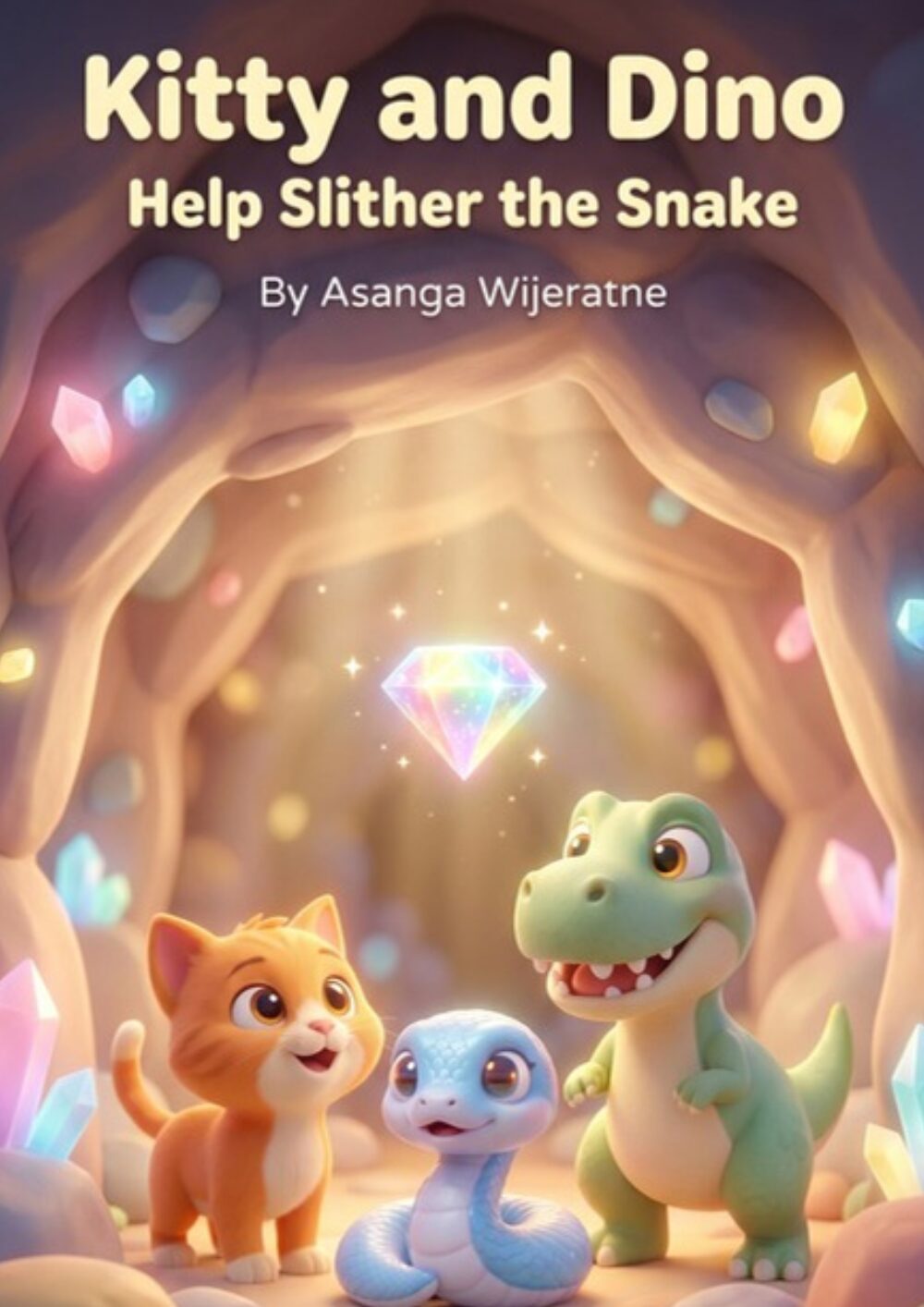
3. Kitty and Dino Help Slither the Snake
This is the one that came out of that afternoon in Kandy.
Slither’s grandfather is unwell, and the thing that can heal him is a diamond, and getting to it means a journey with a lot going wrong along the way. Kitty and Dino go with him.
Two things went into it. One is the search, the house turned upside down, everything pulled out of everywhere. That’s in the book, and it’s in the book because I’d just lived it. The other is Sri Lankan folklore, where guardian snakes protect hidden gems and are said to carry the power to heal. That gave me a way to take a frightening real afternoon and set it somewhere a five-year-old could enjoy being.
In real life it was his grandmother, and there was no diamond, just a pharmacy that was open. But the wanting-to-help part is exact.
If your child wants to help right now: Slither the Snake gives them exactly that — a kid-sized way to be the one who finds the cure. Read Slither’s story free with Kindle Unlimited →
4. Marvin the Moose and Bobo the Baboon
These two sit on the same theme, if the first one lands and you want more.
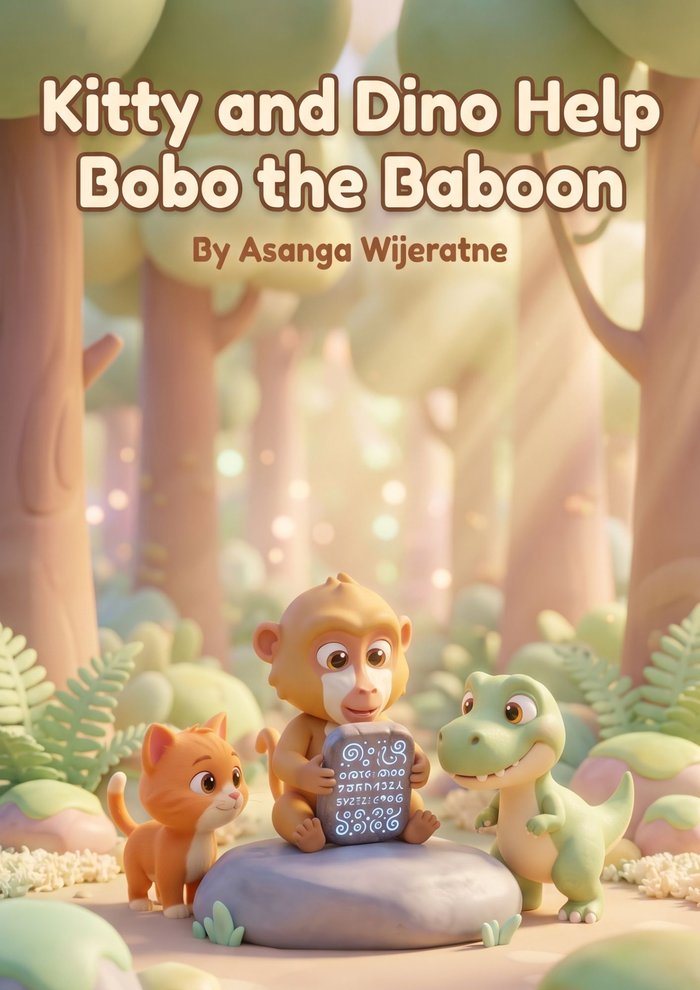
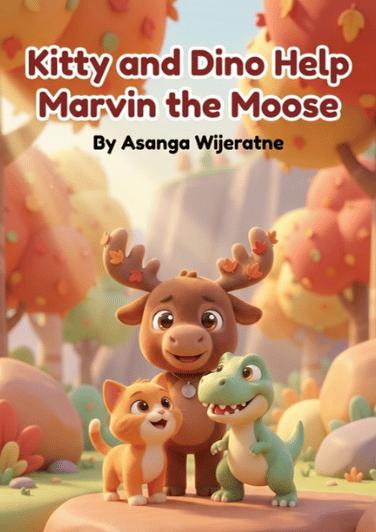
In Marvin the Moose, Marvin needs a rare berry to heal his grandma, and getting it means a climb. In Bobo the Baboon, Bobo has an old map to read and a healing waterfall to reach, again for a grandmother who’s unwell.
I didn’t plan a set of three. They arrived over a stretch of months when this was simply what was going on in our family, and it turns out you write what you’re carrying. If your child is somewhere in the middle of this right now, having three of them means the story can be new while the reassurance stays the same.
Kitty and Dino Help Bobo the Baboon
What to say, and what to skip
Answer the question they asked. If a child asks whether Grandma is coming for his birthday, that’s the question. Don’t hear it as the larger one and deliver a speech. Children ask for what they can handle, and they’ll come back for more when they’re ready.
Give them something to do. A drawing to bring. A voice note. Being the one who carries the bag in. It’s small and it’s not nothing, because the helpless feeling is most of the weight.
Don’t oversell the recovery. “She’ll be completely fine soon” is a promise you may not get to keep. “The doctors are helping her and we’re going to see her on Saturday” is true and still steadying.
Let them be bored and cheerful about it. A child can be genuinely worried and then want to play twenty seconds later. That isn’t callousness, it’s how they regulate. Following them in and out of it is the job.
Name the waiting for what it is. A lot of a child’s discomfort here is simply not knowing how long, and waiting is a skill like any other. Books that actually teach waiting help more than you would expect during a long stretch of hospital visits. The same is true when it is a parent who is away rather than a grandparent who is ill, and I wrote about what helps a child missing someone who is away separately. If your own child has appointments coming up in the middle of all this, books for a child going to the doctor handle that side of it.
If the feelings are coming out sideways and you want more on that, we wrote about books that help kids name what they’re feeling, and about the days that don’t go the way they hoped.
Afterward
My mother’s year was hard, and my son was five for most of it, and I spent a lot of it assuming he was mostly unaware.
He wasn’t. He was tracking all of it. He just needed a way to be useful, and when we didn’t give him one he invented one, which was to ask me for a story and then wait to see what I did with it.
That’s the whole reason I wrote three of these. Not to explain anything to him. Just to hand him a version where the kid gets to help, and it works.
FAQ: Children’s Books About a Sick Grandparent
From the Kitty & Dino bookshelf
Gentle picture books that bring this to life for ages 3–8:


Pingback: Books About Going to the Doctor for Kids | Kitty & Dino
Pingback: Picture Books About Teamwork and Cooperation (Ages 3-8) | Kitty & Dino
Pingback: Books for a Child Missing a Far-Away Grandparent (3-8)
Pingback: How to Choose Picture Books for Your Child's Age (Ages 3-8)
Pingback: Children's Books for When a Parent Is Away (Ages 3-8)