

13 min read
Waiting is the daily battle in my house. The grocery store line, the five more minutes before dinner, the toy that has to charge before it works. My son does not have the wiring yet to just accept that, and honestly, most kids do not. Patience is not something a child is born with. It gets built, slowly, the same way reading does.
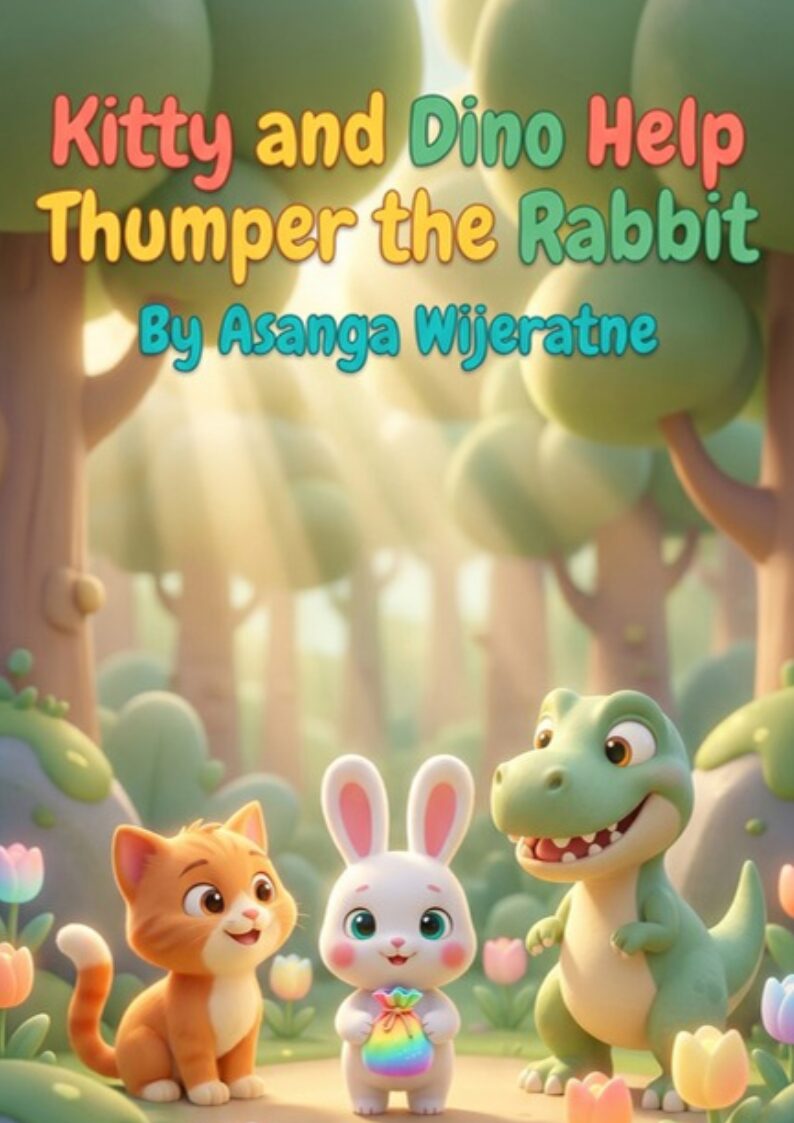
Stories are one of the gentlest ways to build it. A child who cannot sit still for five real minutes will sit through a whole book about a character who waits, because it does not feel like a lesson. Here are seven picture books that actually teach waiting, not just talk about it. If you want the wider shelf rather than this one theme, start with the best picture books for 3 to 5 year olds, plus Thumper the Rabbit and Lila the Ladybird, two of our own Kitty and Dino stories that work the same muscle.
Key Takeaways
- Books teach patience through relatable characters. Children learn best when they can see themselves in the story.
- Stories make waiting concrete. A narrative gives an abstract stretch of time a shape a child can follow.
- Patience is learned, not innate. Every child gets better at waiting with practice and a bit of support.
- Character-driven stories stick. A child remembers what someone they liked went through.
- Reading together builds patience on both sides. Shared storytime is a calm, focused stretch for you as well.
TL;DR: The best books about patience for kids feature characters who wait, take turns, and learn that good things come to those who wait. These 7 picture books make patience fun and relatable, helping children ages 3-6 develop a skill they will use for life.
Why Patience Is Hard for Kids (And Why Books Help)
Children aren’t born patient. The part of the brain that runs impulse control and delayed gratification is still years from finished, so when a three-year-old wants a snack, he wants it now. That isn’t stubbornness. It’s biology, and it’s on schedule.
What a book does that a reminder can’t is let a child practice the feeling at a safe distance. He watches somebody else want something and not get it yet, and he gets to sit in that without his own snack being on the line. Read it enough times and waiting stops registering as an emergency.
The books on patience that actually work tend to do three things. They name the impatience honestly instead of scolding it. They make time visible, so the wait has a shape a child can see. And they pay off at the end, which is how a kid learns that waits do finish.
10 Best Books About Patience for Kids
1. Waiting by Kevin Henkes
Five toys sit on a windowsill, each one waiting for something different. The piggy bank waits for a quarter. The owl waits for the moon. The puppy waits for wind. Almost nothing happens, and that’s deliberate.
A Caldecott Honor book and the gentlest one here, good from about three. What it teaches is that waiting isn’t empty time. It’s full of small things you would miss if you were rushing. For a child who treats every delay as a crisis, that’s a genuinely new idea.
2. The Little Red Hen (various editions)
The hen plants wheat, tends it, harvests it, mills it, and bakes bread, asking for help at every step and getting none. Her friends turn up the moment the loaf comes out of the oven. It is the sharpest example I know of the opposite lesson to the picture books about teamwork we keep on the other shelf.
Ages three to seven. This is the one about effort stretched over time rather than waiting in a line. A child follows the whole arc from seed to bread and works out that some things simply cannot be hurried.
3. If You Want to See a Whale by Julie Fogliano
A child waits to see a whale and everything conspires to distract him. Clouds that look like sheep. Roses worth smelling. Ships going past. The book keeps pulling him gently back: keep your eyes open, watch and wait.
Best from about four. It’s the only book here that treats patience as something active, which matters, because most of what a child calls waiting is really resisting the urge to go do something else.
4. Lily’s Purple Plastic Purse by Kevin Henkes
Lily has a wonderful new purse and her teacher asks her to wait until sharing time. She can’t. She acts out, there are consequences, and there’s an apology.
Ages four to seven, and the best one here for turn-taking specifically. Lily isn’t naughty, she’s excited, and the book is careful about that difference. Worth reaching for if your child keeps interrupting, because it shows impatience from the inside.
5. A Sick Day for Amos McGee by Philip C. Stead
Amos visits his zoo friends every day and gives each one his time. When he falls ill, the animals wait for the bus, ride to his house, and sit up with him.
Ages four to eight, a Caldecott Medal winner, and the calmest read-aloud on this list. It reframes waiting as something you do for somebody else, which is a quieter and older idea than waiting for a treat.
6. The Very Impatient Caterpillar by Ross Burach
A caterpillar cannot bear how long metamorphosis takes. “Am I a butterfly yet?” he asks, roughly every eight seconds, while the others try to explain the process to him.
Ages three to six and by far the funniest. Kids laugh at him and then recognize themselves about a page later. It also makes the point that some waits are non-negotiable, which lands better coming from a caterpillar than from a parent.
7. Bear Wants More by Karma Wilson
Bear wakes up hungry after winter and keeps eating whatever his friends bring him, never quite full, until the whole group is finally together and then he is.
Ages two to six, the youngest-skewing book here. The rhythm does most of the work read aloud, and the ending quietly lands the idea that what he was waiting for was never really more food.
If you want one more for tonight: in Thumper the Rabbit, Thumper’s magic seeds only bloom after sun, water, and a whole night of moonlight — patience with an ending she can actually watch for. Read Thumper’s story free with Kindle Unlimited →
8. Waiting Is Not Easy! by Mo Willems
Piggie has a surprise for Gerald, and Gerald has to wait for it. That is the entire plot, and it is very funny, because Gerald does not take it well. He groans. He reminds Piggie at length that waiting is NOT easy. He comes apart by degrees while Piggie simply holds the line.
What makes it useful is that Gerald is not scolded for finding it hard. He is allowed to be miserable about waiting, and the wait is still worth it. If your child is the sort who announces how unbearable a delay is, this one shows him his own behaviour and lets him laugh at it.
9. Llama Llama Red Pajama by Anna Dewdney
Mama tucks Baby Llama in and goes downstairs. Baby Llama waits. Then he worries, then he whimpers, then he hollers, and by the end he is in a full state about it. Mama comes back and sets it right.
Strictly this is a book about separation at bedtime, and it earns its place here because that is where most small children first meet waiting as a genuinely hard thing. It rhymes beautifully, which helps at the end of a long day when you are the one reading it.
10. Leo the Late Bloomer by Robert Kraus, illustrated by Jose Aruego
Leo the tiger can’t read, can’t write, can’t draw and can’t eat neatly, while the other animals can. His father worries about it and watches him constantly. His mother says he is a late bloomer and will bloom in his own time.
Then the father stops watching, and Leo blooms.
This is the one for the parent rather than the child, and I include it deliberately. Most books about patience ask the child to wait. This one asks you to, and it is from 1971, so the problem is clearly not new.
Which patience book suits which age
Patience isn’t one skill, and what you can fairly ask of a three-year-old is not what you can ask of a six-year-old. If you only want one book, pick by where your child actually is.
At three, waiting is measured in seconds and success means tolerating a short delay without falling apart. Bear Wants More and Waiting suit this age because nothing in either one is complicated.
At four and five, turn-taking becomes the live problem, usually with a sibling or at school. Lily’s Purple Plastic Purse and The Very Impatient Caterpillar are the ones that land, and if the fighting is the real issue, books about getting along cover the other half of it.
By six, a child can hold out for something days away, and the interesting books become the ones about effort over time. The Little Red Hen and If You Want to See a Whale fit there.
If you want to keep going after those seven, Thumper the Rabbit and Lila the Ladybird are the two Kitty and Dino stories we reach for most on a slow, waiting kind of night. Thumper’s magic seeds only bloom after sun, water and a whole night of moonlight, which is patience with a deadline attached. Both are one cozy bedtime long, ages 3 to 8, and free to read with Kindle Unlimited.
How Do I Teach My Child Patience Through Books?
Reading patience books is just the beginning. To maximize their impact, try these strategies:
Pause and predict: Stop reading at moments when characters are waiting and ask, “What do you think will happen?” or “How do you think [character] feels right now?” This builds emotional awareness and narrative patience.
Connect to real life: After reading, discuss times your child has had to wait. “Remember when we had to wait for the bus? You were patient like the owl waiting for the moon.” These connections make book lessons transferable.
Practice waiting games: Use the books as inspiration for patience activities. Play “freeze dance” to practice stopping on command. Plant seeds and wait for them to grow. These experiences reinforce that waiting is part of life.
Validate feelings: When your child expresses impatience, acknowledge it. “Waiting is hard. The caterpillar felt that way too.” Validation doesn’t mean giving in. It means your child feels understood while they learn to manage the feeling. And when the waiting ends in a no rather than a yes, that is a different skill again, and I wrote separately about helping a child handle disappointment. The hardest waiting of all is the kind with a hospital at the end of it, which is its own thing entirely and why there is a separate page on books for a child with a sick grandparent.
What Age Do Kids Learn Patience?
Children begin understanding patience around age 2-3, but it develops throughout early childhood. Toddlers can wait briefly with distractions. Preschoolers (3-5) can delay gratification for short periods with support. By age 5-6, children can understand the concept of waiting for future rewards.
Books help at every stage because they externalize the waiting process. A child who struggles to wait five minutes can watch a character wait weeks for a butterfly to emerge, and that distance is what makes the idea graspable.
What Are the Best Books About Patience for Kids?
The best patience books combine:
- Relatable characters: Children need to see themselves in the story
- Clear waiting situations: The patience lesson should be obvious but not preachy
- Positive outcomes: Waiting should lead to something worth the wait
- Engaging storytelling: The book itself should hold a child’s attention
All seven books on this list meet these criteria while offering different angles on patience, from taking turns to natural processes to friendship.
How Do Stories Help Children Learn Patience?
Stories let children experience waiting vicariously. They see characters model patient behavior and learn that good things come from waiting. This is powerful because:
- Vicarious experience builds empathy: Children feel the character’s frustration and relief
- Narrative provides structure. Stories have beginnings, middles and ends, which quietly shows that waits finish
- Characters model coping strategies: Children learn what patience “looks like”
- Repetition reinforces: Reading the same book multiple times deepens understanding
Start with one book
Teaching patience to children isn’t about making them wait unnecessarily. It’s about handing them a skill that keeps paying off. The books on this list make patience development enjoyable rather than frustrating. They show children that waiting is part of life, that good things come to those who wait, and that patience itself can be a pleasant experience.
Start with one book that matches your child’s interests. Read it together, discuss the waiting moments, and connect them to your child’s life. Soon you’ll have a child who not only waits more patiently but also enjoys the process.
Looking for more on building patience? The Triple Loop Method breaks persistence into small wins, and if the wait is happening between siblings, these books help them get along.
FAQ: Books About Patience for Kids
From the Kitty & Dino bookshelf
Gentle picture books that bring this to life for ages 3–8:


Pingback: Picture Books About Teamwork for Kids Ages 3-8 | Kitty & Dino
Pingback: Picture Books for a Child Who Gives Up Easily (Ages 3-8) | Kitty & Dino
Pingback: What to Put in a Christmas Eve Box | Kitty & Dino
Pingback: Children's Books About a Sick Grandparent | Kitty & Dino
Pingback: Books for Kids Afraid of the Dark | Kitty & Dino
Pingback: Why Kids Take Things Apart | Kitty & Dino
Pingback: Children's Books About Animals for Ages 3-8 | Kitty & Dino
Pingback: Books About Going to the Doctor for Kids | Kitty & Dino
Pingback: Picture Books About Kindness for Kids Ages 3-8 | Kitty & Dino