

10 min read
If your child wants friends and can’t seem to get there, ask one question before you reach for a book: is something concrete in the way? Sometimes what looks like shyness is a practical problem in disguise. Once you have checked that, the books that actually help are the ones where a character wants to belong and does not know how yet. On our shelf those are Sprinkles the Cheetah, for the child who is afraid nobody will come, and Harvey the Hippo, for the child who gets told their favorite thing is not for them.
I write these books for my own son, so most of what follows comes from our house rather than from a study.
Before you call it shyness, check what is actually in the way
When my son was four he refused to go to swim class. Every swim day he asked us to send a note to the teacher saying he should be left out. It looked like the classic picture: the quiet kid who does not want to join in.
Wrong on every count. When I finally asked him why, he said the teacher tells them to go under, the water gets into his nose, and it hurts a lot. That was the whole thing. Water up the nose.
So we asked the teacher, who told us they never force young children to stay under. Then, on a good afternoon when nothing was riding on it, I explained that holding your breath is just part of learning to swim, and the only way to stop water going up your nose is to practice it until you don’t. He said no. I could tell he was turning it over though.
He is older now and swimming is his favorite class.
Plenty of social worries have no tidy physical cause, so I’d rather not oversell this. But I nearly spent a year building my son’s confidence when what he actually needed was a straight answer about his nose. Ask the boring question first. Costs you one conversation, and every so often it saves you a year.
How do you encourage a shy child to make friends?
Here’s what I’d push back on: the word shy, at least the way it usually gets used. There’s a real difference between a child who is shy and a child who feels shy this afternoon, in this room, with these particular children. One sounds permanent. The other sounds like weather. Kids hear that difference far more clearly than we give them credit for.
Past that, three things have worked here. They’re less technique than a way of staying out of your own way.
Don’t narrate it in front of them. The moment you say “oh she’s shy” to another adult, you’ve handed your child a label with a witness standing right there. Say nothing. Or say she’s taking her time.
Give them a job rather than an instruction. “Go and play with them” asks a four year old to invent a whole social strategy standing up. “Can you take these over” just gives them a reason to cross the room, which is usually the hard part anyway.
And let the story do the asking. This is the part books are genuinely good at, and the reason has nothing to do with lessons. A child can think about a problem that belongs to a penguin or a hippo without ever admitting it’s also theirs. Nobody’s watching them work it out.
Books for the child who wants friends and cannot get there
These are ours, so weigh the recommendation accordingly. I’ve said what each one actually contains so you can judge the fit yourself instead of taking my word for it.
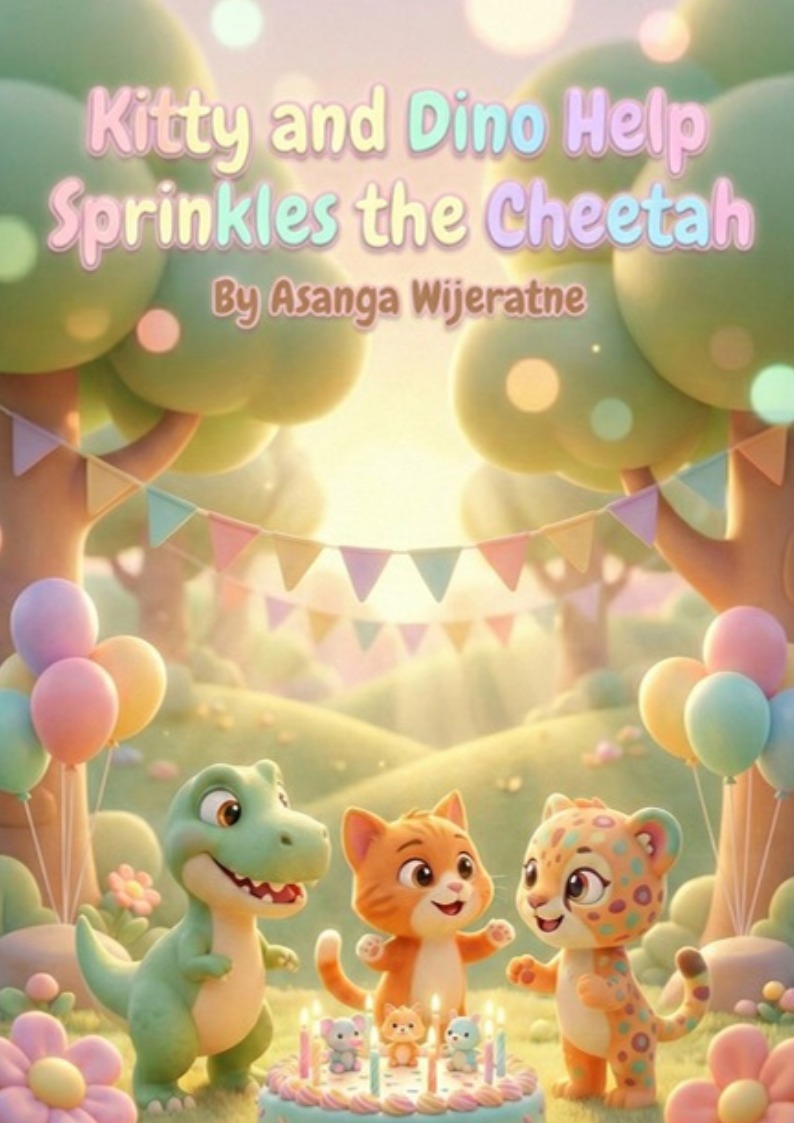
Sprinkles the Cheetah, for the child who is afraid nobody will come
It’s Sprinkles’ birthday and he’s quietly bracing for an empty room. Kitty bends the wind and water, Dino grows flowers out of bare ground, and between them they make sure one lonely cheetah does not spend his big day on his own.
That one came from a real afternoon. We’d gone to a children’s home to hand out gifts, and there was a boy about my son’s age who had arrived that same day. On his own, crying. My son had never seen anything like it. He stood very still for a while, then handed over his own toy. I wrote Sprinkles because of that boy, and because of what my son did without anyone asking him to.
Read it with a child who’s got a party coming and has gone quiet about it, or one who’s started saying nobody likes them. See what the book is about, or get it on Amazon, free to read with Kindle Unlimited.
Harvey the Hippo, for the child told their favorite thing is not for them
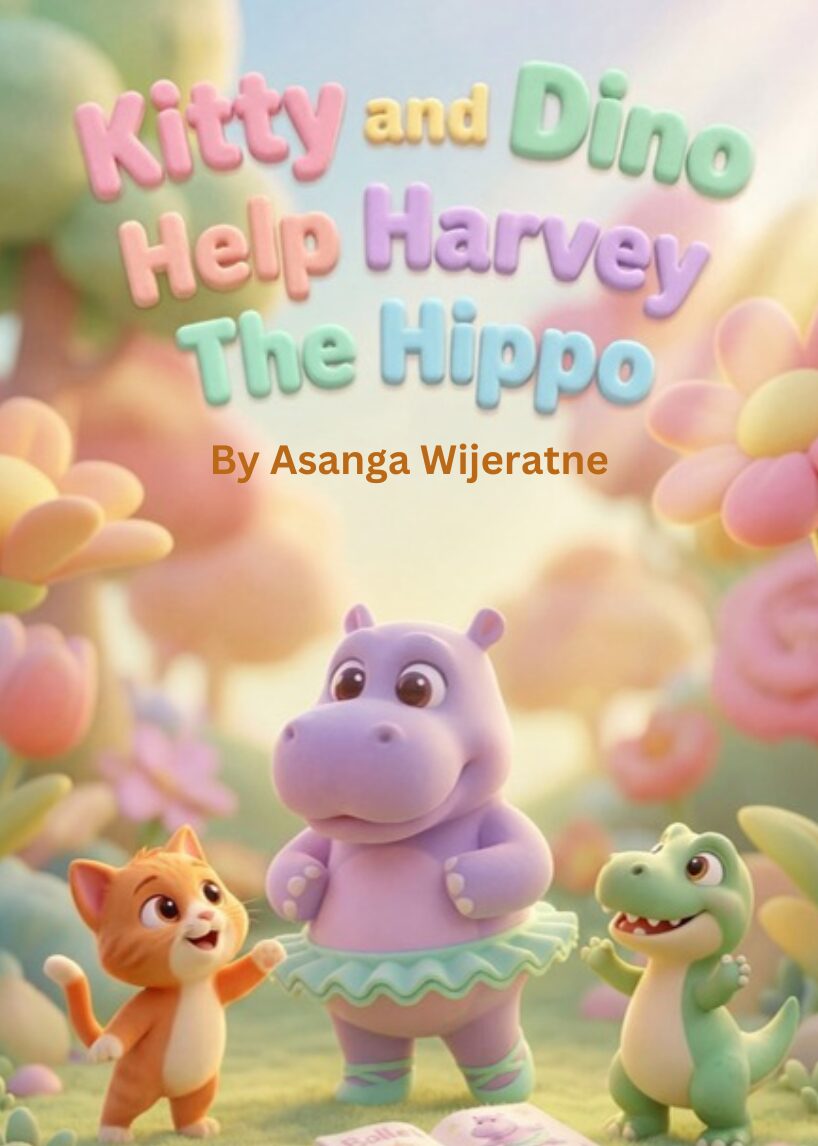
Harvey has always wanted to dance ballet. He keeps losing his balance and landing in a heap, and he’s sure he’s too big and clumsy for it. Kitty and Dino try teaching him the usual moves first, and when that doesn’t work, they help him find a way to dance that fits a hippo.
My son went through a long stretch where the only thing he wanted was his toy kitchen, and the only thing he wanted to be was a chef. He mentioned it at class and some of the boys told him cooking is for women. He came home and told us, hurt in that quiet way that’s much worse than crying. Harvey exists because of that afternoon. He’s since moved on to firefighter, and then animal doctor, which is how these things go. The point stood anyway.
This is the one for a child who’s on the outside of something rather than lonely as such. If the teasing was about something your child loves, these books for a child teased for what they love go further. See what the book is about, or get it on Amazon.
Carlos the Camel, for the child who finds joining in easier than starting
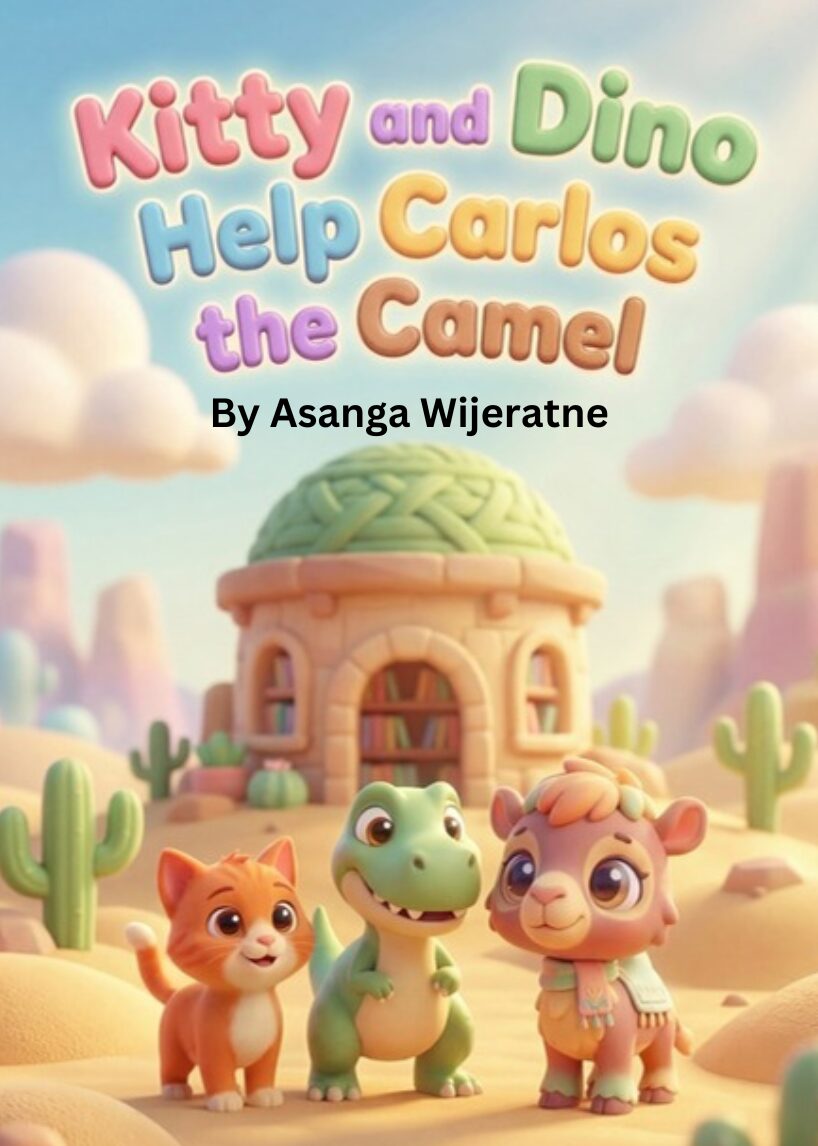
Carlos and his friends decide to build a library, and it takes every one of them, plus some help from Kitty and Dino, to actually pull it off. A story about what a group makes when everybody brings one thing.
Plenty of children can manage the friend part fine once they’ve got a reason to be standing there. A shared job is friendlier than a conversation. See what the book is about.
One book stays off this list even though people often expect it: Penny the Penguin. Penny is about being frightened to try the thing in front of you, which is a different ache entirely. If that’s closer to your child’s actual problem, we wrote about that separately.
If the hardest part is the school gate itself, try picture books for a child who doesn’t want to go to school. And when a friendship needs mending, picture books about saying sorry can help.
What if my child plays alone?
From across a playground, playing alone and being left out look identical. They’re not the same thing at all. The difference is whether your child minds.
Watch for wanting rather than for solitude. A child who says they’d like someone to play with, or who talks about who they’d invite to their birthday, is telling you the gap bothers them. That child needs support. A child who’s genuinely absorbed on their own, and lights up about friends when you ask, is usually just someone who likes their own company. Which is a perfectly normal way to be.
If you’re worried about something specific in how your child is developing, that’s a conversation for your pediatrician rather than a picture book, and I wouldn’t want anything here standing in for it.
Common questions
At what age do children understand friendship?
Around three to four, most children shift from playing next to other children to genuinely playing with them, and the idea of a particular friend starts to mean something. Understanding tends to arrive well before the skill does, which is the gap that makes this age so uncomfortable. They know what they want and can’t yet do it. If yours is still working out what a friend even is, this guide to what friends are starts right there.
What is a good book for a child who is shy about making friends?
Look for one where the character wants to belong and hasn’t managed it yet, and where nobody fixes it for them by force. A story that ends with a shy character shoved into the middle of a group teaches the wrong thing entirely. In ours, that is Sprinkles the Cheetah and Harvey the Hippo.
How do I help a child who is struggling to make friends?
Check for a concrete obstacle first. Then drop the word shy as a description of who they are. Then give them small, specific jobs that put them near other children without asking them to perform. Books do their work in the quiet part, where a child can turn the problem over at one remove.
Should I be worried if my four year old has no friends?
Usually not at four, when friendships are short-lived and mostly about who happens to be nearby. Pay attention to whether your child seems to mind. Persistent distress about it is worth raising with your pediatrician.
My child is shy and so am I. Am I passing it on?
Possibly, and it matters less than you’d think. A quiet parent who keeps taking their child to places where other children are is doing the useful part. You don’t have to model being outgoing. You just have to keep providing the room.
The boring question
Ask it before you assume the big one. My son wasn’t frightened of the other children in that pool. He disliked water going up his nose. Every parent I’ve told that to goes quiet for a second, then tells me about something in their own house that looked like one problem and turned out to be another.
From the Kitty & Dino bookshelf
Gentle picture books that bring this to life for ages 3–8:


Pingback: What Are Friends? Social Skills Story Guide for Parents | Kitty & Dino
Pingback: Books for a Child Teased for What They Love | Kitty & Dino
Pingback: Picture Books About Teamwork and Cooperation (Ages 3-8) | Kitty & Dino