
9 min read
Six is a funny age for picture books. Your child can follow a real story now, with a twist and a joke the grown-up gets too. But some days they’ll also announce that picture books are for babies. They aren’t. The best picture books for 6-year-olds have more plot, a problem that takes more than one try to solve, and pictures worth a second look. Here are ten, sorted by what a six-year-old is usually going through, plus three of my own, clearly labeled.
My son is six. He’s in Grade 2 this year, and a lot of what’s below comes from watching his year so far.
Key Takeaways
- Six-year-olds are not too old for picture books. Many of the best ones are written for exactly this age.
- Pick by what’s going on this week (a first big failure, a scary jump, a new class) and the book does more work.
- A child who “won’t sit for a story” usually needs a funnier or shorter book. Try that before giving up on books.
- Read aloud even after they start reading alone. It’s a different pleasure.
- The last three books on this page are mine. The ten above them are not.
Are 6-year-olds too old for picture books?
No. Picture books aren’t a reading level you grow out of. Plenty of them use bigger words and longer sentences than the early readers your child brings home from school. The pictures carry half the story, which is exactly the half a six-year-old is still learning to read.
There’s real pressure to push kids forward, though. Someone in a parents’ group put it plainly: “We often feel pressured to push children forward in their reading level.” I’d ignore it at bedtime. Let them practice the early readers in the daytime. At night, read them the good stuff.
Here’s my own reason. When a child is worn out or something has just gone wrong, they feel like giving up, and telling a six-year-old to “keep going” means nothing to them. A story can show it instead. Someone tries, it doesn’t work, they try a different way, and it ends well. I’ve tried to put that into my own books, and the ones below do it beautifully.
Picture books for 6-year-olds, sorted by what’s going on
| Book | Good when |
|---|---|
| The Dot | They say “I can’t” and won’t start |
| After the Fall | Something went wrong and they’re scared to try again |
| Rosie Revere, Engineer | They build things and the things break |
| Jabari Jumps | A big first (the pool, the high board, a new class) |
| Interrupting Chicken | They keep interrupting the story |
| The True Story of the Three Little Pigs | They know the classics by heart |
| Last Stop on Market Street | They’ve started asking “why don’t we have…?” |
| Thank You, Omu! | Sharing is hard this week |
| Library Lion | They’re starting to love the library |
| Miss Rumphius | They’re ready for a longer, quieter story |
When they say “I can’t”
The Dot by Peter H. Reynolds. Vashti is sure she can’t draw. In frustration she jabs one dot onto an empty page, and her teacher asks her to sign it. The next week it’s framed on the wall. That small push is enough, and Vashti goes on to fill a whole show with dots. It’s short, and it lands hard.
After the Fall by Dan Santat. You know Humpty Dumpty fell. This is what happened next: he’s scared of heights now, and he has to find his way back up the wall. A good one for the week after a real tumble, on a bike or otherwise. If quitting is a regular thing at your house, I wrote a whole page on picture books for a child who gives up easily.
When they build things, and the things break
Rosie Revere, Engineer by Andrea Beaty, illustrated by David Roberts. Rosie invents things in secret and hides them, because she’s afraid of being laughed at. Then her great-great-aunt Rose shows her that a crashed invention isn’t a failure at all. Earlier this year my son took an old remote-control car completely apart. It never went back together, and he still wants to try. This is his kind of book.
When a big first is coming
Jabari Jumps by Gaia Cornwall. Jabari is sure he’s ready to jump off the diving board. Then he gets to the ladder. It’s a gentle, honest picture of the moment between “I’m ready” and actually going.
When they won’t stop interrupting
Interrupting Chicken by David Ezra Stein. It’s bedtime, and Papa is reading fairy tales. His little chicken keeps jumping into each story to warn the characters before anything bad happens. If your six-year-old talks over every page, read this one. They’ll recognize themselves, and you’ll both laugh.
When they know the classics by heart
The True Story of the Three Little Pigs by Jon Scieszka, illustrated by Lane Smith. The wolf tells his side of the story, and it’s not quite the one you know. Six is a great age for this, because they finally know the original well enough to get the joke.
When they start asking “why don’t we have…?”
Last Stop on Market Street by Matt de la Peña, illustrated by Christian Robinson. Every Sunday after church, CJ rides the bus across town with his grandma, and he wonders why they don’t have a car like his friends. By the last stop, she has shown him what she sees on the way, and they end up serving a meal to people in their community. Expect a few questions afterward. That’s the point.
When sharing is hard
Thank You, Omu! by Oge Mora. Omu makes a pot of stew, and one by one her neighbors smell it and come for a taste. She shares until there’s none left for her. Then her neighbors come back. Short, warm, and good for a read-aloud with a little drama in your voice.
When they’re starting to love the library
Library Lion by Michelle Knudsen. A lion walks into a library that has very strict rules, and turns out to be a great fit. I went to the public library in Kandy from about Grade 1 or 2, and I loved it. If your six-year-old is getting their first library card, this is the one to borrow first.
When they’re ready for a longer, quieter story
Miss Rumphius by Barbara Cooney. A woman wants to travel the world, live by the sea, and do one more thing: make the world more beautiful. She does it with lupine seeds. It’s long for a picture book and slow on purpose, which is why it works on a calm night.
What if my 6-year-old won’t sit for a story?
One parent described it exactly: “He’ll sit with a book for maybe two minutes before getting restless.” Another said their six-year-old calls it boring after a few sentences. Most of us have been there.
“Boring” can mean a lot of things at six. When my son started Grade 2 this year, he told me his new class was “boring.” It took a few more questions to get to what he meant: there was less time to play. The word was covering for something else. So when a story gets called boring, it’s worth a gentle question or two before you give up on books.
A few things that help:
- Go funnier. Interrupting Chicken and The True Story of the Three Little Pigs win over most “boring” kids.
- Go shorter. The Dot takes about five minutes.
- Let them read the funny line or the last word on each page. Six-year-olds like a job.
- Match the book to their week. A story about the thing they’re worried about holds attention better than any other kind.
If school itself is the problem right now, here are picture books for a child who doesn’t want to go to school.
From our own shelf
These three are mine, so weigh them that way. Each is one bedtime story for ages 3 to 8, and all three have the same shape I talked about above: something doesn’t work at first, and they find another way.

Kitty and Dino Help Pippin the Pig

Kitty and Dino Help Humphrey the Hedgehog
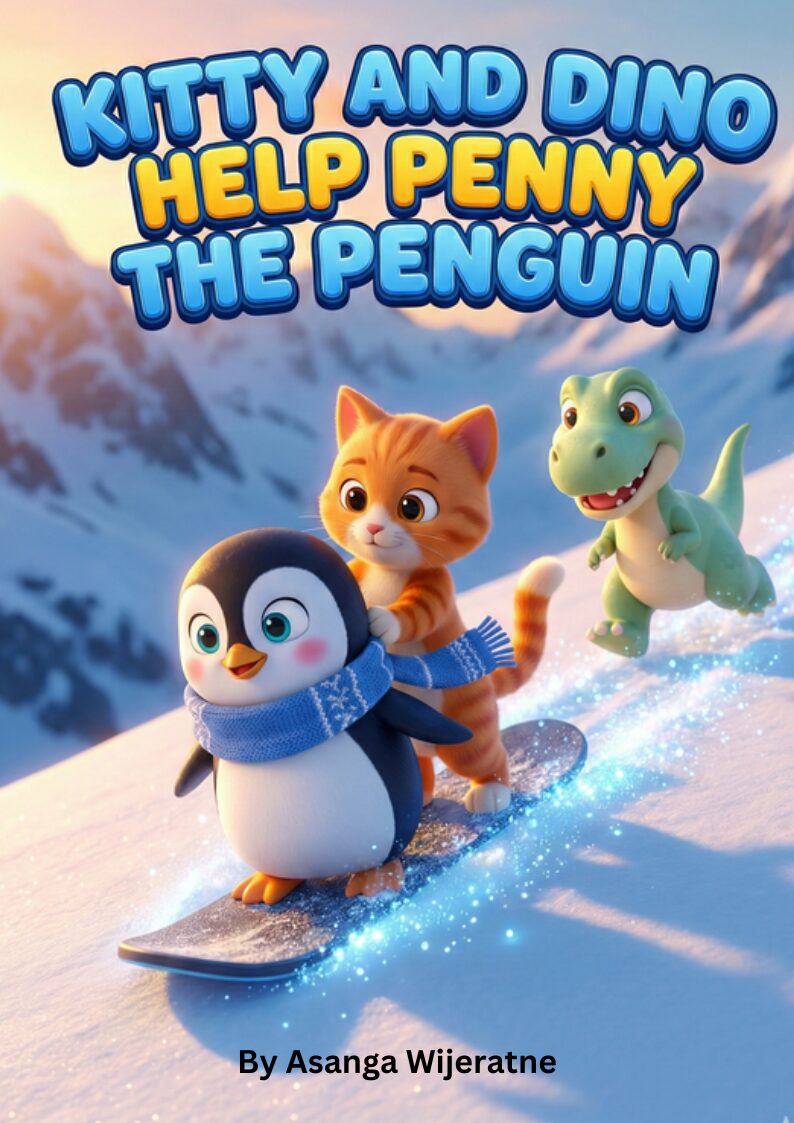
Kitty and Dino Help Penny the Penguin
Shopping for a younger sibling too? Here’s our guide to the best picture books for 3- to 5-year-olds.
Picture books for 6-year-olds: FAQ
What are some good picture books for a 6-year-old?
The Dot, After the Fall, Rosie Revere, Engineer, Jabari Jumps, Interrupting Chicken, The True Story of the Three Little Pigs, Last Stop on Market Street, Thank You, Omu!, Library Lion, and Miss Rumphius are all good fits. Pick by what your child is dealing with right now.
What age should kids stop reading picture books?
There’s no age. Many picture books are written for six, seven and eight-year-olds, and the pictures keep teaching long after a child can read the words.
Should a 6-year-old read on their own or be read to?
Both. Early readers build their skills in the daytime. Being read to at night keeps the stories bigger than what they can read alone yet.
How long should a bedtime story be for a 6-year-old?
Most picture books take five to ten minutes to read aloud. Save the longer ones, like Miss Rumphius, for nights when bedtime isn’t a race.


Pingback: Best Birthday Books for Kids Ages 3-8 (The Ones They Reread)