

18 min read
Looking for the complete guide? See Book Gifts for Kids Ages 3–8 →
Between three and five, a kid goes from chewing the corners to arguing with the plot. The best picture books for this stretch keep up with that, short and simple at three, a little more story by five, warm the whole way through. I write these books and test them on my own son, so instead of a generic list, here are real ones I’d hand a 3, 4, and 5-year-old, and why each one fits.
Key Takeaways
- At three: short, one feeling, big pictures, lots of repetition. The picture is the door in.
- At four: the questions start. Pictures now have to hold up when a child looks closely, because he will.
- At five: a bit more story and humor, and someone who changes by the end.
- Your presence is half of it at every age. A steady bedtime ritual beats any particular title.
- Our own Kitty and Dino books here are for ages 3 to 8, one cozy bedtime each, and free to read with Kindle Unlimited.
What changes between three and five
A three-year-old wants a feeling and a friend. A five-year-old wants a little more, a problem, a couple of bumps, a character who’s different at the end than the start. Same kid, bigger appetite.
I watched the switch happen up close. At three, my son barely asked a thing. Instead, halfway through a story, he’d quietly flip back a couple of pages. No words. He just wanted to look again. It took me a while to work out what he was doing. He was checking the picture, grabbing the small parts of it, making sure they fit the story. Then he’d look up and say, “Okay, now read.”
So at three, my advice is simple. Get the pictures right. Big, colorful, full pages. That is the door a small child walks through, and if the door is dull, nothing else about the book will matter.
Best picture books for 3 year olds
What to look for in picture books for 3 year olds
Four things, and none of them are about reading level.
Short enough for one sitting. If your child squirms before the last page, the book is too long for now, and that’s information rather than a problem. You can come back to it in six months.
One feeling, not a plot with turns in it. At three a child can follow somebody being lonely, or scared, or pleased. He cannot yet follow a subplot, and a book that tries will lose him halfway.
Big pictures that carry the story on their own. Flip through without reading the words. If you can still tell roughly what happens, a three-year-old can too, and that’s what lets him “read” it back to you before he can read.
A line that repeats. Repetition is the part parents get tired of and children need most. When your three-year-old starts chanting the repeating line back at you, the book is doing exactly its job.
One more thing worth saying plainly, because it worries people. Reading the same book every night for a month isn’t a rut. That’s how the language goes in, and repetition is doing more work than variety would.
Three classics that fit a three-year-old exactly
These three have been doing the job for decades, and each one hits the four things above without appearing to try.
Dear Zoo by Rod Campbell. A child writes to the zoo asking for a pet, and the zoo keeps sending the wrong animal. The lion’s too fierce, the camel’s too grumpy, the snake’s too scary. Every animal hides behind a flap and every one goes back, until they finally send a puppy and he keeps it. “So they sent me a…” is the line your child starts saying before you do. In print since 1982. The flaps will get torn eventually, and it’s worth it.
Brown Bear, Brown Bear, What Do You See? by Bill Martin Jr., illustrated by Eric Carle. A call-and-response chain. The brown bear sees a red bird, the red bird sees a yellow duck, on through Carle’s big painted-paper animals. There’s no plot whatsoever, which at three is the point. It’s the purest version of the repeating line, and it’s usually the first book a child will “read” back to you from memory, page for page, with the book closed.
We’re Going on a Bear Hunt by Michael Rosen, illustrated by Helen Oxenbury. A family walks through long wavy grass, a deep cold river, thick oozy mud, a forest and a snowstorm, into a narrow gloomy cave where there is, in fact, a bear. Then they run home through all of it backwards and hide under the covers. More chant than story. You’ll be doing the actions by the third read whether you planned to or not.
Two more from the list further down fit three as well: The Very Hungry Caterpillar, where a three-year-old puts a finger through every hole, and The Snowy Day, where nothing goes wrong at all.
Our own picks for a three-year-old
These are mine, so weigh them accordingly.
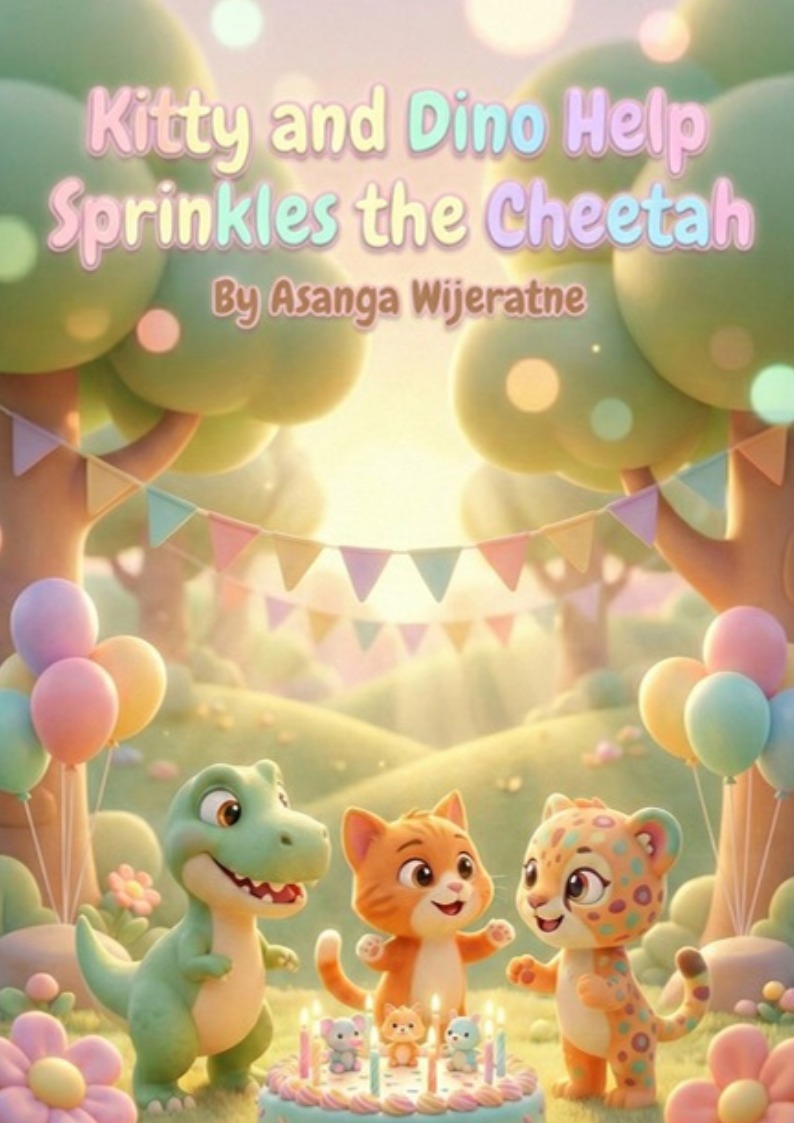
Kitty and Dino Help Sprinkles the Cheetah is a lonely cheetah who just wants someone to come to his party, and Kitty and Dino make sure he isn’t alone. One clear feeling, a warm ending, nothing scary. It came from a real day. My own son handed his toy to a little boy at an orphanage who had arrived that morning with nothing. Three-year-olds feel that kind of kindness long before they can explain it.
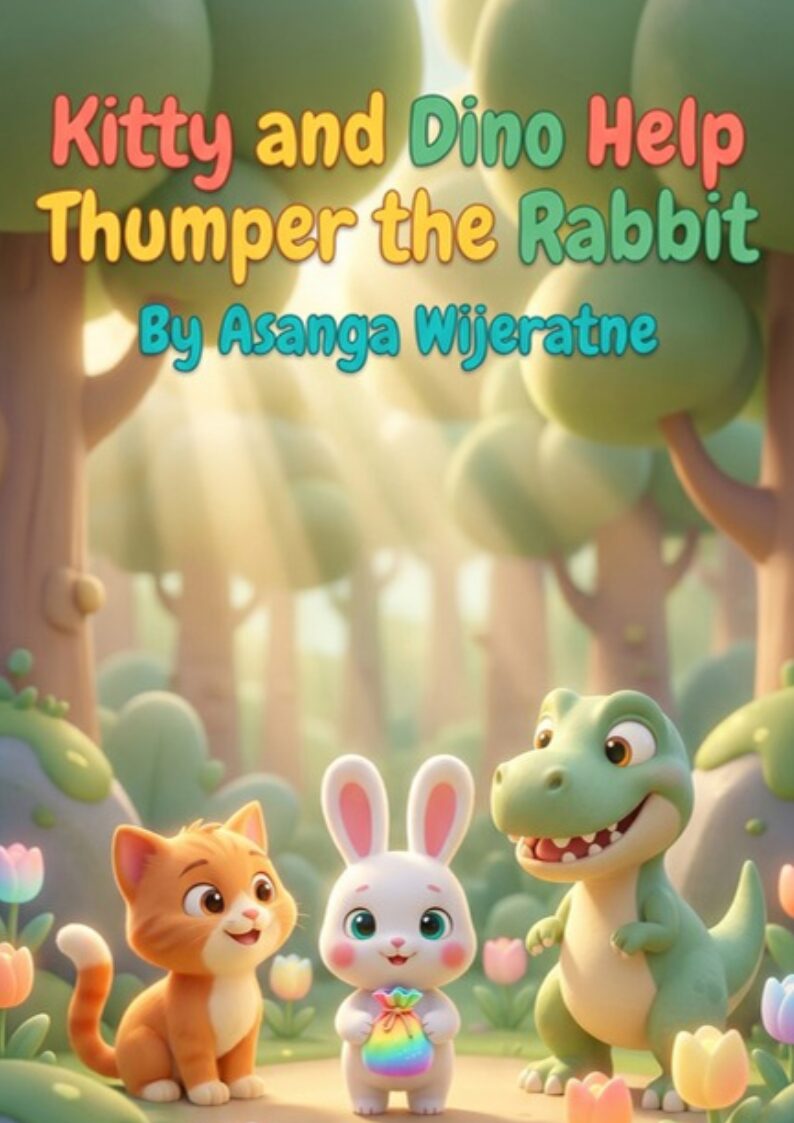
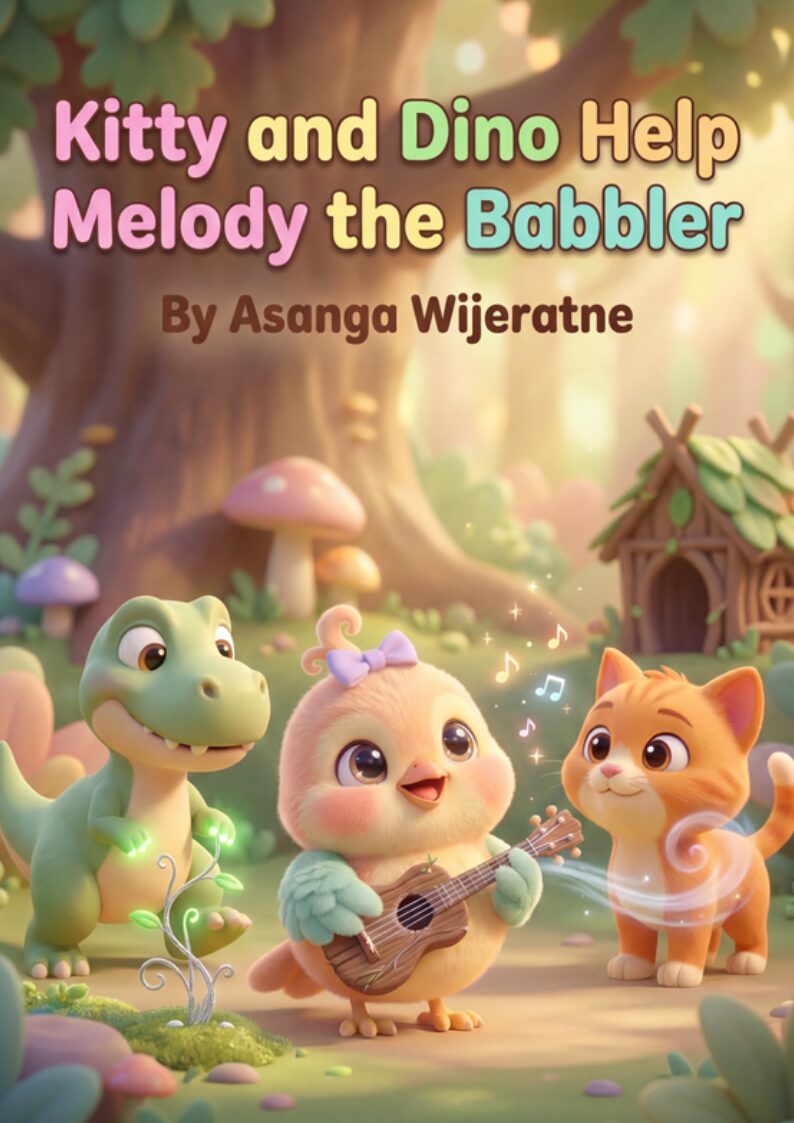
If Sprinkles lands and you want more at the same level, Thumper the Rabbit is the other one we hand three-year-olds most. His magic seeds only bloom after sun, water and a whole night of moonlight, so the waiting is the story. Melody the Babbler is gentler still, a bird whose guitar breaks so she can’t sing the morning song, which is about the softest problem a book can have.
Best picture books for 4 year olds
Right around four, this began to change, little by little. First came the questions. “Why is this happening like this?” “Why can’t we do it this way?” Small ones at first, then more of them. He was no longer just riding the story. He was inside it, poking at how it worked.
And he started catching the little things in the pictures. I remember a page where nothing in the words mentioned the moon, but there was a moon in the sky. He stopped and asked why. “Why is there a moon there if no one said anything about a moon?” At three he’d have floated right past it. At four, he was checking whether every piece of the picture belonged.
That tells you what a four-year-old needs, and it’s more than a year earlier. The pictures still have to pull him in, but now they also have to hold up under a close look. And the story can carry a little more, a bit more to follow, a bit more to wonder about, without tipping into too long.
From the list further down, If You Give a Mouse a Cookie, Don’t Let the Pigeon Drive the Bus! and The Gruffalo suit four best. Each one gives a four-year-old something to work out or push back on.
Our own pick for a four-year-old
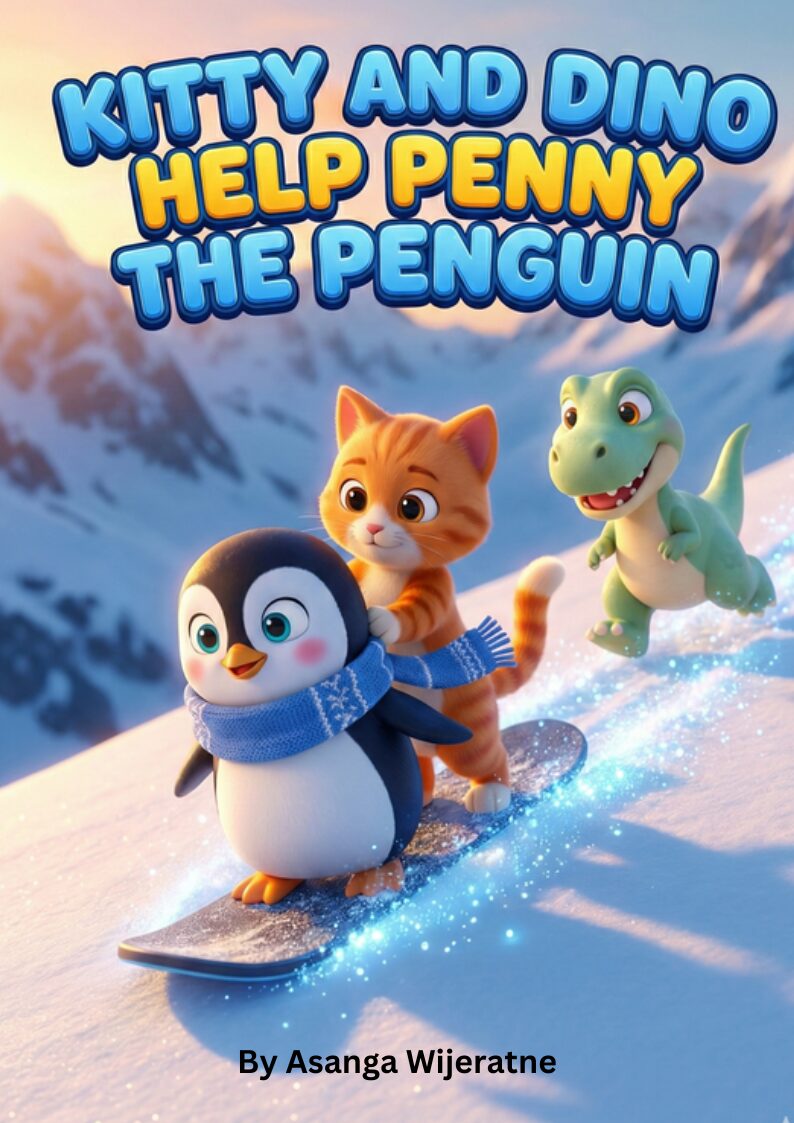
From our own shelf, I’d start with Penny the Penguin. Four is the age of “I can’t” and “I don’t want to.” Penny is scared to make the big jump, until two friends help her do it anyway. I wrote it when my son was terrified of getting water up his nose at swim class. He had me read it over and over. About a year later, in the bath, he told me he could finally go under without holding his nose.
If “I can’t” is the whole problem at your house right now, there’s a separate list for that: picture books for a child who gives up easily.
Best picture books for 5 year olds
By five they’re ready for a small idea tucked under the story. From the list further down, Where the Wild Things Are sits closer to five than three, and The Gruffalo lands best once a child can hold two ideas at once.
From our own shelf: everyone expects a lion to be king of the jungle. Leo the Lion is a music teacher who plays the flute. I made him that way on purpose, because a kid doesn’t have to grow into the thing everyone assumes, a doctor, an engineer, the king of anything. Five-year-olds are just old enough to catch that.
The ones that aren’t mine, and should be on every shelf
I write picture books, so take this next part for what it is. If you’re building a shelf for a three-to-five-year-old, these get there before anything of mine does. They’re the ones I’ve read to my own son until the covers went soft.
The Very Hungry Caterpillar by Eric Carle
A caterpillar eats his way through the week and comes out a butterfly. The holes punched through the fruit are the whole trick. A three-year-old puts a finger through each one and suddenly he’s part of the book. Start here if you’re starting anywhere.
Press Here by Hervé Tullet
Press the yellow dot, turn the page, and the dots have multiplied. Shake the book and they scatter. There’s no story in it at all, and it still gets asked for more than most books that have one. It’s the best thing I know for a child who won’t sit still, because sitting still isn’t required.
Chicka Chicka Boom Boom by Bill Martin Jr. and John Archambault
The whole alphabet races up a coconut tree until the tree can’t hold them all. It’s a chant more than a story, and that’s the point. My son had it by heart long before he knew the letters were letters.
Where the Wild Things Are by Maurice Sendak
Max gets sent to bed without supper, sails off to where the wild things are, and comes home to find his supper waiting and still hot. This one sits closer to five than three. It takes a child’s temper seriously instead of tidying it away, which is rarer than it should be.
If You Give a Mouse a Cookie by Laura Numeroff
Give the mouse a cookie and he’ll want milk, then a straw, and the whole thing loops back around to the cookie. Four-year-olds love it because they can see the ending coming and you can’t stop it. Mine worked out the loop on about the third reading and was insufferable about it for a week.
Green Eggs and Ham by Dr. Seuss
Sam-I-Am asks the same question fifty different ways until he finally gets a yes. Read it to a child who says no to dinner. It won’t fix anything, but everyone laughs, and that counts for something at the end of a long day.
None of these are mine and none of them need my recommendation. They’re here because a shelf with only my books on it would be a strange shelf, and because a parent asking what to read to a three-year-old deserves the real answer before anything else.
Don’t Let the Pigeon Drive the Bus! by Mo Willems
The bus driver steps away and asks you, personally, not to let the pigeon drive the bus. Then the pigeon spends the whole book working on you. He wheedles, he bargains, he claims his cousin Herb drives a bus almost every day.
Your child gets to shout NO at a book, repeatedly, with permission. Four-year-olds find this close to the greatest thing that has ever happened to them. It won a Caldecott Honor, which I mention only because it makes the shouting feel respectable.
The Gruffalo by Julia Donaldson, illustrated by Axel Scheffler
A mouse walking through the wood keeps meeting animals who fancy eating him, so he invents a monster called the Gruffalo to frighten them off. The fox goes. The owl goes. The snake goes. Then the Gruffalo turns up, and he is real.
It rhymes hard, which is why children memorize it whether you want them to or not. Better for four and five than for three, because the mouse’s trick only lands once a child can hold two ideas at once.
Room on the Broom by Julia Donaldson, illustrated by Axel Scheffler
A witch loses her hat, then her bow, then her wand, and each time an animal returns it and asks for a ride. The broom gets crowded, then it snaps. A dragon turns up wanting to eat her, and the animals, covered in mud, pretend to be a monster and see him off.
Same pair as the Gruffalo and the better read-aloud of the two, in my opinion. The rhythm carries you along even when you are reading it half asleep.
The Snowy Day by Ezra Jack Keats
Peter wakes up, sees snow, and goes out into it. He makes tracks, he makes a snowman, he slides down a hill. That is the whole book, and it has been in print since 1962.
It won the Caldecott Medal and was the first full-color picture book with a Black child as its hero, which mattered enormously in 1962 and still does. What makes it work at three is that nothing goes wrong. A small person has a good day outside, at the pace a small person has one.
Corduroy by Don Freeman
A toy bear in a department store is missing a button. A girl called Lisa wants him anyway, but her mother says no. That night Corduroy goes looking for his button through the dark shop, mistakes an escalator for a mountain, knocks over a lamp and gets carried back to his shelf.
Then Lisa comes back with her own money from her piggy bank and takes him home. It is a book about being wanted while imperfect, and it does that without once saying so.
A few more worth having on the shelf
Every one of these is a standalone story, so you can start anywhere and read them in any order.
- Harvey the Hippo loves ballet but feels too big and clumsy for it, then finds a way that fits him. A quiet nudge that you get to like what you like.
- Carlos the Camel and his friends build a library together. A warm one about reading and teamwork, good if you’re trying to grow a book lover.
- Thumper the Rabbit is the one we reach for on a slow, waiting kind of night.
One thing I’ll say honestly. I wrote these 43 books over a year or two, right as my son moved from three toward five. So the series grew up a little alongside him. The later books hold a bit more detail and a bit more story, because by then I knew that’s what he was reaching for. If your four-year-old is a real question-asker, those are the ones to lean into.
How to pick the right one tonight
You don’t need a system. Two easy ways in.
Let your child choose by animal. Show him three or four covers and let him point. Four-year-olds are very sure about which animal they want, even when they can’t say why.
Or match the book to what’s going on at home. A child starting swim lessons might land on Penny the Penguin. A child who feels left out might do better with Sprinkles, and there is more on what to say when a child feels left out if that is the week you are having. Either way works, because each book stands on its own.
And here’s the part that isn’t about the book at all. Your presence is half of it. Bedtime reading works best as a ritual, the same time, the same closeness, most nights. When your child asks one of those “why” questions, the best answer often isn’t on the page. It’s a small story from your own life. “You know, something like this happened to Daddy once.” That’s when a book stops being a book.
Reading well matters as much as reading often, these five tricks keep storytime interactive. And if you are building more than a bedtime routine, see how we start the day calm or browse our roundup of animal picture books. There’s also a fuller age-by-age guide to choosing picture books if you want the deeper how-to.
Buy the paperback →
or read free with Kindle Unlimited
FAQ: Picture Books for 3 to 5 Year Olds
From the Kitty & Dino bookshelf
Gentle picture books that bring this to life for ages 3–8:


Pingback: 10 Best Books About Waiting and Patience for Kids | Kitty & Dino
Pingback: Children's Books About Animals for Ages 3-8 | Kitty & Dino
Pingback: Children's Books About Being Different (Ages 3 to 8)
Pingback: Bedtime Routine for Kids Ages 3–8: A Cozy 7-Step Plan