6 min read
Making Friends Is a Learned Skill
We tend to treat social skills like they’re optional — something that either comes naturally or doesn’t. But making friends is actually a skill, and like any skill, it can be taught, practiced, and improved.
I learned this the hard way with my own son. When he was 4, he didn’t want to go to swimming class. Not because he couldn’t swim, but because something about the class made him uncomfortable — enough that he asked us to write a note to the teacher asking to be left alone.
Looking back, I think part of what he was feeling was a kind of social uncertainty. He didn’t know how to navigate the class, didn’t feel like he fit in, and didn’t have the tools to change that on his own.
What helped? Books. Specifically, stories about characters who were in the same position — lonely, unsure, trying to figure out how to belong.
How Children’s Books Model Friendship Behaviors
Kids learn by watching and by stories. When they hear about Penny the Penguin — a penguin who feels completely alone on a snowy mountain, who has forgotten what it’s like to play with friends — they recognize something. They might not have the words for it yet, but they feel it.
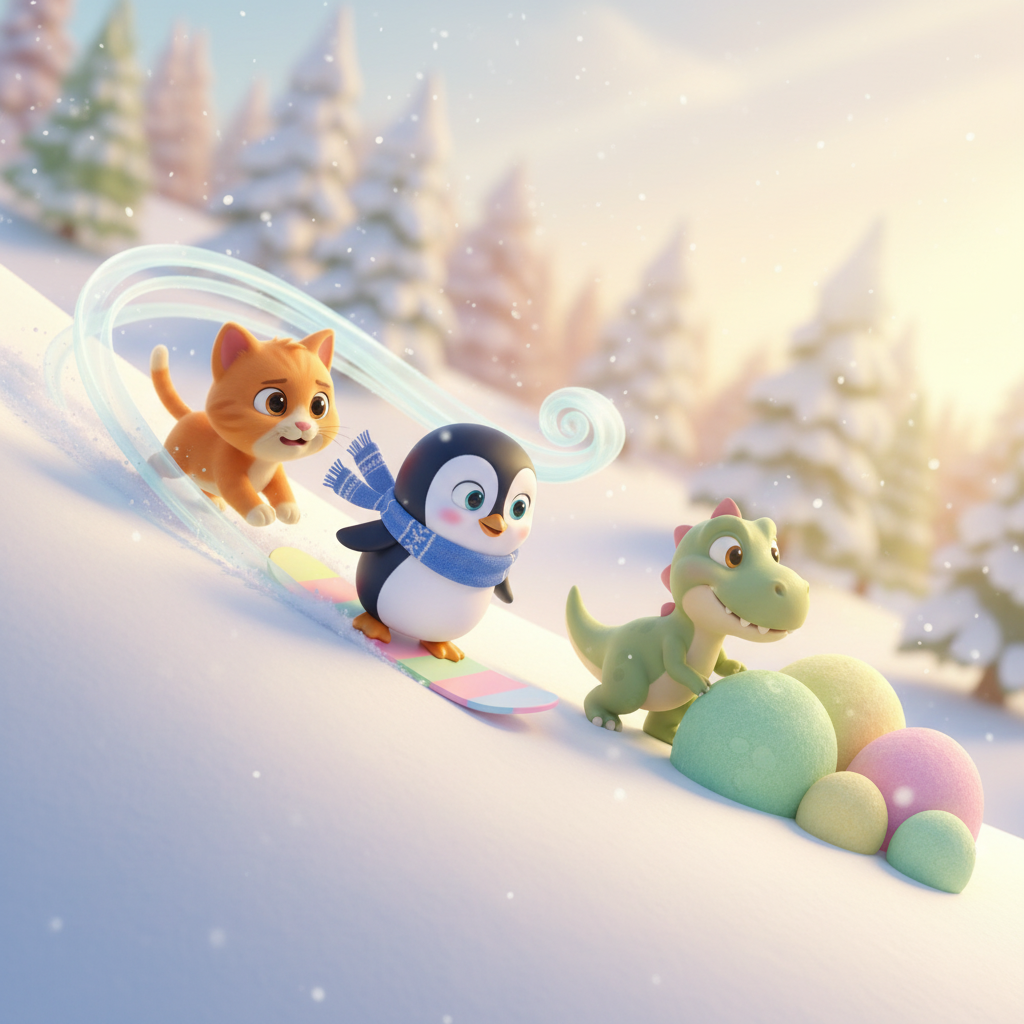
The magic of “Kitty and Dino Help Penny the Penguin” isn’t in the snowboarding tricks or the magical setting. It’s in what Kitty and Dino do: they see someone who’s hurting, they don’t judge her for being grumpy or distant, and they show up anyway. They practice with her. They wait for her. They cheer when she lands her trick.
That’s what friendship looks like to a 4-year-old. Not complicated adult social dynamics — just showing up, being patient, and caring about someone even when they’re having a hard time.
Practical Ways to Use Stories to Build Social Skills
Reading books about friendship is a start. But you can go further. Here are three ways parents use picture books to help kids develop social skills:
- Role-play the story. After reading about Kitty and Dino helping Penny, you can say: “What if we played that? You be Penny and I’ll be Kitty.” Playing out the story helps kids practice the behaviors — reaching out, being patient, encouraging — in a low-pressure way.
- Talk about the character’s feelings. Ask your child: “How do you think Penny felt when she was alone on the mountain?” This builds emotional vocabulary and helps kids recognize feelings in themselves and others — a foundational social skill.
- Connect the story to real situations. If your child is starting at a new school or daycare, frame it around a story: “Remember how Penny was nervous about the triple loop? But she tried anyway because her friends were there. What do you think will help you feel better on your first day?”
Why Shy Kids Especially Benefit From Friendship Stories
Shy children often know exactly what they should do socially — they want to join in, they want to play, they want to make friends — but something holds them back. Books give them a framework. They show that even characters who feel scared or unsure can take small steps toward connection.
Penny doesn’t wake up one day ready to tackle the triple loop. She practices. She falls. She gets frustrated. But she keeps going, partly because she has friends who believe in her even when she doesn’t believe in herself.
For shy kids, that’s a powerful message. You don’t have to be fearless to make friends. You just have to be willing to try, one small step at a time.
Building Social Confidence Through Stories
I wrote “Kitty and Dino Help Penny the Penguin” because I wanted my son to understand something important: feeling lonely doesn’t last forever, and you don’t have to fix it alone. Sometimes it takes a friend showing up — or a story that helps you see that showing up for yourself is possible too.
About a year after we started reading the book together, something shifted. My son stopped needing to be comforted about swimming class. He told me he could stay underwater without pinching his nose. He wanted to go.
I don’t think it was the book alone. But the book gave him something to hold onto — a story about a character who was scared, who felt alone, and who eventually found her confidence anyway.
At What Age Do Children Typically Start Making Friends?
Children begin showing interest in peer relationships around ages 3 to 4, even if the friendships look very different from adult friendships — short bursts of parallel play, temporary alliances, and quick conflicts that resolve just as fast. By age 5 or 6, most children have a clearer sense of who their friends are and start developing the social skills needed to maintain those relationships, like sharing, taking turns, and resolving disagreements. Kids who struggle with these skills at this age often benefit from explicit teaching through stories and guided play.
What Can I Do if My Child Is Too Shy to Make Friends?
Don’t force it — but do create opportunities. Sign your child up for structured activities where interaction happens naturally, like a small class or a playdate with one child at a time rather than a large group. Practice at home: read books about friendship, role-play different social situations, and name the feelings your child might be experiencing. The goal isn’t to change who your child is — it’s to build their confidence at their own pace, one small step at a time, the same way Penny the Penguin learned her snowboarding trick.
How Do Picture Books Help With Social-Emotional Development?
Picture books give children a safe way to experience social situations they’re not yet in — or that they’re afraid of. When a child hears about Penny feeling lonely and then watching her slowly rebuild her confidence with help from friends, that child is building an emotional framework for their own experiences. Studies on social-emotional learning consistently show that children who can name and understand their emotions have an easier time navigating social situations, and picture books are one of the most accessible tools parents have for building that emotional vocabulary.
Get the Book
“Kitty and Dino Help Penny the Penguin” is available on Amazon. It’s one of those books that works for bedtime, for difficult days, and for the moments when your child needs to hear that showing up — even when you’re scared — is what matters most.
Related Posts:
Bedtime Stories for Kids Who Feel Different — using stories to help children embrace their uniqueness
TL;DR Summary
Quick Takeaways:
- Children learn compassion through stories, not lectures
- This book shows kindness in action — characters help without asking why
- Perfect for ages 3-8 during the empathy development years
- Based on a real story that makes it emotionally authentic
From the Kitty & Dino bookshelf
Gentle picture books that bring this to life for ages 3–8: