
5 min read
Bedtime routine for kids ages 3–8 doesn’t have to be a battle. Some nights, bedtime can feel like a tiny marathon: one more sip of water, one more hug, one more “I forgot to tell you something important.” If you’re raising a child ages 3–8, you’ve probably lived it. The good news? A predictable routine doesn’t have to be rigid. It can be warm, magical, and full of connection.
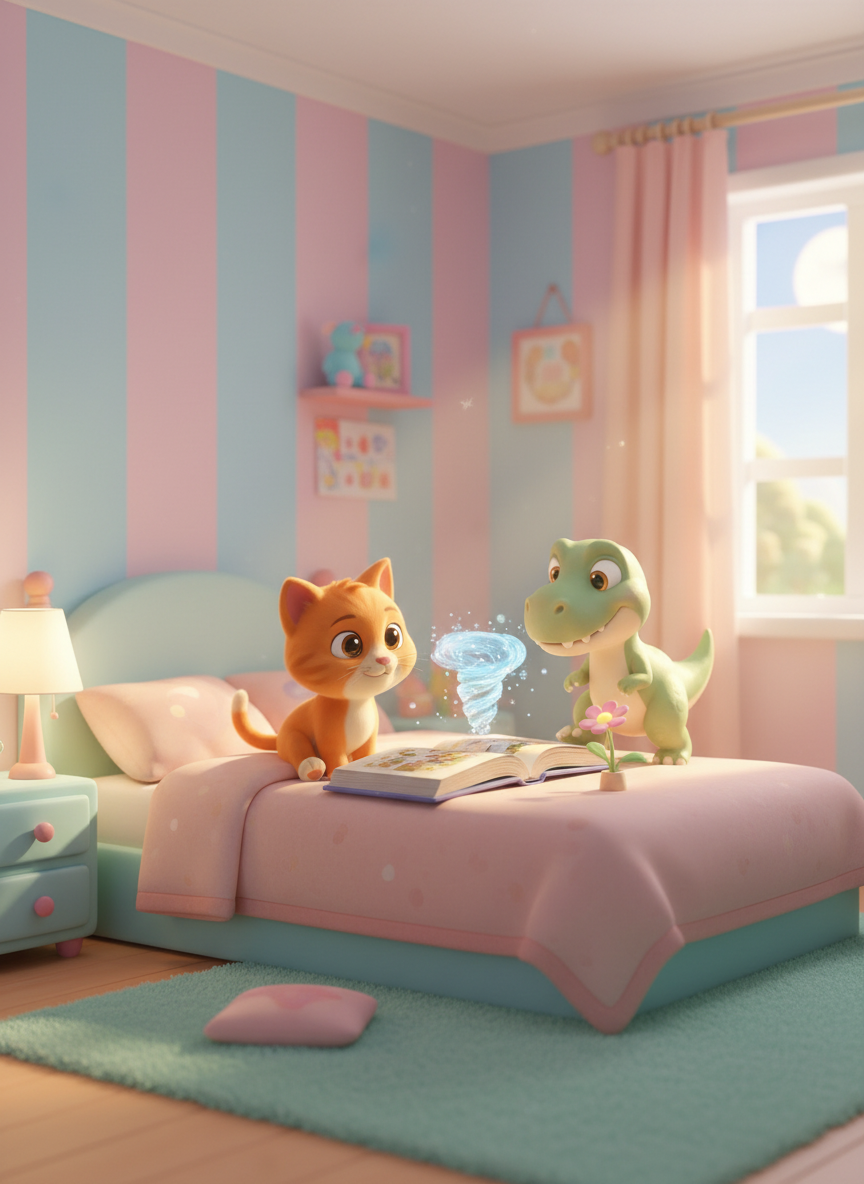
In our home, we like to imagine that Kitty (the red cat who guides gentle wind and water) and Dino (the green dinosaur who grows friendly plants) are part of the bedtime team. They don’t replace you—they simply turn everyday steps into a cozy story your child can follow.
New here? Start with the Kitty & Dino series hub for gentle bedtime stories and early reader adventures.
Why a bedtime routine works (especially for ages 3–8)
Kids feel safest when they know what’s coming next. A steady bedtime routine:
- Reduces power struggles because the routine becomes “the boss,” not you.
- Builds emotional regulation by slowing the day down in predictable steps.
- Creates connection—the kind kids remember when they’re older.
A 7-step bedtime routine for kids (ages 3–8) (15–30 minutes)
Pick a start time that fits your family, then follow these steps in the same order most nights. Consistency matters more than perfection.
1) The wind-down signal (2 minutes)
Give a clear cue that bedtime is beginning. You might say, “Kitty is sending a soft bedtime breeze,” and dim the lights. Try one calm song each night—same song, same time.
2) Pajamas + bathroom (5 minutes)
Keep it simple. A small choice helps: “Do you want the blue pajamas or the green ones?” Dino can “grow” a pretend little leaf on the bathroom mirror to remind everyone: pee, wash hands, brush teeth.
3) A tiny tidy (2–3 minutes)
Bedtime goes smoother when the room feels calm. Set a two-minute timer and do a quick “Dino Plant Pickup”—only books and toys that are on the floor. Stop when the timer ends.
4) Water & comfort check (2 minutes)
This is your chance to prevent the repeated requests later. Offer water once. Do a quick check: “Is your body comfy? Any itchy tags? Need one more hug?”
5) The gratitude seed (2 minutes)
Ask a gentle question: “What’s one kind thing you did today?” or “What’s one thing that made you smile?” You’re planting a “gratitude seed” before sleep.
6) Storytime (8–12 minutes)
Choose one or two short stories. If your child struggles to settle, keep the lights low and your voice steady. Let Kitty’s “water magic” be your pace—slow and smooth.
Story tip: pause once to ask a simple empathy question like, “How do you think the character felt?” Then return to reading. Too many questions can wake kids back up.
7) The goodnight script (1 minute)
End with the same few words every night. For example: “I love you. You are safe. Tomorrow we’ll have another adventure.” Kitty sends a “goodnight breeze,” Dino “plants” a tiny dream garden, and you leave the room calmly.
If you’re also gearing up for the first week of school, try this calm 5-day back-to-school prep plan to reduce morning stress.
Common bedtime challenges (and gentle fixes)
- “One more story!” Decide the number ahead of time: “Two stories, then sleep.” You can even show two fingers and let your child fold one down after each story.
- Big feelings at bedtime Keep a “worry box” by the bed. Let your child place one worry inside (real or pretend). Say, “We’ll open it tomorrow.”
- Kids who pop out of bed Walk them back with minimal talking. Each return is quiet and boring. Consistency wins.
Bedtime routine checklist (printable)
Screenshot this and keep it on your phone—or print it for the bedroom door.
- Wind-down signal (same cue every night)
- Pajamas + bathroom
- Tiny tidy (2–3 minutes)
- Water + comfort check
- Gratitude seed (one kind thing / one happy thing)
- Storytime (1–2 short stories)
- Goodnight script (same words, lights out)
When to start the routine (sample bedtime schedule by age)
Every child is different. This is a gentle starting point for families who want a consistent rhythm.
| Age | Suggested lights-out window | Suggested routine start |
|---|---|---|
| 3–4 | 7:00–8:00 pm | 6:30–7:30 pm |
| 5–6 | 7:30–8:30 pm | 7:00–8:00 pm |
| 7–8 | 8:00–9:00 pm | 7:30–8:30 pm |
If your child is coming down from heavy screen time, you may also like this parent story: how I got my son to love bedtime stories again.
Try a Kitty & Dino bedtime story tonight
If you want a story-world that reinforces kindness, empathy, and calm routines, explore the Magical Tales of Kitty & Dino picture books on Amazon.
Shop Kitty & Dino books on Amazon
FAQs
What is the best bedtime routine for a 4–7 year old?
Quick answer: A short, consistent sequence (bathroom, pajamas, calm tidy, one comfort check, story, same goodnight script) works best because kids know what to expect.
How long should bedtime routine take?
Quick answer: Most families do well with 15–30 minutes. Keep it shorter if your child gets wired, and longer if they need extra connection before sleep.
What if my child keeps getting out of bed?
Quick answer: Walk them back calmly with minimal talking. Keep it boring, consistent, and loving. The routine works when the boundary is predictable.
Should we do a bath every night?
Quick answer: Not necessarily. Some families do baths nightly; others do them 2–4 times a week. What matters most is the consistent order of steps.
What time should a 5-year-old go to bed?
Quick answer: Many 5-year-olds do best with lights out around 7:30–8:30 pm. Adjust based on wake time and your child’s mood the next day.
From the Kitty & Dino bookshelf
Gentle picture books that bring this to life for ages 3–8:


