
5 min read
Key Takeaways
- What do parents of book-loving kids do differently? They make reading fun, accessible, and part of daily life — not a chore.
- How do you raise a reader? Follow these 5 habits: let them choose, use voices, keep books accessible, discuss stories, and model reading yourself.
- At what age should I start? It’s never too early. Even babies benefit from hearing your voice and looking at pictures.
Some children reach for books like they’re cookies. Others act like you’re offering broccoli. What’s the difference? It’s not innate talent or “bookworm genes.” Parents who raise enthusiastic readers follow specific habits that make reading irresistible.
The good news: These habits aren’t complicated or time-consuming. They’re small shifts in how you approach books that add up to a lifelong love of reading.
Habit #1: Let Them Choose (Even When You Cringe)
Parents of book-loving kids know a secret: the book your child picks is always the right book. Even if it’s the same dinosaur book for the 47th time. Even if it has no educational value. Even if you’d rather read literally anything else.
When children choose their own books, they develop ownership over reading. They’re not just consuming content someone selected for them — they’re curating their own literary world. This agency transforms reading from “something done to them” to “something they do.“
Try this: Take your child to the library or bookstore and let them pick any three books. No veto power. Watch what they gravitate toward — it’ll tell you what they’re thinking about, worrying about, or dreaming about.
Habit #2: Use Silly Voices (Seriously, Don’t Skip This)
Reading in a monotone voice is like serving a gourmet meal on a paper plate. The content might be great, but the presentation underwhelms.
Parents who raise readers ham it up. They roar like lions. They squeak like mice. They pause dramatically before turning pages. They make reading an experience, not just an activity.
This isn’t just fun — it’s educational. Vocal variety helps children hear language patterns, understand dialogue, and stay engaged. A 2020 study found that children whose parents used expressive voices during storytime showed 23% better reading comprehension by age 6.
People Also Ask: I’m not good at voices. Will my child still love reading?
Absolutely. You don’t need to be a professional voice actor. Just vary your pitch, pace, and volume. Use a whisper for secret parts. Speed up during exciting moments. Your enthusiasm matters far more than your acting skills.
Habit #3: Keep Books Within Reach (And Screens Just Out of Reach)
Parents of book-loving kids create environments where books are easier to access than screens. They keep picture books in the playroom, the car, and yes, even the bathroom. They build cozy reading nooks. They place bedtime books right next to the bed.
Meanwhile, tablets and TVs require more effort to access. Screens aren’t banned — they’re just not the default.
The environmental design principle: Make the behavior you want the path of least resistance. When books are everywhere and screens require asking permission, guess what your child reaches for during downtime?
Habit #4: Talk About the Story (Not Just Read It)
This habit separates reading at children from reading with children. Parents who raise readers pause to ask questions, make predictions, and connect stories to real life.
Simple conversation starters:
- “How do you think the character feels right now?”
- “What would you do if you were in this story?”
- “Does this remind you of anything that happened to you?”
- “What do you think happens next?”
These discussions build comprehension, empathy, and critical thinking. They show your child that books aren’t just entertainment — they’re conversation starters.
People Also Ask: Does talking during reading interrupt the flow?
Not if you keep it brief. A question or two per book is plenty for young children. As they get older, the conversation naturally lengthens. Follow their cues — if they’re eager to turn the page, keep reading. If they want to linger, explore the story together.
Habit #5: Let Them See You Reading (Not Just on Your Phone)
Children are masterful observers. They notice when you spend hours scrolling on your phone but rarely crack open a physical book. They absorb what you value by watching what you do, not just what you say.
Parents who raise readers make their own reading visible. They read physical books and magazines. They talk about what they’re reading. They show that reading is something adults do for pleasure, not just something children do for school.
Try this: Set aside 15 minutes of “family reading time” where everyone reads their own book. Even pre-readers can flip through picture books. This parallel activity creates a household culture where reading is normal, expected, and enjoyed.
Book Recommendations for Young Readers
Looking for books that naturally encourage these habits? Here are some characteristics to seek out:
Books that invite voice variation: Look for stories with animal characters, different “speaking parts,” or rhythmic, musical language. These practically beg for silly voices.
Books that spark conversation: Choose stories with emotional depth, relatable situations, or gentle conflicts. These open doors to “what would you do?” discussions.
Books that make kids want to choose them: Follow their interests — dinosaurs, princesses, trucks, animals. The “right” book is the one they’re excited to open.
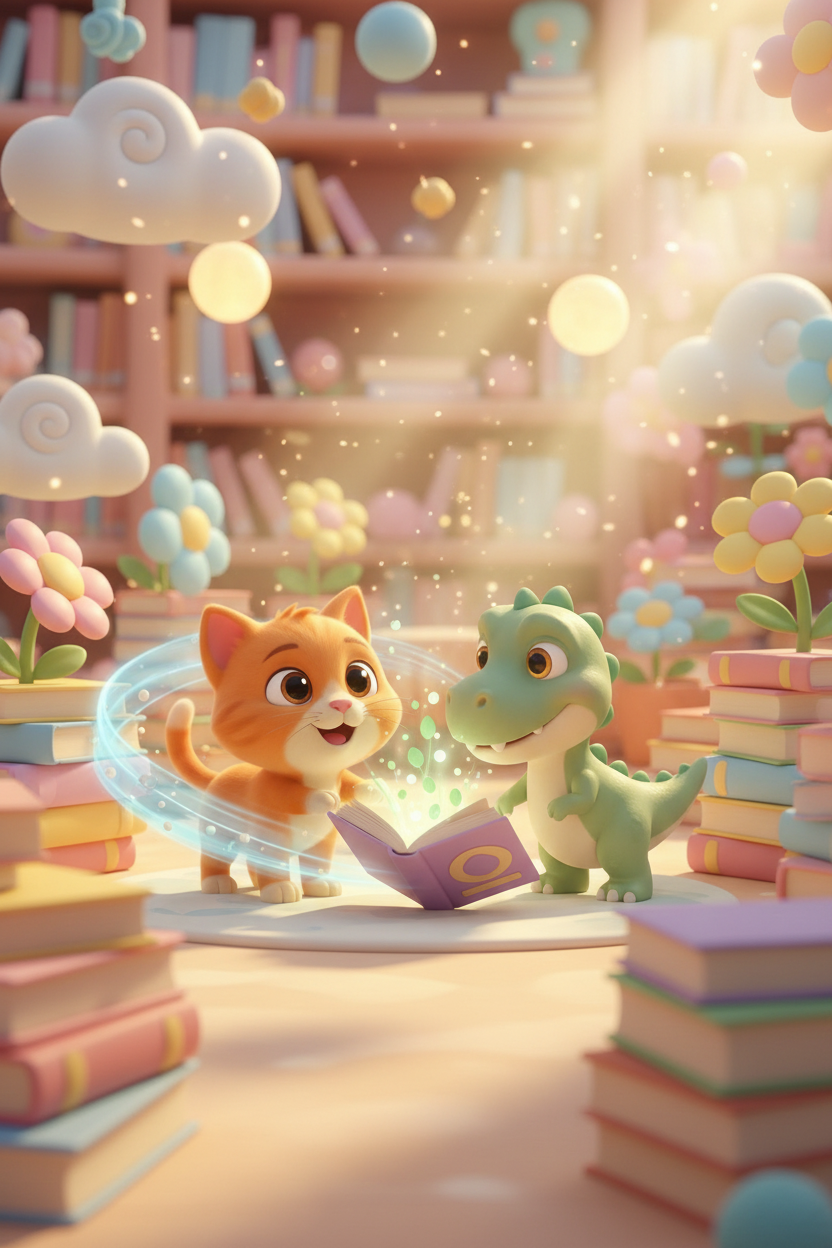
The Magical Tales of Kitty & Dino series hits all these marks. With lovable characters, gentle adventures, and artwork that rewards close looking, these stories naturally invite voice-acting, conversation, and repeat readings. They’re the kind of books children reach for again and again — building the foundation for a lifetime of loving to read.
TL;DR — 5 Habits That Raise Readers
From the Kitty & Dino bookshelf
Gentle picture books that bring this to life for ages 3–8:


