
9 min read
“You didn’t say sorry.” My son said that to me one evening, through tears, after I had spent a good few minutes explaining myself. He was right. I had explained everything except the one word he was waiting for.
If you’re trying to teach a child to say sorry, here’s the short answer. The picture books that help are the ones that pull apart saying the word and meaning it, and it helps to pick one by where your child is stuck: they won’t say it, they say it flat, it feels too hard, or they need to see someone do it well. That’s how this list is sorted.
Key Takeaways
- A real sorry has more in it than the word: knowing what went wrong, helping to fix it, and trying to do better.
- Pick the book by where your child is stuck: won’t say it, says it without meaning it, or finds it too hard.
- Grown-ups saying sorry to children teaches more than any book. When it’s our mistake, we shouldn’t hold back.
- Read these at bedtime, away from the argument, when nobody is waiting for an apology.
- Our own book on what comes after a mistake is Milo the Monkey, ages 3 to 8, free with Kindle Unlimited.
Why won’t my child say sorry?
Usually because the word has turned into a fight. Ask a cross four-year-old to say sorry right now, in front of everyone, and you’ve started a contest they don’t want to lose. Parents online describe the rest of it well. Some kids say it in the flattest voice they can manage. Some melt down and say “it’s too hard” over and over. And some learn that sorry is a ticket out of trouble. One parent put that last one bluntly: forcing it “teaches them that they can do what they want as long as they SAY they are sorry.”
Read on a calm night, a book shows what a real sorry looks like, so the next real one has something to stand on.
Picture books about saying sorry, sorted by where your child is stuck
When they say it without meaning it
Sorry! by Trudy Ludwig, illustrated by Maurie J. Manning. Jack makes friends with Charlie, who causes trouble and then tosses out a quick “sorry” to get out of it. Jack learns the difference between an empty apology and a real one. Best for the older end, around five and up.
I’m Sorry You Got Mad by Kyle Lukoff, illustrated by Julie Kwon. Jack hurts Zoe’s feelings and finds out an apology needs more than the words. The title alone will make any parent laugh, because we’ve all heard it.
How to Apologize by David LaRochelle, illustrated by Mike Wohnoutka. A funny how-to for when, why, and how to say sorry, with a popped balloon and a porcupine involved. It turns up on almost every list for good reason, and it’s the one I’d start with.

Kitty and Dino Help Milo the Monkey
When it feels too hard to say
I’m Sorry by Sam McBratney, illustrated by Jennifer Eachus. Two best friends fall out, and each one hopes the other will say sorry first. Gentle and short, good for three and four.
I’m Sorry by Michael Ian Black, illustrated by Debbie Ridpath Ohi. A potato hurts a flamingo’s feelings and has to work out how to apologize. Yes, a potato and a flamingo. Kids love it, and the awkwardness is exactly right.
When they were the one who got hurt, and then slip up
Horrible Bear! by Ame Dyckman, illustrated by Zachariah OHora. A girl’s kite gets crushed by a sleeping bear, and she is furious. Then she makes a mistake of her own, and finds out what “I’m sorry” can do. Lovely for the child who is very good at spotting other people’s mistakes.
When a bad mood is spreading
Sorry (Really Sorry) by Joanna Cotler, illustrated by Harry Bliss. Cow’s grumpy mood passes from animal to animal across the farm, until one kind act turns it around. Good for showing how one unkind moment travels, and how one sorry can stop it.
The night my son taught me to say it
It had been a bad day for him. He had an evening class and was tired, and I think he’d had a small argument with his best friend at school. So he was already low when I took him to wash his face before bed. Reaching for the water cup, my hand brushed his ear by accident. I don’t think it hurt much. But tired and upset as he was, he burst into tears and said I’d hurt his ear.
I explained. It was an accident, my hand slipped when I went for the cup, I didn’t mean it. He kept crying. His mom came in to ask what was wrong, and he started all over again.
After a while I asked him, didn’t I tell you again and again that it was an accident? And he said, “You didn’t say sorry.”
That was it. I had spent all that time explaining and never said the word. I think part of it was the day he’d had. Maybe his friend hadn’t said sorry to him that day either. But mostly, he was right.
When we say sorry, what we really mean is that a mistake happened and we regret it. Without that word, sometimes nothing else works. Parents skip it too, sometimes out of pride, and in my case that evening simply because I forgot. So here’s what I took from it. When the mistake is ours, we shouldn’t hesitate to say sorry to our children. Most problems with a child settle once you do. And when they see us do it, they learn to say it when the mistake is theirs.
Our book on what comes after a mistake
This one is ours, so weigh it that way. One honest note before you buy it: Milo never actually says the word “sorry.” What the book shows is everything else an apology is for.
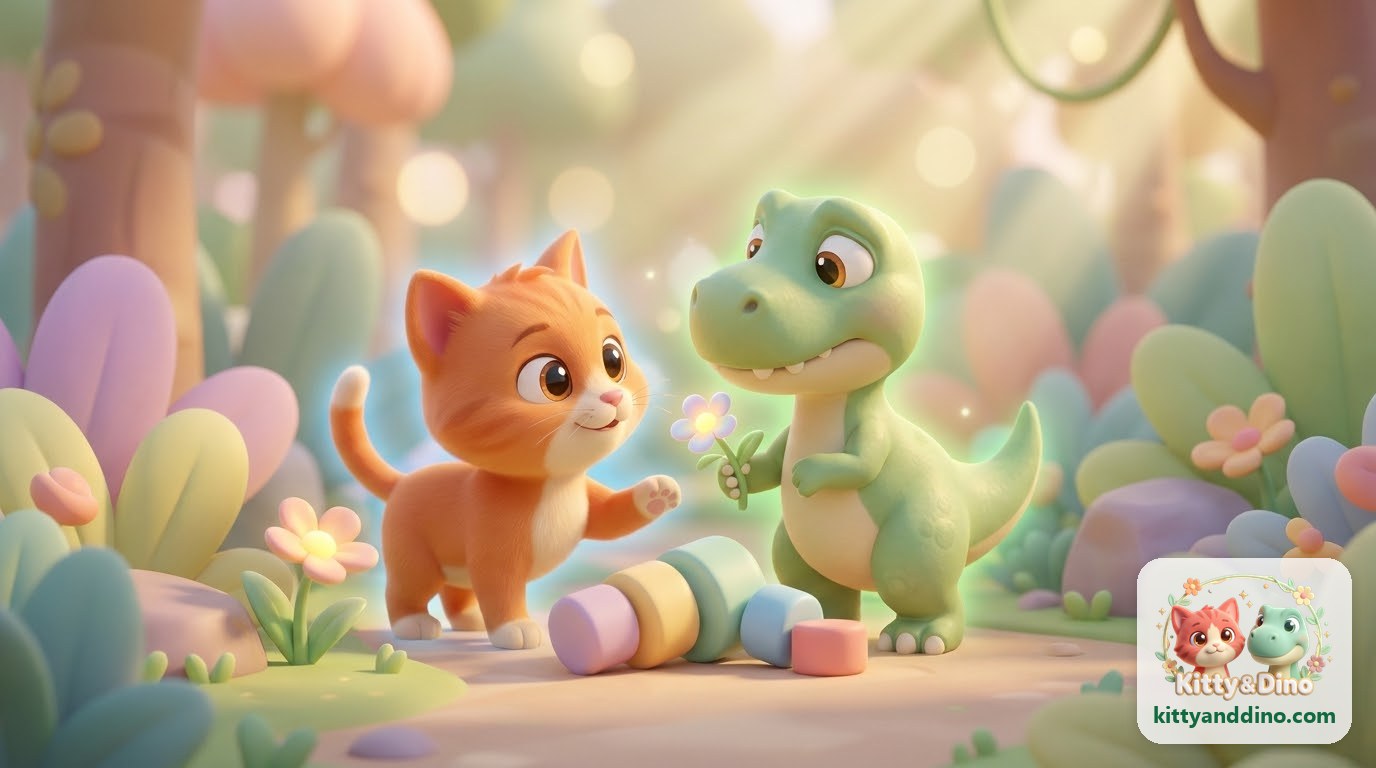
Kitty and Dino Help Milo the Monkey. Milo’s newest fruit juice has magic he didn’t expect: anything it touches floats away. He spills it, and soon half the jungle is drifting into the sky, Mrs. Turtle included. When Kitty and Dino find him, he owns it straight away: “I made a big mistake with my fruit tests!” He doesn’t blame anyone. He helps fix it, and it’s the first fruit he made that turns out to be the answer. By morning Mrs. Turtle is back home on the ground, and Milo says that trying new things is good, but he should be more careful next time. Owning it, helping to fix it, and doing better next time. That’s a sorry, even without the word, and it gives you a lovely opening to ask your child what Milo could have said. Free with Kindle Unlimited, or get it on Amazon.
Kitty and Dino Help Milo the Monkey
What helps more than “Say sorry!”
Say it to them first. When you get something wrong with your child, say sorry and say what for. It’s the most direct way they’ll learn what a real one sounds like.
Parents in the threads I read kept coming back to two more things. Name what happened before you ask for the word. “Your sister is crying because the tower got knocked down” gives a young child something to be sorry about. A bare “say sorry” gives them a script.
Leave room for the doing part. Helping rebuild the tower, or bringing a cold cloth, is often a truer apology from a three-year-old than the word is. The words can come a little later.
If someone else is hurting, our list of what to say when a child feels left out might help too, and books for siblings who fight covers a lot of the moments where sorry gets asked for. If the trouble started with a fib, try picture books about honesty and owning up.
FAQ: Picture Books About Saying Sorry
From the Kitty & Dino bookshelf
Gentle picture books about mistakes and making things right, for ages 3–8:
Read free with Kindle Unlimited → or buy it on Amazon


Pingback: Picture Books for a Child Who Gives Up Easily (Ages 3-8) | Kitty & Dino