Key Takeaways
Q: What’s the best way to teach empathy to a 4-year-old?
A: Bedtime stories that show characters helping others — like Gordon the Rooster
Q: How do you explain “respecting all life” to a child?
A: Through magical stories where even vegetables deserve kindness
Q: Can a rooster teach my child about compassion?
A: Yes — Gordon shows kids that every creature, no matter how small, deserves care
The fastest way to teach empathy to young children is through stories where characters face real problems and choose kindness. That’s exactly why I wrote Gordon the Rooster — a bedtime story about a rescued rooster whose magical garden teaches children that every life matters.
Why Bedtime Stories Work for Teaching Empathy
Children ages 3-8 learn best through narrative. They don’t absorb abstract concepts like “be kind” — they absorb moments. When they hear about Gordon the Rooster being rescued, they feel it. The magical garden where vegetables walk and play makes the lesson memorable, not preachy.
Research backs this up. A study in the Journal of Children and Media found that kids who regularly hear storybooks with prosocial themes show more empathetic behavior in real life. The key is consistency — a nightly story compounds over months.
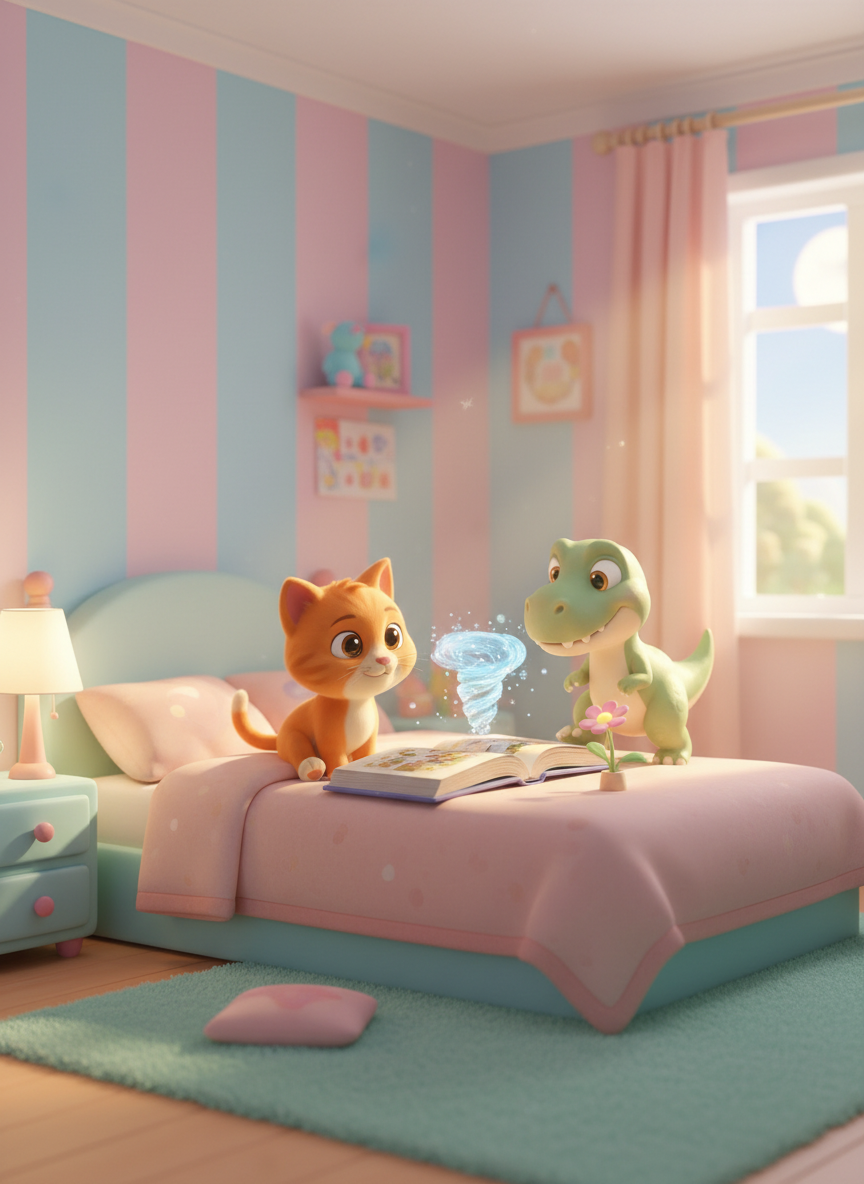
Gordon the Rooster works because it’s not a lecture. It’s a world. Kitty and Dino don’t tell Gordon to be brave — they show him through action. And that’s what sticks with a four-year-old.
What Age Should You Start Teaching Kindness?
Most child development experts suggest starting empathy education around age 3. That’s when children begin understanding that other people have feelings separate from their own. Bedtime stories are perfect for this because they create a calm, connected moment.
With Gordon the Rooster, even toddlers absorb the basics: Gordon was scared, his friends helped him, he felt safe. By age 5 or 6, kids pick up the deeper thread — that Gordon was rescued from danger, and that every life has value.
The beauty of this book is it grows with your child. A 3-year-old remembers the talking carrots. A 6-year-old understands why Gordon needed rescuing in the first place.
How Can Parents Extend the Lesson Beyond the Book?
After reading, ask simple questions: “How do you think Gordon felt when he was scared?” or “What would you do if you saw someone lonely at the park?” These conversations turn storytime into empathy practice.
You can also point out real moments during the day — “That was kind, how you shared your snack.” Connecting the book’s themes to actual behavior reinforces the lesson.
And if you have a backyard or a garden, plant something together. Gordon’s story is rooted in the earth. Tending to a plant alongside your child gives the empathy lesson a physical reality to touch and care for.
If you want to try the book, you can find Gordon the Rooster on Amazon here. It’s part of the Magical Tales of Kitty & Dino series.
You can also explore more stories at kittyanddino.com — where Kitty, Dino, and their friends go on adventures that teach without preaching.
TL;DR
- Bedtime stories are the #1 tool for teaching empathy to ages 3-7
- Gordon the Rooster uses magical realism to make the lesson stick without being preachy
- The real backstory (a rescued rooster) makes it authentic and memorable
- The book grows with your child — from simple story to deeper meaning
❓ People Also Ask
What is this article about?
This guide provides practical advice on 5 ways to teach your child empathy through bedtime stories.
Who should read this?
Parents of children ages 3-8 who want to foster a love of reading and learning.
How can I apply these tips?
Start with one small change to your routine and build from there consistently.
Related Articles
Explore more helpful content: