6 min read
Why Kids Need Imaginary Animal Friends: The Hidden Benefits of Magical Companions
Every child needs someone in their corner — even if that someone has fur, scales, or happens to be made of imagination.
Imaginary animal friends have been part of childhood for generations. They’re not a sign of confusion or escape. They’re a healthy, important tool children use to process big feelings, practice social skills, and build the confidence they’ll need for real friendships.
Kitty and Dino Help Penny the Penguin understands this deeply. The story gives children two magical companions who model what real friendship looks like — presence, patience, and unwavering support. Kids don’t just read about Kitty and Dino. They spend time with them. And that time matters.
What Imaginary Animal Friends Actually Do for Children
Research on imaginary companions has grown significantly over the past two decades. Studies show that children who engage with imaginary friends — whether invisible playmates, stuffed animals with personalities, or characters from stories — often develop stronger emotional regulation and narrative skills.
Here’s what imaginary animal friends provide:
A safe place to feel big emotions. Children can be scared, angry, or sad through their imaginary friends without feeling judged. The emotion gets felt and processed in a contained way.
Practice for real relationships. Negotiating with a stuffed dinosaur or comforting a worried storybook cat gives children rehearsal time for actual social situations.
A sense of control. When real life feels overwhelming, imaginary friends offer a space where the child decides what happens next.
Language development. Children often speak more freely and complexly with imaginary companions than they do in direct conversation with adults.
Why Kitty and Dino Work as Imaginary Friends
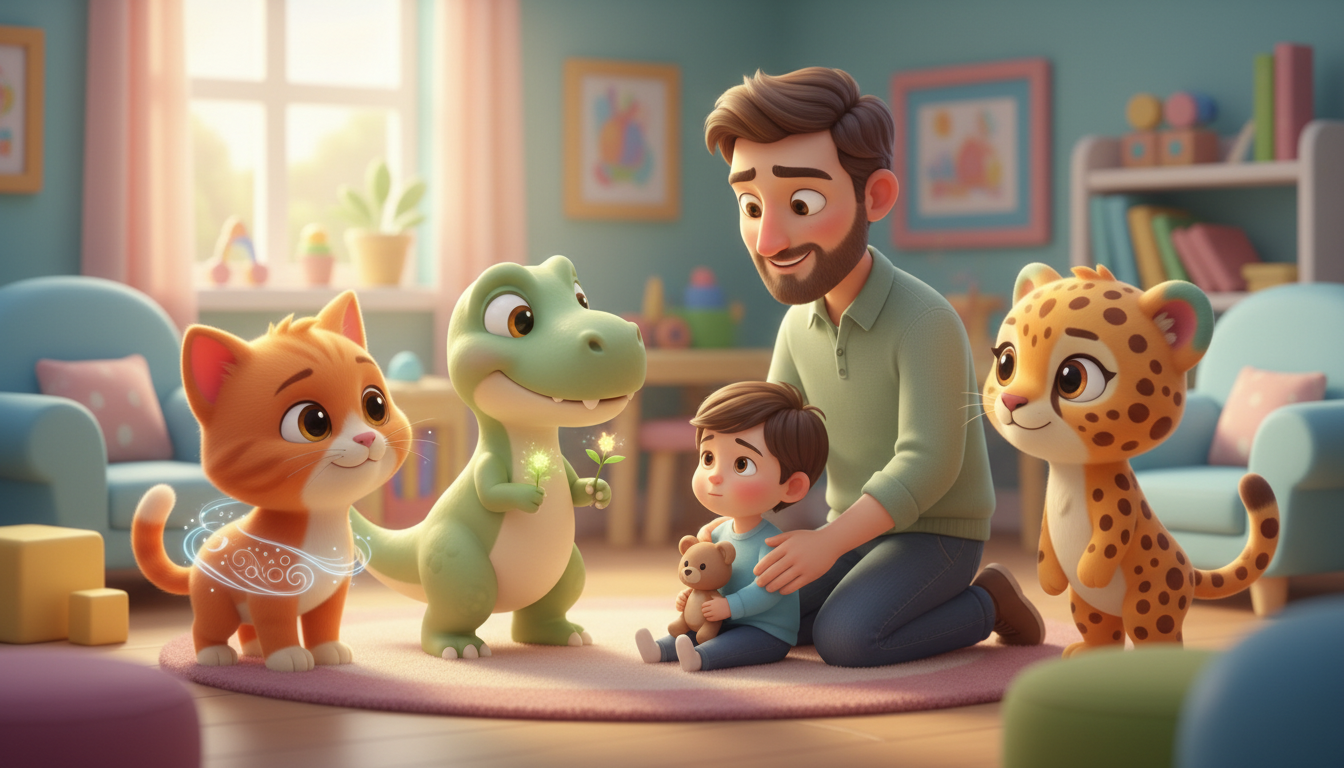
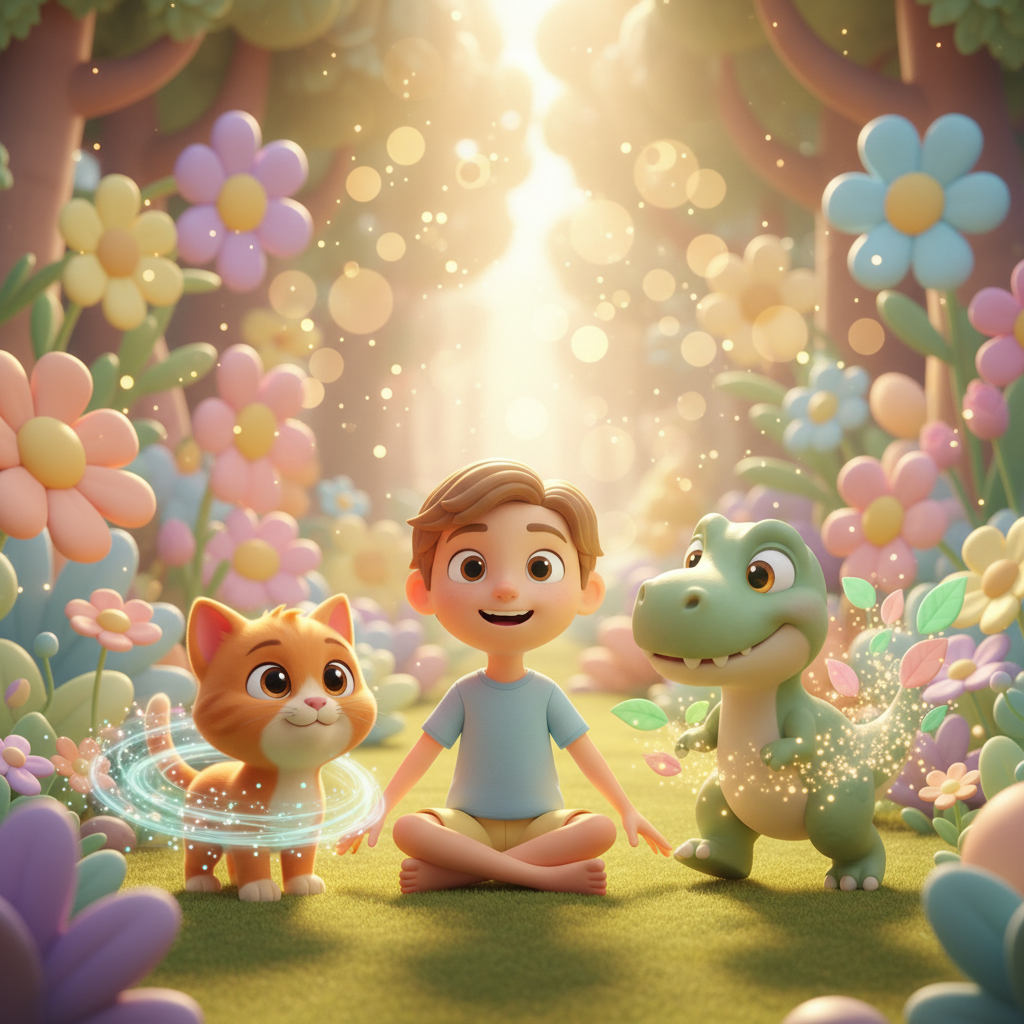
Kitty and Dino aren’t trying to be real. They’re clearly magical — a cat with wind powers, a dinosaur who grows plants. That fantasy element is exactly why they work so well.
Children know Kitty and Dino are story characters. But they also feel real enough to matter. When Kitty rides alongside Penny during practice runs, children feel that steadiness. When Dino grows soft bushes for landing, children understand that safety matters.
The magic makes the emotions safe to explore. The friendship makes the lessons stick.
Penny, the penguin who lost her confidence after a crash, finds two friends who don’t judge her fear. They don’t tell her to “get over it.” They stay with her while she finds her way back. That’s the kind of friendship children need to see — both in stories and eventually in their own lives.
The Bridge Between Imaginary and Real
Imaginary animal friends aren’t meant to replace human connection. They’re a bridge to it.
Children who spend time with storybook friends like Kitty and Dino practice:
- Noticing when someone else is struggling
- Offering help without taking over
- Being patient when progress is slow
- Celebrating someone else’s success
- Showing up consistently, even when it’s not exciting
These are the same skills they’ll use with real friends. The imaginary ones give them a risk-free environment to practice.
Penny’s story ends with her landing the Triple Loop — not because Kitty and Dino did it for her, but because they were there while she did it herself. Children absorb that message: friends support, but you still do the work. That’s a healthy understanding of relationships.
What Parents Should Know
If your child talks about Kitty and Dino like they’re real, that’s developmentally appropriate. If they pretend to have their own magical animal friend, that’s healthy imagination at work.
Questions you might hear — and how to respond:
“Can Kitty really help me if I’m scared?” “Kitty is a story friend who shows us how to be brave. When you’re scared, you can remember how Kitty helped Penny, and that might help you feel braver too.”
“Why does Dino grow plants?” “Dino’s magic helps him take care of his friends. In real life, we help our friends in our own ways — maybe by listening, or sharing, or just staying nearby.”
“I wish I had a friend like Kitty.” “You can be a friend like Kitty. Notice when someone needs help. Stay with them while they try something hard. That’s what Kitty does.”
Frequently Asked Questions
Are imaginary friends a sign of loneliness?
No. Research shows that children with imaginary friends are often socially skilled and creative. Imaginary companions are a normal part of healthy development, not a sign of isolation.
At what age do imaginary friends typically appear?
Imaginary friends often emerge between ages 3 and 8 — exactly the age range for picture books like Penny the Penguin. This is when children’s imagination and social understanding are developing rapidly.
Should parents worry if their child has an imaginary animal friend?
Generally, no. Imaginary friends support language development, emotional regulation, and social practice. Only be concerned if the imaginary world seems to replace all real interaction or causes significant distress.
How do storybook characters like Kitty and Dino help?
They give children models of healthy friendship to observe and internalize. Children learn what supportive friends do — and what they don’t do — by watching story characters navigate challenges together.
Can reading about magical friends help shy children?
Yes. Story characters provide social rehearsal in a safe context. Shy children can “practice” friendship by observing Kitty and Dino, then gradually apply those lessons to their own interactions.
The Story That Gives Children Friendship Models
I wrote Kitty and Dino Help Penny the Penguin for my own son — a child who needed to see what patient, steady friendship looked like. The book gives young readers two magical companions who show up, stay present, and help without taking over.
For children ages 3-8, this is exactly the kind of story that feeds healthy imagination. It gives them friends to spend time with on the page, lessons to carry into real life, and the quiet understanding that being seen and supported is what friendship is actually about.
Imaginary friends matter. They prepare children for real ones. And stories like Penny’s give them the best possible examples to learn from.
Give Your Child Friends Worth Imagining
Kitty and Dino Help Penny the Penguin is a picture book for ages 3-8 that gives children magical companions to learn from — and through. Join Kitty, Dino, and Penny on a snowboarding adventure that teaches children about courage, practice, and the friends who make both possible.
Order Penny the Penguin on Amazon →
Discover more magical friendships in the complete Kitty & Dino collection.
TL;DR Summary
Quick Takeaways:
- Children learn compassion through stories, not lectures
- This book shows kindness in action — characters help without asking why
- Perfect for ages 3-8 during the empathy development years
- Based on a real story that makes it emotionally authentic
From the Kitty & Dino bookshelf
Gentle picture books that bring this to life for ages 3–8: