
10 min read
The best picture books about giving show a child, or a bear, or a crow, handing over something that matters to them, and how good it feels afterward. Here are ten for ages 3 to 8, sorted by what’s going on at your house right now: the gimme stage, a toy pile that’s taking over before Christmas, a child who wants to make something for someone, or one who’s old enough for a bigger conversation. Each book comes with one small question to ask at lights-out. Two of my own are at the end, clearly labeled.
One day my wife and I took our son to a children’s orphanage to hand out gifts. A boy the same age as my son had arrived there that very day. He was alone, and he was crying. It was the first time my son had seen anything like that. He was a little shocked, and then he handed that boy his own toy.
I think about that every December. You can’t really explain giving to a four-year-old. You can show it, though, and a good story is one of the easiest ways to do that.
Key Takeaways
- The gimme stage is normal at three and four. Giving is something kids learn by seeing it, a little at a time.
- Pick the book by what’s happening this week: a toy they won’t let go of, a crowded toy shelf, birthday money burning a hole in their pocket.
- Two of the most-listed giving books deal with poverty and a house fire. Beautiful, and better for a five- or six-year-old in the daytime than a sleepy three-year-old.
- Ask one question after the book and stop. The story already made the point.
- The last two books on this page are mine. The ten before them are not.
Is the “gimme stage” normal?
Yes. If your preschooler’s Christmas list keeps growing, you’re in good company. One parent on Reddit put it plainly: “The gimme gimmes are pretty par for the course for this age!” Wanting things comes easily at three or four. Giving takes practice, and most of that practice is watching someone else do it first.
It doesn’t help when your child is the only grandchild on both sides and the presents pile up by the box. That one comes up in parent threads year after year. A book won’t clear the shelf for you. It can make passing a toy on feel good.
Picture books about giving, sorted by what’s going on
| Book | Good when | Bedtime tone |
|---|---|---|
| Harold Loves His Woolly Hat | They won’t let go of a favorite thing | Gentle |
| Nila’s Perfect Coat | They have birthday money of their own | Gentle |
| The Gift of Nothing | They have plenty and still want more | Gentle |
| The Berenstain Bears Think of Those in Need | The toy pile is taking over | Gentle |
| Thank You, Omu! | Sharing is hard this week | Gentle |
| Give | Your youngest won’t sit for a long story | Gentle, nearly wordless |
| The Mitten Tree | They want to make something for someone | Gentle |
| A Hat for Mrs. Goldman | Same, and you have some yarn | Gentle |
| What Is Given from the Heart | They’re ready to hear that some families have very little | Heavier (a house fire), best for 5 and up |
| Last Stop on Market Street | They’ve started asking “why don’t we have…?” | Thoughtful, best for 5 and up |
When it’s hard to give up something they love
Harold Loves His Woolly Hat by Vern Kousky. Harold loves his woolly hat. Then a crow takes it, and Harold finds out the crow’s family needed it more than he did. A good one for the child who clutches every toy when a cousin visits.
Ask after: “Was it hard for Harold? How did he feel at the end?”
Nila’s Perfect Coat by Norene Paulson, illustrated by Maria Mola. Nila spots a coat she loves at a thrift store and buys it with her own birthday money. Then she gives it to a classmate who doesn’t have a coat at all. Six-year-olds with a piggy bank will have opinions about this one.
Ask after: “What would you have done with the birthday money?”
When they have plenty and still want more
The Gift of Nothing by Patrick McDonnell. Mooch wants to give his best friend a present. But what do you give someone who already has everything? The answer turns out to be the friendship itself. Good on a night when the toy catalog came in the mail.
Ask after: “What could you give someone that isn’t a thing?”
When the toy pile is taking over
The Berenstain Bears Think of Those in Need by Stan and Jan Berenstain. The Bear family realizes they have far too much stuff. They give some of it away, along with some of their time. A good one to read the night before a toy sort.
A lot of families do a toy sort before Christmas. One parent described asking the kids to donate “5 small toys (like small toy cars, for example) or 1 big toy every day from Halloween to Christmas.” That’s ambitious. One bag, picked by your child, counts.
Ask after: “Which of your toys do you think another kid would love?”
When sharing is hard this week
Thank You, Omu! by Oge Mora. Omu cooks a big pot of stew, and the smell brings her neighbors one by one for a taste. She shares until the pot is empty and there’s nothing left for her. Then the neighbors come back. It’s a lovely read-aloud if you give each neighbor a voice.
Ask after: “How did the neighbors say thank you?”
For your youngest
Give by Jen Arena, illustrated by Rahele Jomepour Bell. A nearly wordless book of small kind acts, a lost ribbon replaced, a scarf offered, each one passing along to someone new. With so few words, your child can tell the story with you.
Ask after: “Who got something nice on this page?”
When they want to make something for someone
The Mitten Tree by Candace Christiansen, illustrated by Elaine Greenstein. An older woman notices a boy at the bus stop with no mittens. She knits pairs and hangs them on a tree for the neighborhood children. A wintry one for a cold night.
Ask after: “Who could we make something for?”
A Hat for Mrs. Goldman by Michelle Edwards, illustrated by G. Brian Karas. Mrs. Goldman knits hats for everyone in the neighborhood, but she doesn’t have one herself. So Sophia learns to knit to make her one. The book includes a simple knitting how-to if your child wants to try.
Ask after: “Who makes things for everyone else in our family?”
When they’re old enough for a bigger conversation
What Is Given from the Heart by Patricia C. McKissack, illustrated by April Harrison. James Otis and his mother have very little, and they still find something to give a family who lost everything in a fire. It turns up on almost every list of giving books, and it’s heavy for a three-year-old at lights-out. I’d read it in the afternoon with a five- or six-year-old.
Last Stop on Market Street by Matt de la Peña, illustrated by Christian Robinson. Every Sunday after church, CJ rides the bus across town with his grandma and wonders why they don’t have a car like his friends. By the last stop, they’re serving a meal to people in their community. Expect questions afterward.
Ask after either one: “What did they give, even though they didn’t have much?”
How do you teach a child to give without lecturing?
Mostly by doing it next to them. A few things that keep it light:
- Read the book, ask one question, and stop there. You don’t need to say the lesson out loud.
- Keep it small and concrete. One toy, one drawing, one plate of cookies for the neighbor.
- Let your child choose what to give. A toy they picked themselves is a real gift.
- Hand it over together, so they get to see the other person’s face.
From our own shelf
These two are mine, so weigh them that way. Each is one bedtime story for ages 3 to 8, short enough for a school night.
The first has giving right in the story. Thumper the Rabbit waits all day for the moonlight his wish flowers need, and when his wish finally comes, he doesn’t keep it for himself.
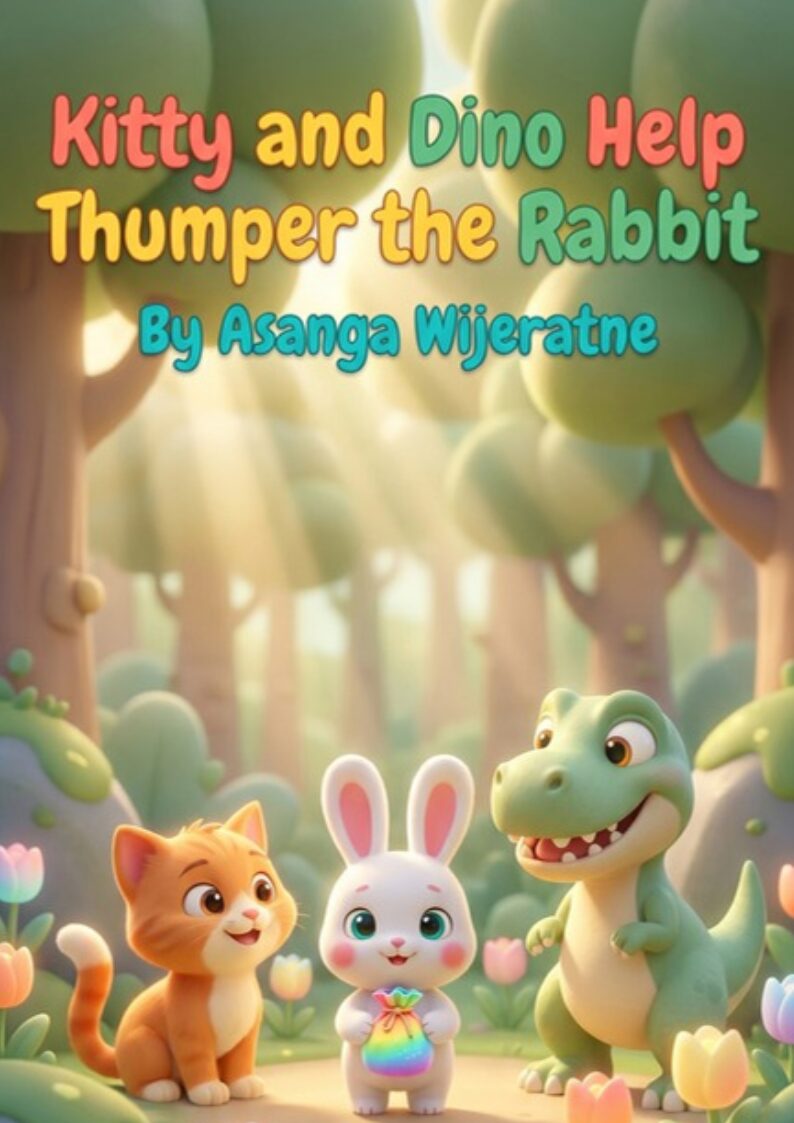
Kitty and Dino Help Thumper the Rabbit
The second came out of that orphanage visit. Like the boy we met that day, Sprinkles is alone and needs friends. The giving in this one is the unwrapped kind: showing up for someone who’s new. I wrote more about that day in the story behind Sprinkles.
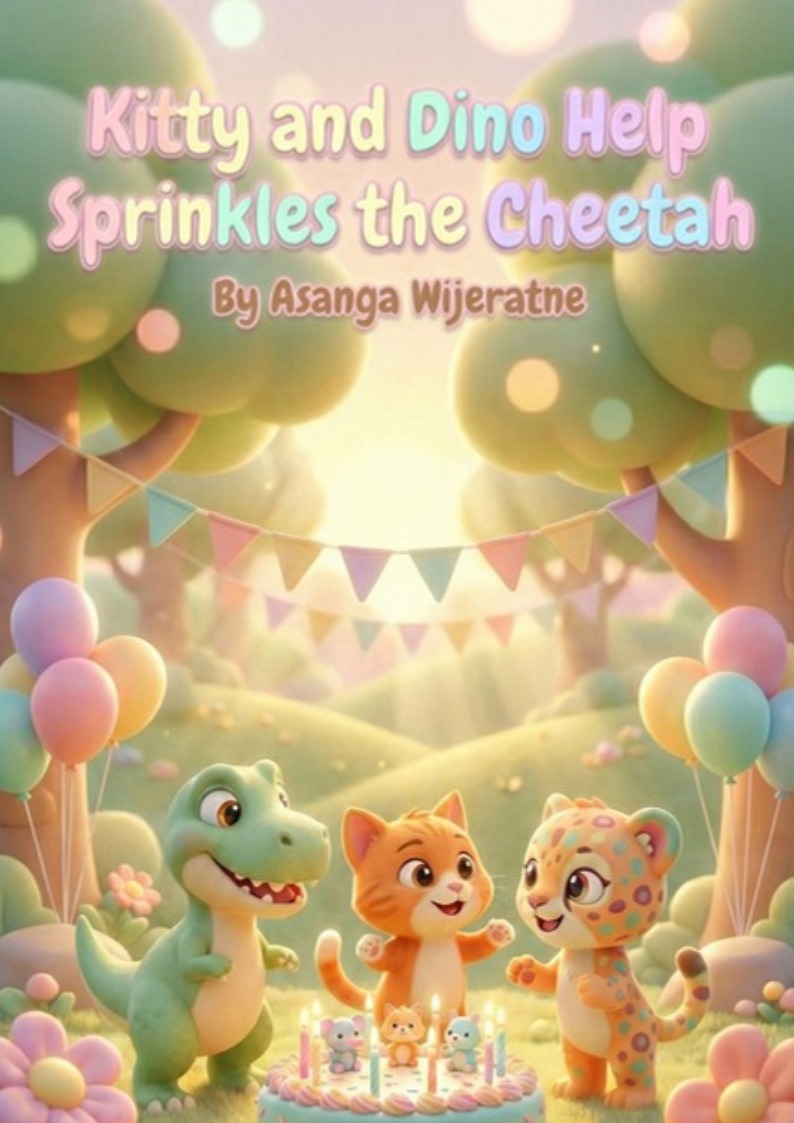
Kitty and Dino Help Sprinkles the Cheetah
Every Kitty and Dino book is also free for Kindle Unlimited members. If you’re shopping for the holidays, here are our book gifts for kids, and if you’d like one story a night all December, here’s how to make a book advent calendar.
Picture books about giving: FAQ
What are good picture books about giving for kids?
Harold Loves His Woolly Hat, Nila’s Perfect Coat, The Gift of Nothing, The Berenstain Bears Think of Those in Need, Thank You, Omu!, Give, The Mitten Tree, A Hat for Mrs. Goldman, What Is Given from the Heart, and Last Stop on Market Street. Pick by what your child is going through right now.
Are there Christmas books about giving?
Yes. What Is Given from the Heart turns up on most holiday giving lists. For older kids, around 6 and up, Silver Packages: An Appalachian Christmas Story by Cynthia Rylant follows a boy who waits for gifts from a Christmas train each year and later grows up to give back.
Are books about giving the same as books about sharing?
They overlap. Sharing usually means taking turns with something you keep. Giving means it goes to someone else for good. Thank You, Omu! sits right in between, which makes it a nice place to start. If the hard part right now is a little one who won’t share at all, here are our books for a child who won’t share.
How do I talk about giving without making my child feel bad for wanting things?
Wanting things is normal, so leave your child’s wish list out of it. Talk about how the character felt when they gave something away. That’s usually enough.

