
14 min read
“I can never go to school again, Daddy.” My son said that almost every afternoon for the first two or three months of Upper Nursery, on the drive home.
If you’re hearing your own version of it, here’s the short answer. The picture book that helps depends on why your child doesn’t want to go. Usually it’s one of a handful of reasons: missing you, coming back after a long break, a new class or teacher, a worry they can’t explain, or a hard time with the other kids. Work out the reason first, then pick the book. That’s how this list is sorted.
Key Takeaways
- “I don’t want to go” is usually a feeling your child can’t name yet. Naming it for them is often half the fix.
- Pick the book by the reason: missing you, a long break, something new, a worry, or the other kids.
- Read it at bedtime the night before, not in the car on the way. A story needs a calm minute to work.
- If the refusal lasts for weeks, or comes with tummy aches most mornings, talk to the teacher and your pediatrician first. Books are for the ordinary hard mornings.
- Our own book for the child who dreads one particular class is Penny the Penguin, ages 3 to 8, free with Kindle Unlimited.
Why doesn’t my child want to go to school?
A small child feels “I don’t want to go” long before they know what’s behind it. They just know mornings feel bad. So when parents talk about this online, you see the same few reasons come up again and again:
- Missing you. “I want to stay with you.”
- Coming back after a break. A holiday, a sick week, sometimes just a long weekend.
- Something new. A new class, a new teacher, a new room, friends split up.
- A worry they can’t explain. The what-ifs, or a plain “I don’t know.”
- The other kids. Someone was mean, or nobody played with them.
- “It’s boring.” Often this means there’s less time to play than there used to be.
Most of these have a good book. Here they are, sorted the same way.
Picture books sorted by why your child doesn’t want to go
When they want to stay with you
The Kissing Hand by Audrey Penn. Chester Raccoon doesn’t want to leave his mother for his first day of school, so she kisses the palm of his hand. Whenever he misses her, he can press it to his cheek. One mom said online that she reads it to her daughter before bed every school night, and I can see why. It gives a child something to hold on to that fits in a pocket.
Llama Llama Misses Mama by Anna Dewdney. Llama Llama is fine at preschool right up until Mama leaves for work. Then he starts to wonder if she’s coming back, and his new classmates show him that school can be fun. Short and rhyming, so it suits the youngest end of this list.
Owl Babies by Martin Waddell, illustrated by Patrick Benson. Three baby owls wake up and their mother is gone. They wait, and worry, and she comes back. That’s the whole book, and that’s exactly the point for a child who isn’t sure you’ll be there at pickup.
The Invisible String by Patrice Karst. Not a school book. A mother tells her children they’re always connected by a string made of love, even when they’re apart. It suits the child whose worry is really about being away from you, wherever that is. If a parent is away for longer than a school day, our list of books for when a parent is away fits better.
Kitty and Dino Help Penny the Penguin
When it’s the first morning back after a long break
This is the one I understand best. My son once had about a month at home, and for two days before school started again he kept saying he didn’t want to go. He couldn’t say why. He just didn’t.
So I told him what I think is true for all of us. After a few weeks at home, anyone feels lazy about going back, and it’s hard to get up in the morning. Even grown-ups feel it. Once that feeling had a name, he got ready and went to school. It really was that quick.
The Little Bear by Nicola Killen. At the end of summer Ollie isn’t sure about going back to school. The night before, she dreams of a woodland school full of friendly animals, and she wakes up wanting to go. It was the only book I found that’s about going back rather than starting, which is odd, because going back is when most of the “I don’t want to” happens.
When everything is new: the class, the teacher, the friends
My son has just started Grade 2. That’s the fourth time his class has changed, because his school mixes the classes every year. He gets attached to his teachers, so every change makes him sad. He told us he felt sad about leaving his old class and his old teachers.
This time we started a month early. During the holidays we told him, slowly and more than once: you’ve done this four times now. You’ll love your new teachers the way you loved the old ones. You’ll make new friends, and some old ones will turn up in your class again. By the last week of the holidays he’d made his peace with it. In Grade 1 he cried for about two days. This time there was no fuss at all. His only complaint was that the new classroom is on the second floor.
First Day Jitters by Julie Danneberg, illustrated by Judy Love. Sarah doesn’t want to start at a new school and has to be coaxed into going. The twist at the end is a good one, and I won’t spoil it. Best from about five.
Mae’s First Day of School by Kate Berube. Mae decides she isn’t going to school. She climbs a tree instead, finds a girl called Rosie up there who isn’t going either, and then their teacher joins them. They all go in together. Lovely for the child who has already made up their mind.
The Pigeon HAS to Go to School! by Mo Willems. The pigeon has a long list of complaints: math, the alphabet, a heavy backpack, what the teacher and the other kids will think. Kids love being the sensible one while the pigeon melts down, and that’s the trick. It turns up on most lists for a reason.
Lena’s Shoes Are Nervous by Keith Calabrese, illustrated by Juana Medina. Lena is excited about kindergarten. Her favorite shoes are not. It’s a funny, sideways way to let a child talk about nerves without having to say they’re the nervous one.
When the worry is bigger than the reason
Wemberly Worried by Kevin Henkes. Wemberly worries about everything, and her first day of nursery school is the biggest worry yet. Then she finds out she isn’t the only worried one in the room. It came up more than any other book on the lists I read, and it earns it.
Ruby Finds a Worry by Tom Percival. Not a school book, but maybe the most useful one here. Ruby’s worry gets bigger the more she ignores it and shrinks once she talks about it. That’s the whole “name the feeling” idea, in a form a four-year-old can hold on to.
When it’s a hard time with the other kids
The Day You Begin by Jacqueline Woodson, illustrated by Rafael López. On the first day of school, children who each feel like “the only one” in some way share their stories and find what they have in common. It has more words than the others, so it suits the older end.
Our Class Is a Family by Shannon Olsen, illustrated by Sandie Sonke. A classroom described as a place where it’s safe to be yourself, to make mistakes, and to be a friend. It’s gentle, and good for the child who isn’t sure they belong yet.
If someone made fun of something your child loves, our list of books for a child teased for what they love goes further. If the trouble is that they haven’t made friends yet, try books for a shy child who struggles to make friends.
Two from our own shelf
These are mine, so weigh them that way. Neither is a school book. Both came out of my son’s school life.
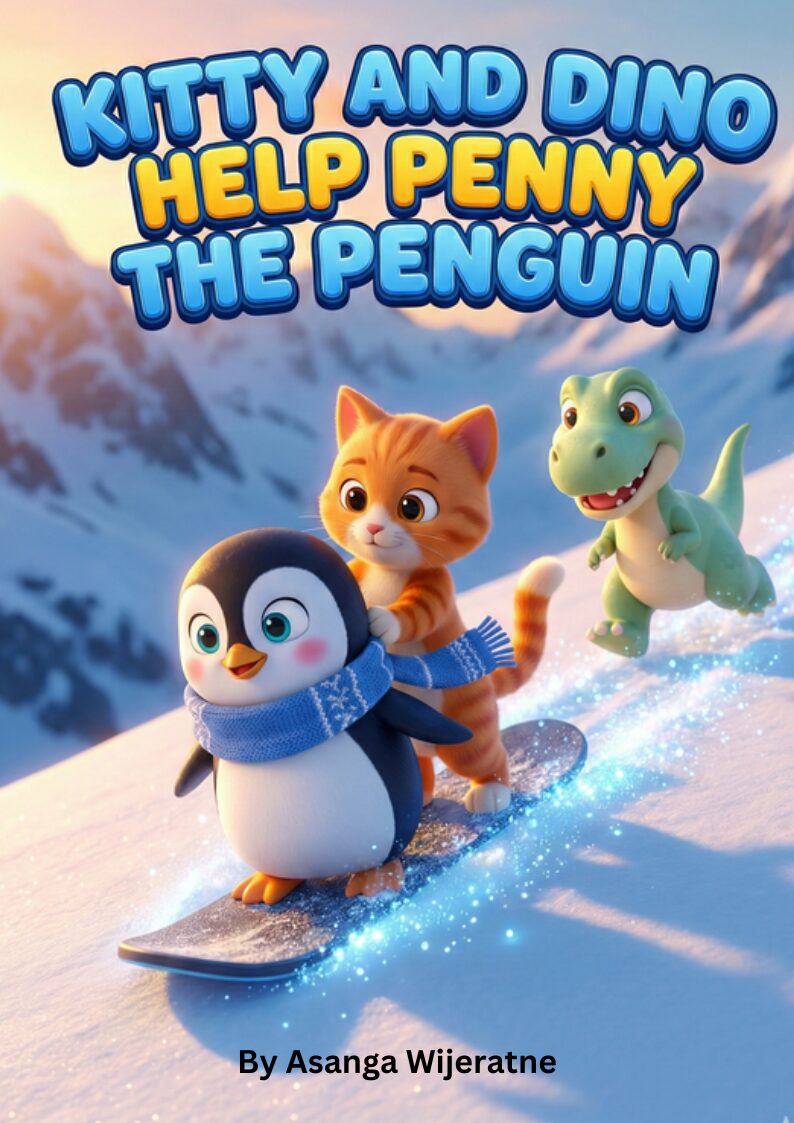
Kitty and Dino Help Penny the Penguin. My son had swimming class every other week, and on swimming days he asked us to send a note so the teacher would let him skip it. When I asked why, he said the teacher told them to go under and the water got into his nose. “It hurts a lot.” So I wrote Penny. In the book, snow starts falling before winter, and Kitty and Dino follow it up a mountain to Penny, a little penguin on a snowboard who got scared in the middle of a trick called the Triple Loop. Since then her snow magic won’t stop. Nobody pushes her. They go slowly: a gentle ride first, then a small jump, then the whole trick, with soft bushes waiting to catch her. My son asked for it again and again. About a year later, in the bath, he told me he could stay underwater without holding his nose, and swimming is his favorite class now. It fits the child who dreads one particular thing at school. Free with Kindle Unlimited, or get it on Amazon.
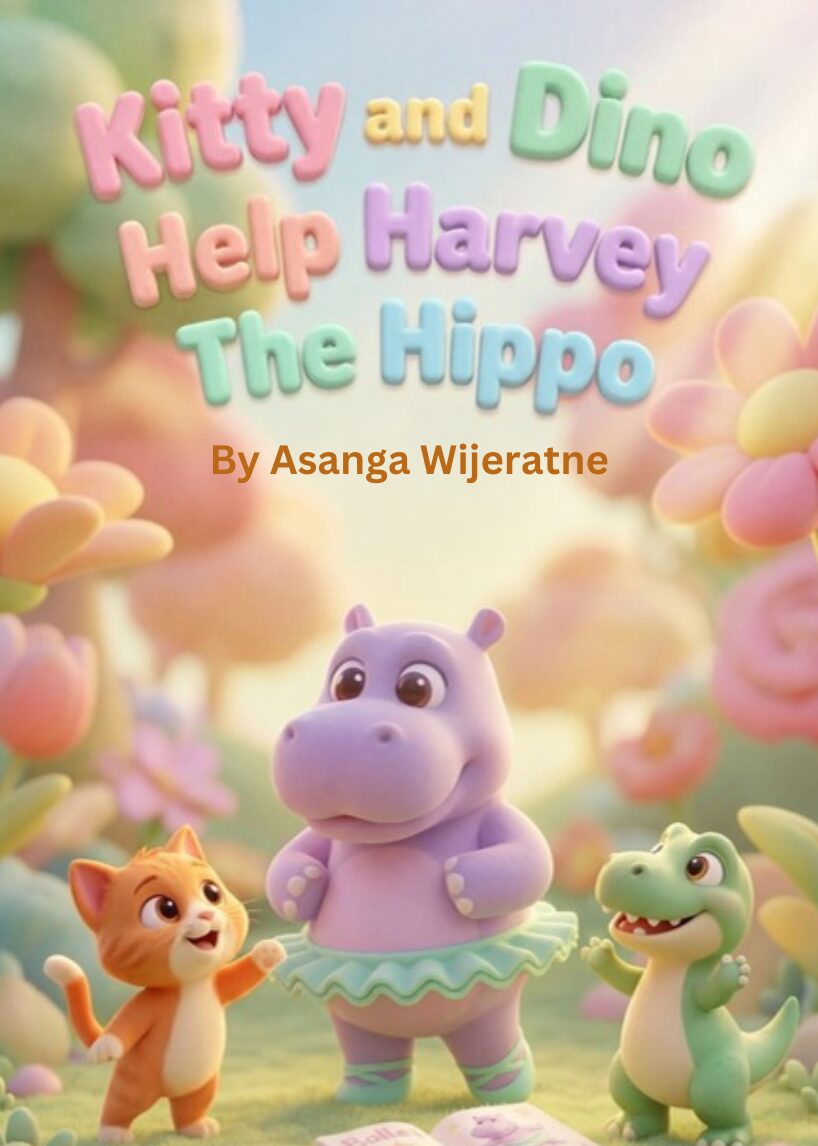
Kitty and Dino Help Harvey the Hippo. One day my son told his class he wanted to be a chef, and some of the boys teased him that cooking was a woman’s job. He came home hurt. Harvey is the book I wrote after that. Harvey has always wanted to be a ballet dancer, but he keeps falling over and decides he’s too big and clumsy. Kitty and Dino first try to help him dance like everyone else, then realize that’s the mistake, and they make him a pool where he builds his own hippo ballet in the water. One honest note: nobody teases Harvey in the story. The doubt is all his own, so it fits best a few days after the teasing, once what’s left is the little voice saying maybe they were right. Free with Kindle Unlimited, or get it on Amazon.
Kitty and Dino Help Penny the Penguin
Kitty and Dino Help Harvey the Hippo
What to say on the morning they won’t go
Name the feeling before you argue with it. “You’ve been home a long time, and going back feels hard. That happens to grown-ups too.” That’s what worked in my house after a month off.
Ask the boring question. Is there one specific thing? When my son begged us to send notes to get him out of swimming class, I asked him why. Water was getting into his nose, and it hurt. We checked with the teacher first, and after that we could talk about the real problem instead of a vague one. If your child keeps getting stuck on the same thing, our list of picture books for a child who gives up easily may help too.
Start early when you know a change is coming. A new class is easier when it has been talked about for weeks, a little at a time. “This feeling is normal. Everyone gets it.” Say it calmly, and say it more than once.
Keep the goodbye short and warm. A long goodbye at the classroom door tends to make it harder for both of you. Several parents in the threads I read said their child was fine a couple of minutes after they left.
Plan to be patient. Before Grade 2 started, my wife and I agreed we’d stay gentle if the first few days brought tears over small things. In the end we didn’t need to. He’d already prepared himself.
When is it more than a phase?
Most of the time, not wanting to go passes within days, or a few weeks after a big change. If it goes on longer, if mornings bring stomachaches or headaches again and again, or if your child seems frightened of something or someone at school, talk to the teacher and to your pediatrician. They can see the whole picture, and that’s the right place to start.
FAQ: Picture Books for a Child Who Doesn’t Want to Go to School
From the Kitty & Dino bookshelf
Gentle picture books for brave mornings, for ages 3–8:
Read free with Kindle Unlimited → or buy it on Amazon


Pingback: Children's Books for When a Parent Is Away (Ages 3-8)