
6 min read
“Again, again!” It’s the refrain that drives parents to hide favorite books. You’ve read it seventeen times this week. You could recite it in your sleep. And tonight, when you try to swap in something new, there will be tears.
Here’s what your child’s brain is actually doing during that 47th reading: building the foundation for every book they’ll ever read. The repetition isn’t stubbornness. It’s architecture.
What Repetition Actually Builds
Research in early childhood language development tells us something counterintuitive: reading the same book repeatedly teaches more vocabulary than reading ten different books once each.
Exposure count matters. A child needs to hear a word 12-20 times in meaningful contexts before it becomes part of their productive vocabulary. “The same book every night” isn’t limiting their learning — it’s accelerating it.
Contextual learning beats flashcards. Words learned in stories have emotional weight, visual anchors, and narrative connections. “Enormous” in a story about a growing plant means something different than “enormous” on a vocabulary worksheet.
Pattern recognition builds reading brains. Repeated exposure to sentence structures, rhyme schemes, and narrative patterns teaches children how books work. This meta-awareness is what turns children into readers.
People Also Ask: Why do toddlers want to read the same book every night?
Toddlers crave predictability in a world that mostly makes no sense to them. The same book every night offers control, comfort, and mastery. They know what comes next. They can “read” along. And each repetition reveals something new — a detail in the illustration, a word they missed, a connection they didn’t make before. It’s not boredom. It’s a deepening relationship with the material.
The Three Powers of Repetition
1. Vocabulary Anchors
When a child hears “mischievous” in the same story, in the same context, night after night, something happens:
First reading: They ignore the word completely. The pictures carry the story.
Fifth reading: They notice the word sounds funny. They might repeat it, testing it in their mouth.
Tenth reading: They connect the word to the character’s behavior. “Mischievous” means causing trouble, but in a playful way.
Twentieth reading: They use the word themselves. “The dog was being mischievous when he stole my sock.”
This progression doesn’t happen with single exposures. The “same book forever” complaint is actually the engine of vocabulary growth.
2. Confidence Through Participation
Predictable books invite children to participate. They know when the character will shout. They know what sound comes next. They can “read” before they can read.
This isn’t pretend reading — it’s pre-reading. They’re tracking left to right. They’re connecting spoken words to printed ones. They’re understanding that text carries meaning.
The repetition creates a safe space to try. They can’t fail at a book they know by heart. And in that safety, they take risks: pointing at words, guessing spellings, asking “what does this say?”
3. Deepening Noticing
Here’s what most adults miss: children see differently each time they read a familiar book.
First read: They follow the main action. Character moves left to right across the page.
Fifth read: They start noticing background details. The cat in the window. The clock on the wall. The expression on the side character’s face.
Tenth read: They notice cause and effect they missed before. The buildup to the punchline. The reason the character made that choice. The illustration that foreshadows what happens next.
Twentieth read: They’re making sophisticated observations. “That was the same cat from the beginning.” “She knew that was going to happen.”
Each reading layer builds comprehension. The brain is constructing a more complex understanding each time through. What looks like “the same book” to you is actually a new book every time to your child.
People Also Ask: How many times should you read a book to a toddler?
There’s no magic number. Read as many times as they want. Watch for signs of true mastery (they can recite along, they notice new things, they answer questions about the book) versus signs of genuine disengagement (they’re physically squirming, flipping pages without looking, asking for something else). If they’re still engaged, keep going. If they’ve moved on, it’s fine to say “we’ll read it again tomorrow.”
Making Peace With the Repeat
Parents often feel guilty about reading the same book over and over. They worry they’re not exposing their child to enough variety. They want to “give them more.”
Here’s the reframe: your child isn’t missing out on other books. They’re building something deep and strong. The vocabulary, the confidence, the comprehension — these compound over time.
Accept the repeat. The 47th reading matters as much as the first. Maybe more.
Add commentary. “Oh, I never noticed that cat before!” — model that there’s always more to discover in familiar books.
Let them “read” to you. When they know a book well, let them hold it and “narrate.” This is reading practice disguised as play.
Gradually expand. Eventually, a new favorite emerges and the old one retires — naturally, without pressure. That’s a reader developing.
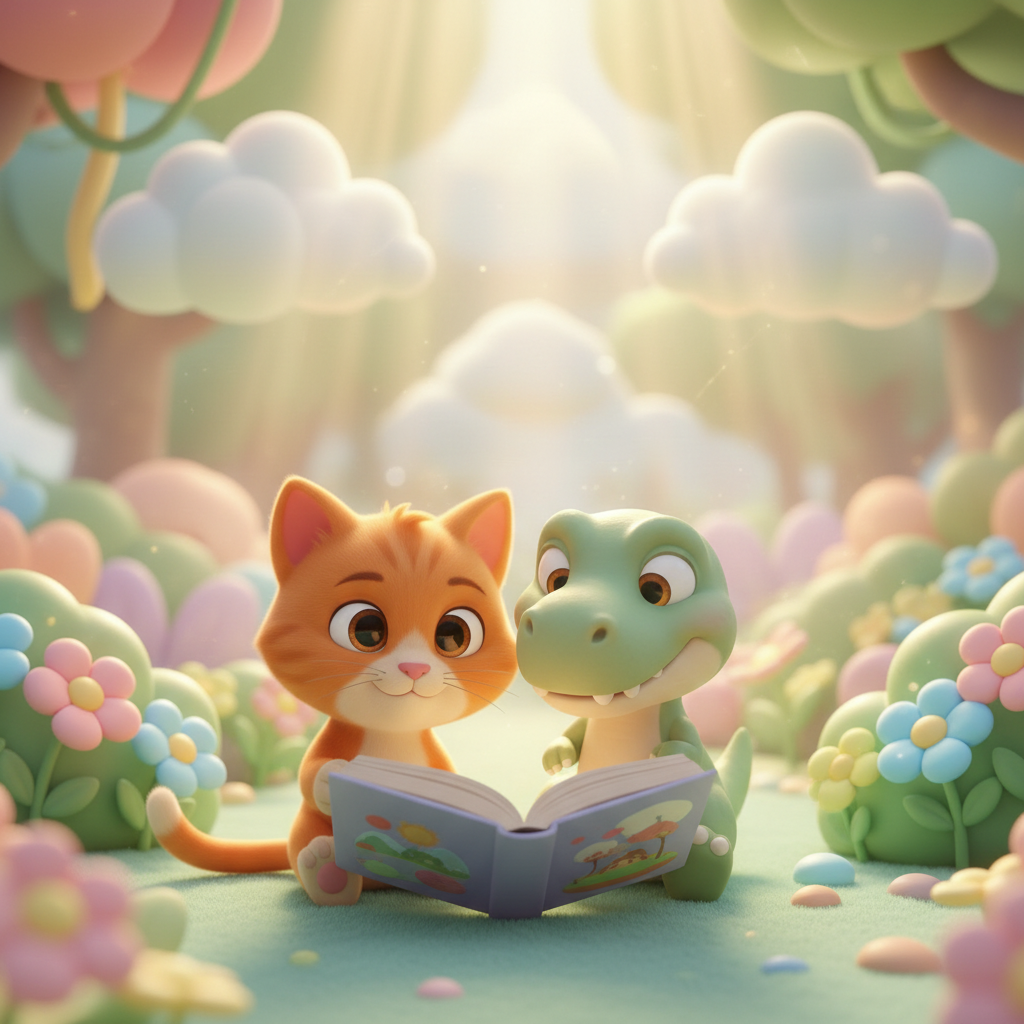
In the stories Kitty and Dino share, characters often discover that the best things require patience and repetition. A friendship that grows deeper over time. A skill that develops through practice. A story that reveals new layers with each telling. That’s the message for us, too.
People Also Ask: Does reading the same book help toddlers learn words?
Yes, significantly. Repetition is one of the most effective vocabulary-building strategies for young children. When they hear the same words in the same contexts multiple times, those words are processed more deeply and stored more permanently than words encountered once. This is why the “same book again” approach is actually optimal for language development — the repetitions create strong neural pathways for each new word.
TL;DR — Embracing the Repeat
From the Kitty & Dino bookshelf
Gentle picture books that bring this to life for ages 3–8:


