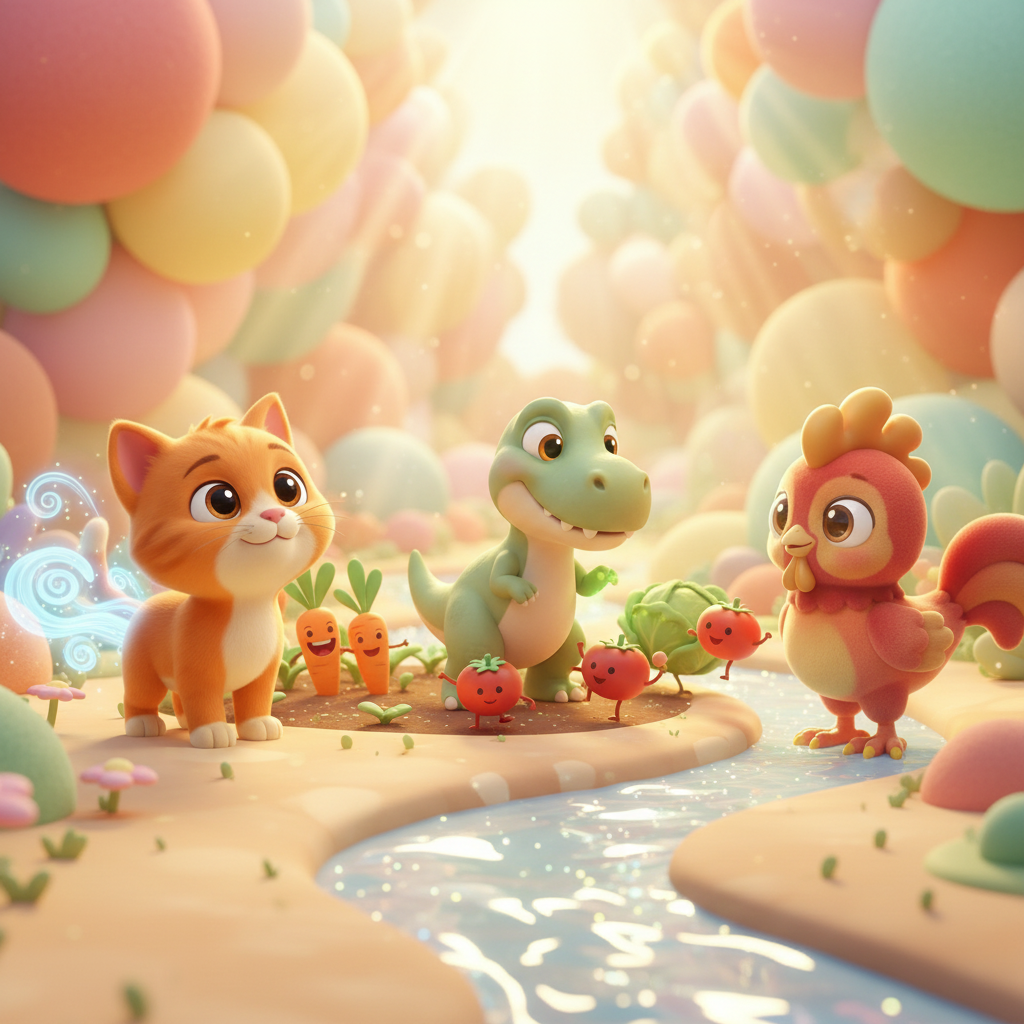
Source story: “Kitty and Dino Help Gordon the Rooster” — When Gordon’s magical garden plants grew legs and wandered off at night, his friends Kitty and Dino didn’t just feel sorry for him. They listened, got creative, and built a solution that worked for everyone.
What the Story Is Actually About
On the surface, it’s about a rooster whose garden plants grew legs and started walking away at night. But strip that away and you find the actual story: what happens when someone you care about has a problem they can’t solve alone.
Gordon loves his plants. The plants are happy. But the situation is unsustainable — plants wandering into the forest at night will get lost or hurt. Gordon can’t fix it by himself. So he asks for help.
The Empathy Model in This Story
Most children’s books about kindness show a character feeling sorry for someone and then fixing things for them. That’s pity with a happy ending — not empathy.
Kitty and Dino do something more useful: they listen first. They talk to the plants directly. They find out what the plants actually want — not what Gordon assumes, not what would be easiest to fix, but what the plants themselves need.
“They want a place to play at night,” explains Dino.
“And they want to keep themselves safe,” says Kitty to Gordon.
Only then do they build the solution. That’s empathy, not assumption.
The plants follow the sparkling stream home because they want to — not because they’re forced to.
Why the Problem-Solving Matters
Here’s the key distinction: Kitty and Dino don’t capture the plants and lock them in. They don’t tell Gordon to accept that plants will get lost. They don’t do it for Gordon — they do it with him and for the plants.
The playground and sparkling stream give everyone what they need. That’s the model we want kids to internalize: understand real needs, design for all parties, build what works because it’s right — not because it’s easy.
The Magic System as a Bonus
- Kitty’s tail creates the wind that clears the playground space (wind from her tail — consistent with her character)
- Dino’s hands grow the hills, tunnels, and slides from the ground
- Kitty’s water magic creates the glowing, sparkling stream that surrounds the gardens
It’s a team effort where everyone’s abilities matter — using your strengths in service of others.
Why This Works at Bedtime
The story ends gently: plants come home, Gordon is relieved, Kitty and Dino head back to their cozy hut. No villain, no high-stakes climax, no tension before sleep. The emotional arc resolves into calm — exactly what bedtime needs.
Discussion Questions for Reading Together
- “Why couldn’t Gordon solve this on his own?”
- “How did Kitty and Dino find out what the plants really needed?”
- “Why do you think the plants followed the water home?”
- “Have you ever helped a friend with something they couldn’t do alone?”
- “What would have happened if nobody helped Gordon?”
All of these invite perspective-taking — the core skill empathy is built on.
TL;DR
- This story models real empathy: listen to understand, don’t assume, then solve together
- The plants aren’t controlled — they’re given what they asked for (play + safety)
- Kitty uses tail-based wind magic and water magic; Dino uses plant magic — consistent world-building
- The story ends in calm resolution, ideal for bedtime
- Use open-ended questions to deepen comprehension and connection
Get Gordon the Rooster on Amazon: https://www.amazon.com/dp/B0FXTLNWG6
Explore the full series at: https://kittyanddino.com/
Leya — Blog Channel Owner