8 min read
Teaching Kids to Be Brave: How Stories Help Children Face Fear
Every parent has heard their child say it: “I can’t. I’m scared.” The instinct is to reassure — you’ll be fine, there’s nothing to be afraid of, just try. But these phrases, however well-intentioned, often miss what children actually need.
Real bravery isn’t the absence of fear. It’s action in the presence of fear. And this is a difficult concept to explain to a four-year-old standing at the edge of a pool or staring at a dark bedroom. That’s where stories become essential. They show children what courage looks like in a form they can understand and remember.
Why Telling Kids to “Be Brave” Rarely Works
When adults tell children to be brave, children often hear a command to stop feeling afraid. This creates a bind: they’re scared, and now they’re also failing at not being scared. The shame compounds the fear.
Stories offer a different path. They let children watch someone else be scared — really scared, not pretend-scared — and then see what happens next. The emotional processing happens vicariously. The child feels Penny’s fear without being overwhelmed by it. They see her find her way through, and they internalize the possibility that they could too.
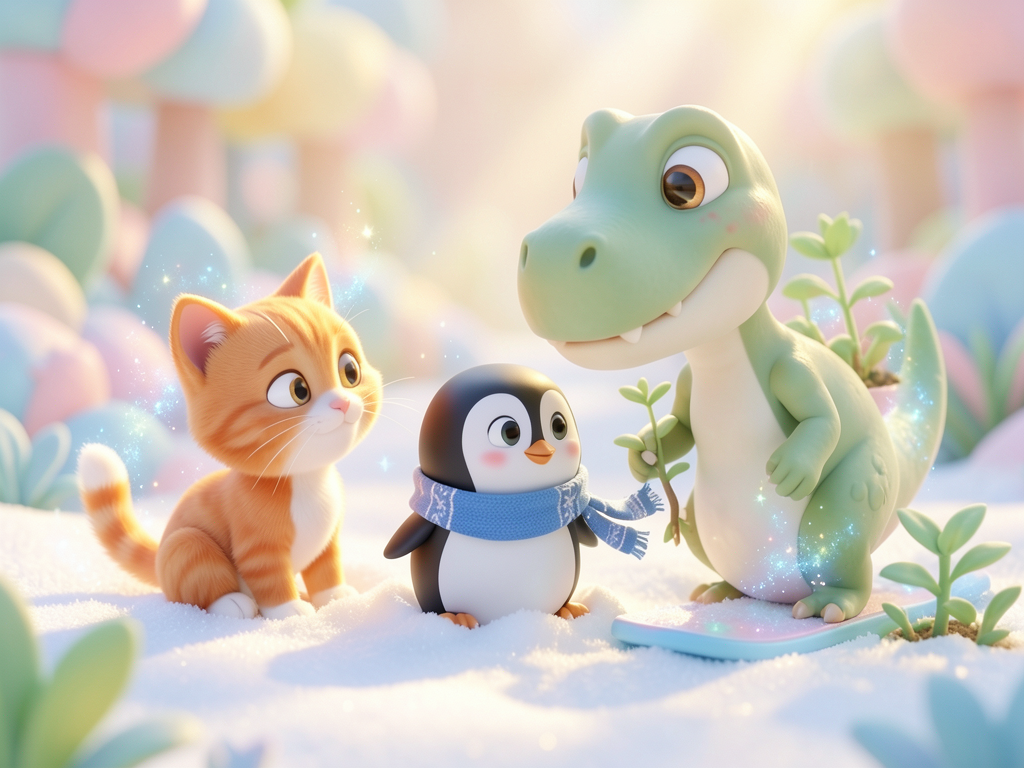
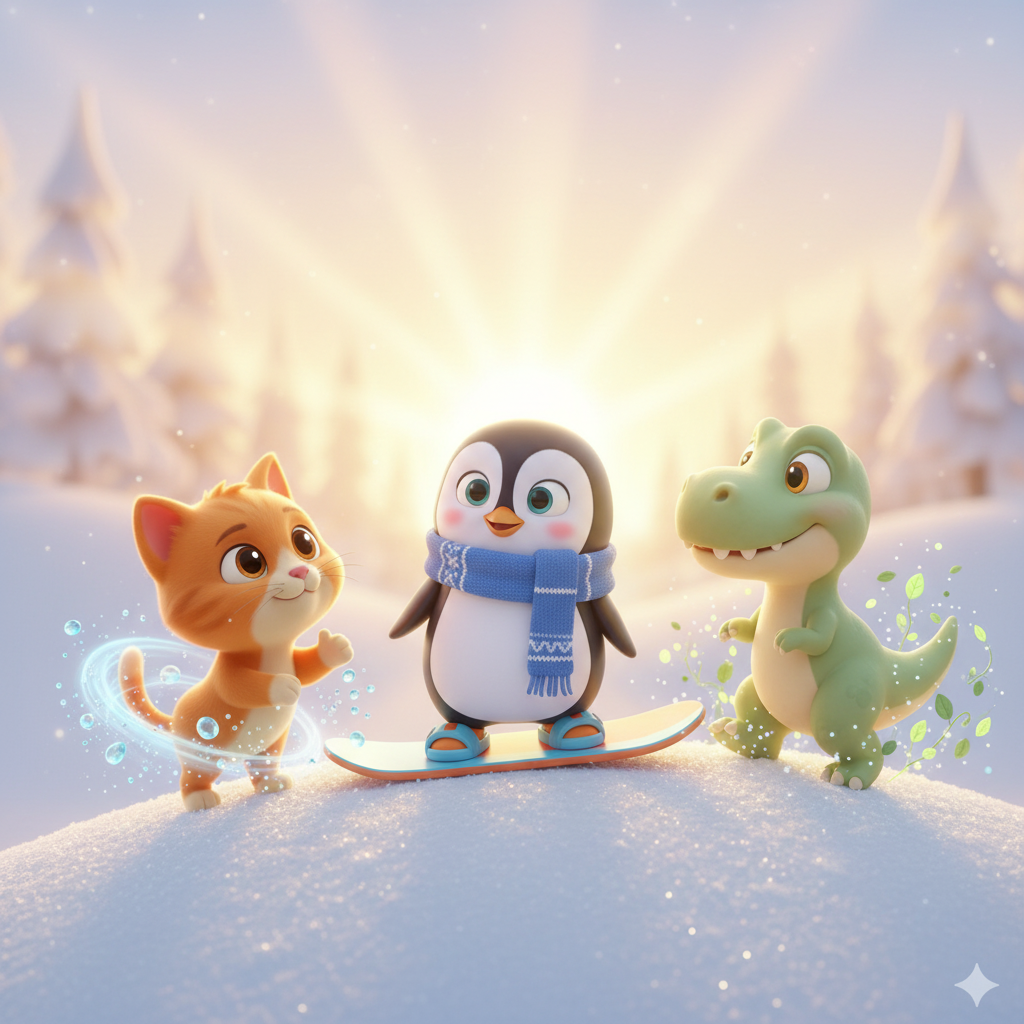
This is why Kitty and Dino Help Penny the Penguin matters. Penny doesn’t just face a challenge. She crashes spectacularly, cries frozen tears, and refuses to try again. Her fear is specific and believable. When she eventually returns to the Triple Loop, children understand exactly what cost her courage exacted.
The Bravery Arc Children Need to See
Effective courage stories follow a pattern that matches how bravery actually develops:
The attempt. The character tries something difficult. For Penny, it’s the Triple Loop — three spins in the air on her snowboard. She has practiced. She is ready. She goes for it.
The failure. This is crucial. Stories that skip the failure teach children that success comes easily to brave people. Real bravery stories show the crash, the embarrassment, the pain of not succeeding. Penny lands hard. Her snow magic spirals out of control. She is humiliated and hurt.
The withdrawal. After failure, the character pulls back. Penny decides she will never snowboard again. This is not weakness. This is the normal, protective response to pain. Children need to see that wanting to quit is part of the process.
The friendship. Here’s where the story teaches its real lesson. Kitty and Dino don’t lecture Penny. They don’t tell her she’s being silly. They stay nearby. They show up every day. They build a practice space where falling doesn’t hurt. They make it safe to try again.
The gradual return. Penny doesn’t suddenly decide she’s fearless. She practices small jumps first. Then medium ones. Her confidence rebuilds incrementally, grounded in actual experience. When she finally attempts the Triple Loop again, she’s earned her courage.
This arc — attempt, fail, withdraw, find support, practice, try again — is what children need to internalize. It’s the template for real courage in real life.
What Parents Can Do After Reading
The story opens the door. The conversation walks through it. After reading Penny’s adventure, try these questions:
“What was Penny most afraid of after she crashed?” This helps children identify specific fears rather than vague anxiety. Penny wasn’t just scared. She was scared of failing again, of looking foolish, of getting hurt.
“Why did Kitty and Dino help instead of telling Penny to stop being scared?” This reinforces the lesson that courage comes from support, not pressure. It also models how children might respond to friends who are struggling.
“What was the smallest jump Penny practiced?” This emphasizes the importance of starting small. Courage isn’t about attempting the hardest thing immediately. It’s about gradual, supported growth.
“Have you ever been scared to try something again?” The direct invitation to connect the story to their own experience. Some children will have an immediate example. Others will need time. Both responses are fine.
Bravery in the Real World
The bravery children practice through stories translates to everyday challenges:
Learning to ride a bike. The falls are real. The fear of falling again is legitimate. The parent who stays nearby, who makes it safe to try again, is playing the Kitty role.
Starting school. New environments are overwhelming. The child who remembers Penny’s gradual return may feel more willing to try a little more each day.
Speaking in front of others. Performance anxiety is common. The child who has seen Penny survive her crash understands that embarrassment is survivable.
Making new friends. Rejection stings. The child who has internalized the bravery arc knows that withdrawal is normal, but so is trying again when the time is right.
In each case, the story provides a reference point. “Remember how Penny practiced small jumps first?” becomes a phrase children can use to coach themselves through difficulty.
Frequently Asked Questions
At what age do children understand the concept of bravery?
Children begin developing a basic understanding of courage around age 3, but the concept becomes more fully grasped between ages 4 and 7. This is exactly why picture books like Penny the Penguin — designed for ages 3-8 — are so effective. They meet children where they are developmentally.
Should parents push children to face their fears?
Gentle encouragement works better than pressure. The Kitty-and-Dino model — staying nearby, making it safe to try, celebrating small progress — builds lasting confidence. Pushing too hard can reinforce avoidance. The goal is for children to feel supported, not coerced.
How do I respond when my child says “I’m scared”?
Validate first: “I hear that you’re scared. Tell me more about what feels scary.” This acknowledges the feeling without amplifying it. Then problem-solve together: “What would make this feel safer?” This engages the child’s thinking brain and gives them agency.
Can reading about brave characters actually make children braver?
Research suggests yes. Children who engage with stories about characters overcoming challenges show increased willingness to attempt difficult tasks themselves. The effect is strongest when parents discuss the story afterward and help children connect it to their own lives.
What if my child fixates on the crash and gets more scared?
This is normal. Some children need to process the scary parts multiple times before they can absorb the resolution. Let them lead. If they want to discuss Penny’s crash repeatedly, that’s how they’re working through their own fears. Trust the story arc. They’ll integrate the ending when they’re ready.
Why I Wrote a Courage Story
Kitty and Dino Help Penny the Penguin came from watching my own son struggle with fear. The boy was afraid of swimming, of climbing, of trying anything where he might fail. I wanted to give him a story that honored that fear — that said it’s okay to be scared, okay to pull back, and okay to return when you’re ready.
I chose a penguin because penguins are inherently a little funny, a little awkward on land, graceful in their element. I gave her snow magic because magic makes difficult things feel possible. I gave her Kitty and Dino because nobody gets brave alone.
The result is a story that works. Children see themselves in Penny’s fear. They want her to succeed. They absorb the lesson that courage isn’t about being fearless — it’s about being scared and trying anyway, with friends nearby.
A Story That Grows With Your Child
The first time you read Penny the Penguin, your child might focus on the snow magic and the snowboarding. The fifth time, they might notice how Kitty knows what Penny needs before Penny says it. The tenth time, they might tell you that Penny was brave because she tried again even when she was scared.
That’s how stories teach. Layer by layer, reading by reading, until the lessons become part of how children understand themselves.
Bravery isn’t something you explain. It’s something you show. And sometimes, the best way to show it is through a penguin who falls down, cries frozen tears, and gets back up again.
Give Your Child a Template for Courage
Kitty and Dino Help Penny the Penguin is a picture book for ages 3-8 that teaches children what bravery really looks like — not the absence of fear, but the decision to try again with friends nearby. Join Penny, Kitty, and Dino on a snowboarding adventure that shows young readers they can be scared and courageous at the same time.
Order Penny the Penguin on Amazon →
Discover more stories about courage, friendship, and kindness in the complete Kitty & Dino collection.
TL;DR Summary
Quick Takeaways:
- Children learn compassion through stories, not lectures
- This book shows kindness in action — characters help without asking why
- Perfect for ages 3-8 during the empathy development years
- Based on a real story that makes it emotionally authentic
From the Kitty & Dino bookshelf
Gentle picture books that bring this to life for ages 3–8: