7 min read
The Quiet Magic of Simple Play: What Kitty Taught Me About Joy
There’s a moment in every cat owner’s life when they realize they’ve wasted money on toys. You bring home the expensive scratching post, the automated laser pointer, the plush bed with memory foam. And your cat? Your cat crawls into the cardboard box it came in and purrs like they’ve found paradise.
That’s Kitty. That’s all of us who’ve ever loved a cat.
The Paper Bag Epiphany
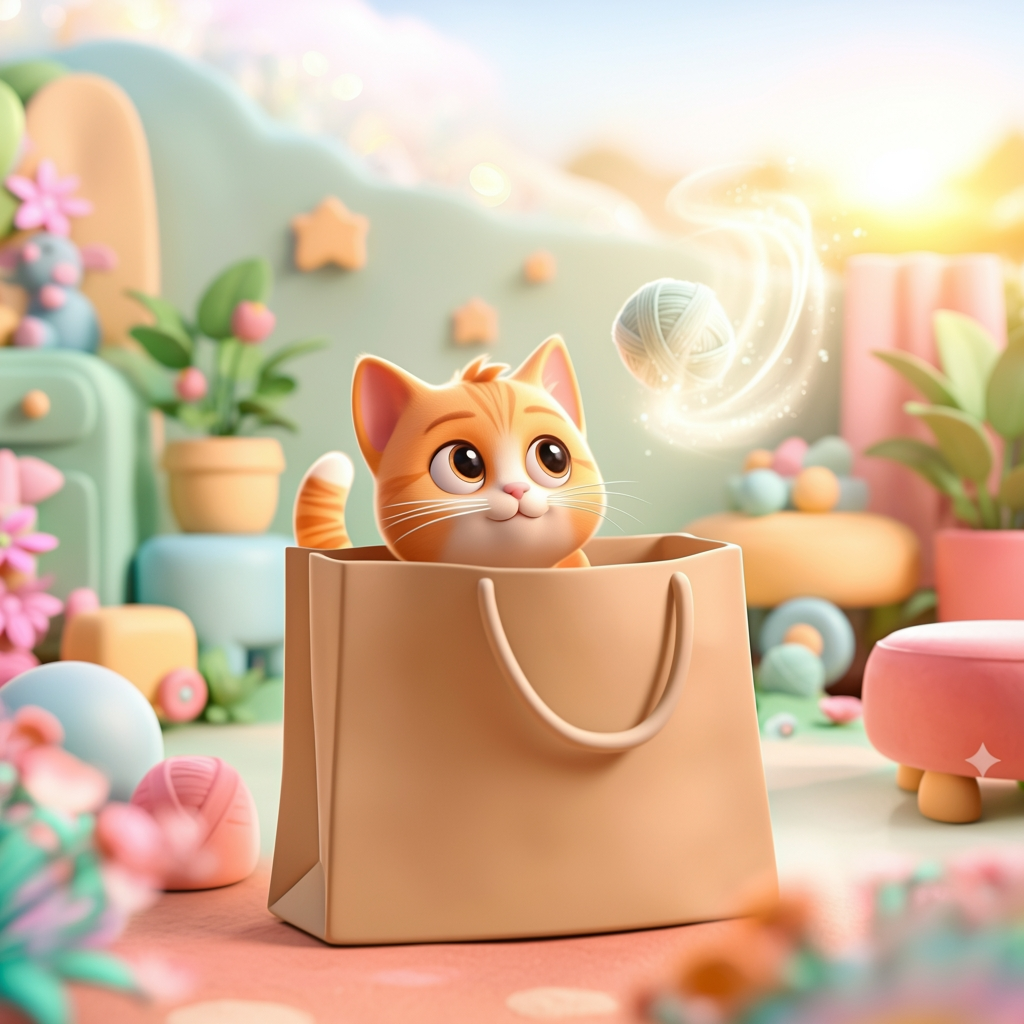
I watched it happen again last week. Kitty had a basket full of toys—crinkly balls, catnip mice, springs that bounce unpredictably. But she bypassed all of them for a simple paper bag that had held groceries. She crawled inside, rustled around, and emerged with that look cats get when they’re supremely satisfied with their own decisions.
It reminded me of something I’d seen with my own son. He once took apart a remote-controlled car I’d given him. Most parents might have panicked—toy destroyed, parts everywhere, the thing won’t work anymore. But I handed him a screwdriver instead. I watched him figure out how the wheels connected, how the motor fit, how the whole thing came together. He wasn’t destroying. He was understanding. He was building his own knowledge, piece by piece.
That’s the thing about simple objects. They don’t dictate how to play. A paper bag can be a cave one minute, a crinkly musical instrument the next, a hiding spot, a sleeping nook, a toy to bat around when the mood strikes. The toy doesn’t define the play. The imagination does.
Why Kids (and Cats) Prefer “Nothing”
Researchers have looked at this for years, and they keep finding the same thing: simple, open-ended materials pull kids in deeper than elaborate toys with fixed purposes.
Think about it:
- A cardboard box becomes a spaceship, a store, a bed for stuffed animals, a secret clubhouse
- A stick transforms into a sword, a walking staff, a magic wand, a tool for drawing in dirt
- A blanket creates forts, capes, picnic grounds, cozy reading nooks
Compare that to a toy with one button that makes one sound. The first time, it’s exciting. The tenth time? The hundredth? The novelty is gone, and so is the engagement.
This isn’t some anti-toy crusade. It’s just noticing that the best play usually happens when adults step back and let kids figure things out themselves.
When the Box Is Better Than the Toy
My friend Sarah learned this the hard way. She bought her four-year-old an elaborate dollhouse for Christmas—three stories, working lights, miniature furniture sets that cost almost as much as real furniture. The dollhouse sat untouched for weeks.
Then one rainy afternoon, her daughter discovered the large box the dollhouse had arrived in. She spent three hours decorating it with crayons, creating rooms with old fabric scraps, making furniture from bottle caps and cardboard tubes. She called it her “imagination house” and played with it daily for months.
Sarah told me later, “I felt silly for spending all that money when what she really wanted was the box and permission to create.”
That story isn’t unusual. Parents across the world have had similar revelations. The things we think children need—complexity, features, educational claims—often miss what they actually want: agency, creativity, and the freedom to make something their own.
Creating Space for Simple Play
You don’t need to throw away the toys. But you can create space for the kind of play that doesn’t require batteries or instructions:
Keep a “creation box” — Fill a container with paper bags, cardboard tubes, fabric scraps, buttons, ribbons, and other safe recyclables. Let children access it freely. Don’t direct their play. Just watch what emerges.
Resist the urge to improve — When a child is content with a simple activity, we often feel compelled to “make it better” with more materials or structured guidance. Sometimes better is just… different. Let them stay with what engages them.
Model creative use of ordinary things — Children learn by watching. When they see you turning a paper bag into a gift wrap, or a stick into a garden marker, or a blanket into a movie-watching nest, they absorb the lesson that ordinary things hold extraordinary possibilities.
Embrace the mess — Simple play often looks like chaos. There’s a reason parents dread the shredded paper, the cardboard fort taking up half the living room, the collection of “treasures” that look like trash. But that mess is evidence of engagement, of imagination at work, of a child learning that they can transform their world with their own hands.
The Connection to Storytime
This philosophy runs through every Kitty & Dino story. When Carlos the Camel decides to build a library for his desert community, he doesn’t have fancy tools or pre-made materials. He has determination, creativity, and friends who believe in the project. When Penny the Rat constructs a greenhouse, she figures it out as she goes, learning from mistakes, adapting her approach.
These aren’t just nice stories. They’re reflections of how children actually learn and grow. The characters face problems, experiment with solutions, fail sometimes, and keep going. Just like a child with a paper bag figuring out all the ways it can be used.
That’s why reading these stories together matters. They reinforce what children already know deep down: that creativity beats consumption, that process matters more than product, that the best things in life often come in simple packages.
Finding Your Own Paper Bag Moments
I think about that remote-controlled car sometimes. My son didn’t remember the gift a month later, but he remembered the feeling of taking something apart and understanding how it worked. He remembered the confidence of using a real tool, of being trusted with something potentially messy and difficult.
Kitty doesn’t remember the paper bag either, probably. But in the moment, she experienced pure, unfiltered satisfaction. The crinkle of paper, the darkness inside, the surprise of popping out—that was enough. That was everything.
As parents, we can chase the next educational toy, the next developmental milestone, the next recommended activity. Or we can step back and notice when our children are already engaged, already learning, already happy with something simple.
The paper bag isn’t just a paper bag. It’s permission to explore. It’s space to create. It’s a reminder that joy doesn’t require complexity—just curiosity and the freedom to follow where it leads.
TL;DR
Children (and cats) often prefer simple, open-ended objects to elaborate toys because simple things invite imagination rather than dictating use. A paper bag can become anything—a cave, a musical instrument, a hiding spot—while a complex toy usually stays just one thing. Parents can support this natural creativity by keeping a “creation box” of recyclables, resisting the urge to “improve” simple play, modeling creative problem-solving, and accepting the mess that comes with engaged imagination. The Kitty & Dino stories reflect this philosophy through characters like Carlos and Penny, who build and create with determination rather than fancy tools. Sometimes the best gift we can give isn’t a new toy—it’s permission to explore what ordinary things can become.
Looking for stories that celebrate creativity and simple joys? Discover the Kitty & Dino series at kittyanddino.com — where every book sparks imagination and creates memories that last a lifetime.
Related Reading
From the Kitty & Dino bookshelf
Gentle picture books that bring this to life for ages 3–8: