Key Takeaways
What are the best screen-free activities for kids ages 3-8?
The best screen-free activities for this age group build vocabulary, fine motor skills, and imagination using simple materials you already have — like kitchen supplies, cardboard, and outdoor space.
How much screen-free time should kids have daily?
Most experts recommend at least 1-2 hours of screen-free active play daily. The key is consistency: regular screen-free routines matter more than long sessions.
Do screen-free activities really help with reading?
Yes. Activities like storytelling, sensory play, and fine motor games build the same skills that support reading readiness — vocabulary, attention span, and hand-eye coordination.
Screens aren’t evil. But when screens fill every gap in a child’s day, something gets squeezed out: the chance to be bored, to figure things out, to make something from nothing.
Kids ages 3-8 are in a critical window for building foundational skills. Vocabulary explodes between ages 3 and 6. Fine motor development peaks between ages 4 and 7. Attention spans stretch when children practice focusing on one thing for more than a few minutes.
Screen-free activities give these skills room to grow. The best part? You don’t need expensive toys or elaborate setups. Most of what you need is already in your kitchen drawers, recycling bin, or backyard.
Here are 10 screen-free activities that actually build something — skills, memories, or both.
Activity 1: Kitchen Science Experiments
What you need: Baking soda, vinegar, food coloring, empty containers, a tray or cookie sheet.
How to do it: Pour baking soda into small containers. Add a few drops of food coloring. Let your child pour vinegar over the top and watch the fizzing reaction.
Why it works: Children learn cause and effect, basic chemistry concepts, and measurement vocabulary (“more,” “less,” “full,” “empty”). The sensory experience — watching colors bubble and mix — creates memorable learning moments.
Ages 3-4: Focus on the “wow” factor. Let them pour and watch.
Ages 5-8: Ask prediction questions: “What do you think will happen if we add more vinegar?”
Activity 2: Cardboard Box Creations
What you need: Large cardboard boxes, markers, scissors (for adult use), tape, anything else you want to add.
How to do it: Give your child a box and ask: “What could this become?” A rocket? A house? A cave? Let them lead the design.
Why it works: Open-ended building develops spatial reasoning, creativity, and planning skills. Children practice describing their creations, which builds vocabulary and narrative thinking.
Ages 3-4: Keep it simple — a box to sit in, draw on, or peek out of.
Ages 5-8: Add details — windows, doors, signs, furniture made from smaller boxes.
Activity 3: Sensory Bins with Rice or Beans
What you need: A shallow container, uncooked rice or dried beans, small toys, scoops, measuring cups.
How to do it: Fill the container with rice or beans. Bury small toys. Give your child scoops and let them dig, pour, and discover.
Why it works: Sensory play builds fine motor skills through scooping, pouring, and digging. It also develops vocabulary (texture words like “smooth,” “rough,” “grainy”) and sustained attention.
Ages 3-4: Use larger items to bury and find. Focus on pouring and filling.
Ages 5-8: Add themed items — dinosaur figures for a “dino dig” or letter tiles for a literacy twist.
Activity 4: Nature Scavenger Hunts
What you need: A paper bag, a simple picture list (drawn or printed), outdoor space.
How to do it: Create a list of items to find: a leaf, a rock, a flower, something smooth, something red. Walk through your neighborhood or a park and let your child collect.
Why it works: Nature walks develop observation skills and vocabulary (names of trees, flowers, insects). The scavenger hunt format keeps children engaged and gives them a purpose for exploring.
Ages 3-4: Use picture cards with just 4-5 items. Focus on finding, not identifying.
Ages 5-8: Add descriptive challenges: “Find something that smells good” or “Find three things that are different shapes.”
Activity 5: Storytelling with Props
What you need: A basket of random objects — a toy car, a button, a spoon, a scarf, a plastic animal.
How to do it: Pull one object from the basket and start a story: “Once there was a [object] that…” Then let your child add the next part. Take turns building the story.
Why it works: Storytelling develops narrative skills, vocabulary, and imagination. Children practice sequencing (beginning, middle, end) and cause-and-effect thinking without realizing they’re learning.
Ages 3-4: You tell most of the story, pausing to let them fill in details.
Ages 5-8: Let them lead. Ask: “What happens next?” or “Why did the character do that?”
Activity 6: Fine Motor Art Stations
What you need: Paper, crayons, stickers, hole punchers, scissors (child-safe), tape, playdough.
How to do it: Set up a station with materials and let your child choose what to create. No instructions, no “right” way to do it.
Why it works: Drawing, cutting, peeling stickers, and molding playdough all strengthen the small muscles in hands and fingers. These are the same muscles needed for writing later.
Ages 3-4: Focus on tearing paper, using chunky crayons, and pressing stickers.
Ages 5-8: Add cutting along lines, hole punching, and more detailed drawing.
Activity 7: Building with Household Items
What you need: Plastic cups, toilet paper rolls, sponges, playing cards, blocks, anything stackable.
How to do it: Challenge your child to build the tallest tower, the longest bridge, or the strongest house. Let them test their creations.
Why it works: Building develops spatial reasoning, problem-solving, and persistence. Children learn about balance, gravity, and structural stability through trial and error.
Ages 3-4: Use stable materials like plastic cups and soft blocks.
Ages 5-8: Add challenge cards: “Build something with only 10 pieces” or “Make a tower taller than your knee.”
Activity 8: Role-Play and Pretend Play
What you need: Dress-up clothes, toy kitchen items, stuffed animals, doctor kit, or just imagination.
How to do it: Set up a scenario — a restaurant, a doctor’s office, a grocery store — and let your child take on a role. You play the customer, patient, or shopper.
Why it works: Role-play develops social skills, vocabulary, and emotional understanding. Children practice conversations, problem-solving, and seeing things from another perspective.
Ages 3-4: Keep scenarios familiar — cooking, feeding babies, going to the store.
Ages 5-8: Expand to more complex roles — teacher, librarian, veterinarian, astronaut.
Activity 9: Music and Movement
What you need: Music (played on a phone or speaker), scarves or ribbons for dancing, instruments (even homemade ones like rice-filled containers).
How to do it: Play different types of music and move together. Fast, slow, bouncy, smooth. Freeze when the music stops.
Why it works: Movement develops gross motor skills, coordination, and listening skills. Music introduces rhythm, patterns, and vocabulary (tempo, loud, soft, fast, slow).
Ages 3-4: Focus on simple movements — jumping, spinning, freezing.
Ages 5-8: Add pattern games: “Jump three times, then spin. Can you remember the pattern?”
Activity 10: Reading Together (Yes, It Counts)
What you need: Books — from your shelf, the library, or borrowed from a friend.
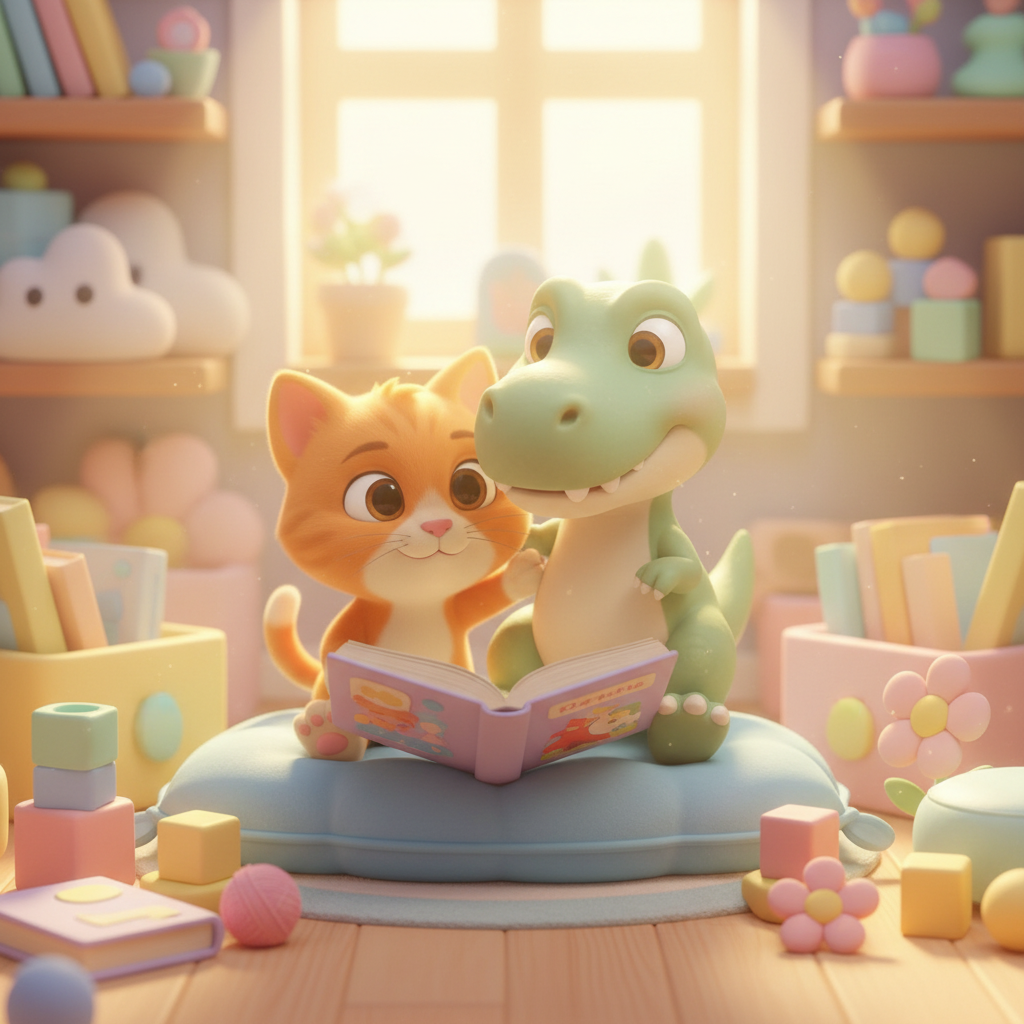
How to do it: Read aloud. Ask questions. Let your child turn the pages. Talk about the pictures. Read the same book twenty times if they want it.
Why it works: Reading aloud builds vocabulary, comprehension, and print awareness. It’s the single most important activity for reading readiness. And it’s screen-free by definition.
Ages 3-4: Point to pictures, name objects, ask “What’s this?”
Ages 5-8: Ask open-ended questions: “Why do you think she did that?” or “What would you do?”
People Also Ask
What age should kids start screen-free activities?
Children can start screen-free activities from infancy. Simple sensory experiences — feeling different textures, listening to music, watching faces — are screen-free activities for babies. By ages 3-8, children are ready for more structured activities like scavenger hunts, building, and art.
How do I transition my child from screens to screen-free activities?
Start small. Replace one screen session with a screen-free activity. Make the alternative appealing — set it up before offering it. Keep screens out of sight during screen-free time. Most children adjust within a week when the alternative is genuinely engaging.
Can screen-free activities replace educational apps?
Yes, and often with better results. Educational apps focus on narrow skills. Screen-free activities develop broader abilities — creativity, social skills, physical coordination, problem-solving. A child who builds a cardboard rocket learns engineering, narrative thinking, and vocabulary in one activity.
TL;DR
Screen-free activities don’t need to be complicated or expensive. The 10 activities above use everyday materials to build vocabulary, fine motor skills, creativity, and social understanding. Here’s what matters:
- Start simple: Kitchen science, cardboard boxes, and sensory bins require almost no prep
- Follow your child’s lead: Open-ended activities build more skills than prescribed ones
- Be consistent: Regular screen-free routines matter more than long sessions
- Ages 3-4: Focus on sensory experiences and simple play
- Ages 5-8: Add challenges, predictions, and more complex narratives
- Reading together: Still the most valuable screen-free activity of all
One activity a day. That’s all it takes to build something real.
Internal Links
- Best Birthday Books for 3 Year Olds — Great for reading together
- What Makes a Good Picture Book for 3-5 Year Olds? — How to choose books for screen-free reading time
- All Books — Explore more reading options