TL;DR
- “Again, again”: Demanding repeats is a sign of deep engagement, not boredom
- Book choice battles: Arguing about which book to read shows ownership of reading preferences
- Solo browsing: Quietly looking at books alone is pre-reading behavior in action
“My child doesn’t like reading.” I hear this from parents constantly. Usually while the child is doing something that actually screams the opposite.
Here’s the thing: children rarely announce “I enjoy literature.” They show it in behaviors parents misinterpret as annoyances. The repeat requests. The book-hoarding. The resistance to your choices.
Look for these five signs. If you see even two or three, your child isn’t a reluctant reader — they’re a reader in disguise.
Sign #1: They Demand “Again, Again”
The 47th reading of the same book isn’t a sign your child is bored with reading. It’s evidence they’re obsessed with reading.
Children repeat what they love. They don’t ask to watch the same movie or play the same game dozens of times unless it brings genuine joy. Books work the same way.
What repetition actually means: They know this book brings satisfaction. The story arc is comforting. The language is rich. They catch new details each time. They can “read” along with you, which builds mastery and confidence.
Why parents misread it: We’re bored by repetition. Children are not. Their brains are wiring language patterns, building prediction skills, and deepening comprehension with each pass. The 47th reading is developmentally different from the first.
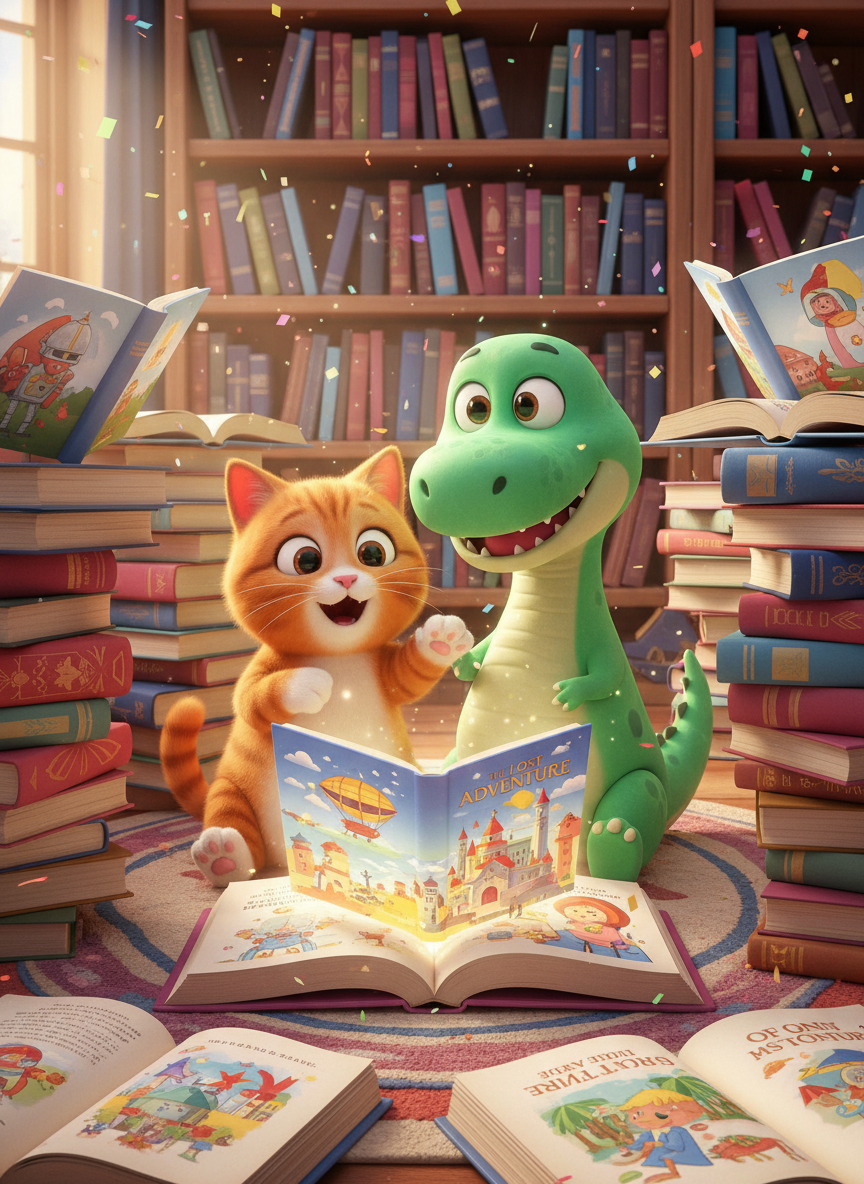
When Kitty and Dino find a favorite story, they return to it again and again — not because they lack options, but because some stories become friends worth revisiting.
Sign #2: They Argue About Book Selection
“Not that one! I want the dinosaur book!” This isn’t defiance. It’s reader autonomy.
Children who don’t care about books don’t care which book you choose. They accept whatever you grab and tune out. But a child with opinions? They’re engaged. They have preferences. They’re developing taste.
What book battles actually mean: They know what they like. They’re building a relationship with specific characters, themes, or styles. They feel ownership over their reading life.
How to nurture it: Let them choose sometimes. Create a “tonight’s books” pile they curate. Respect their preferences even when you can’t stand reading that particular book again.
People Also Ask: How do I know if my child is a good reader?
Signs of a “good reader” vary by age. Before formal reading instruction: they choose books independently, ask questions about stories, pretend to read by narrating pictures, and request favorites repeatedly. During early reading: they sound out words confidently, self-correct mistakes, and read expressively. Older children: they discuss characters’ motivations, make connections to other books, and read for pleasure without prompting. Remember: “good” isn’t just about technical skill — enthusiasm and engagement matter as much as decoding ability. Look for these 7 signs your child is already a book lover to confirm their reading passion.
Sign #3: They “Read” Books Alone
You walk in to find your four-year-old sitting with a book, turning pages, narrating aloud — or silently moving lips. This isn’t pretending. This is reading.
Emergent literacy researchers call this “pretend reading,” but that’s a misnomer. The child is doing everything readers do: holding the book correctly, turning pages front-to-back, following text with eyes (or fingers), creating narrative from pictures, sometimes matching memorized words to print.
What solo browsing actually means: They’re practicing reading behaviors. Building book-handling skills. Creating internal narratives. Developing comfort with books as independent objects of engagement.
How to nurture it: Keep books accessible. Don’t interrupt or “correct” their narration. Provide quiet time when books are an option. Celebrate their independence.
Sign #4: They Ask Questions About Stories
“Why did she do that?” “What happens next?” “Is he scared?” Questions are the sound of active engagement.
Children who don’t care about stories don’t invest cognitive energy in understanding them. They passively listen, passively wait for the end. But the question-asker? They’re working. They’re predicting, inferring, empathizing, connecting.
What questions actually mean: They care about the narrative. They’re processing character motivation and emotional states. They’re not just hearing words — they’re constructing meaning.
How to nurture it: Answer their questions. Ask questions back. Wonder together. The conversation around the story deepens comprehension and models that books are worth thinking about.
Sign #5: They Connect Books to Real Life
“That’s like in my book!” “He’s being mean like the character.” These connections show a child is processing stories deeply enough to apply them.
Making text-to-life connections is sophisticated comprehension. It requires remembering story content, recognizing patterns across contexts, and applying abstract narrative to concrete situations.
What connections actually mean: Stories are becoming part of their worldview. They’re not just entertainment — they’re reference points for understanding life.
How to nurture it: Acknowledge and extend their observations. “Yes! That is like in the book. What do you think will happen?” Make your own connections too — this models that literature is part of ongoing life conversation.
People Also Ask: What are the signs of a struggling reader?
Signs to watch for: avoiding books or reading time, getting frustrated quickly with text, guessing words without looking at letters, forgetting what was read immediately, complaining that reading is “boring” or “too hard,” and showing anxiety around books. Note: reluctance isn’t always struggle — some children need different genres, formats (audiobooks, comics), or simply more choice. True reading difficulties often involve avoiding even favorite read-alouds, whereas children who struggle with independent reading may still love being read to. If concerned, consult teachers and consider evaluation. See if they’re showing signs they’re ready to read independently first.
Key Takeaways: Recognizing the Reader Within
Key Takeaways
- Repetition equals love: “Again, again” is a standing ovation, not a complaint
- Opinions indicate engagement: Book battles mean they’re invested in their reading life
- Solo time is reading time: Independent book browsing is emergent literacy in action
- Questions show thinking: Curiosity about characters and plot means active comprehension
- Connections demonstrate depth: Applying stories to real life shows sophisticated understanding
Nurturing What You’ve Found
If you recognize these signs in your child, congratulations — they’re a reader. Now the task is preserving that love:
Respect their preferences. The “quality” of book matters less than the engagement. If they love a book you find tedious, celebrate their enthusiasm.
Provide abundant options. Library visits. Book swaps. Different formats. The more books available, the more likely they’ll find beloved ones. Learn why picture books matter for developing readers.
Protect reading time. Make space for books in the schedule. Reading shouldn’t compete with screens — it should be the default downtime activity.
Model reading joy. Let them see you reading for pleasure. Talk about books you’re enjoying. Show that reading is something people do throughout life.
People Also Ask: How do I encourage my child to read more?
First, remove pressure — reading shouldn’t feel like homework. Second, provide choice — let them pick books based on interests, not grade levels. Third, create cozy reading environments — good lighting, comfortable spaces, books within reach. Fourth, make time — protect reading as downtime, not just before bed when everyone’s tired. Fifth, connect to their world — find books about topics they love, characters who reflect their experiences, or stories that extend their play themes. Finally, read aloud — even fluent readers benefit from hearing complex texts, and shared reading maintains connection as children grow.
The Secret Reader Revealed
Your child may not call themselves a reader. They may resist “reading time” or claim they prefer screens. But watch their behavior.
Do they beg for repeats? Argue about book choice? Lose themselves in solo browsing? Ask endless questions? Make story-to-life connections?
These aren’t signs of a reluctant reader. These are signs of a reader who’s already hooked. Your job isn’t to convince them to love reading. It’s to notice that they already do — and make sure nothing gets in the way of that love growing.
Looking for stories that spark a love of reading? Discover the Magical Tales of Kitty & Dino — adventures designed to make children ask for “just one more chapter.”