Key Takeaways
- Can bedtime stories really teach empathy? Yes — research shows fiction increases empathy by letting children simulate others’ experiences.
- Why are animal rescue stories effective? They show vulnerability, action, and consequences that children can relate to.
- What’s included in this post? 5 free discussion questions to use with your child tonight.
Bedtime stories do more than help kids fall asleep. The right story teaches them how to be human. When you read about a rescued animal — a rooster saved from death, a dog given a second chance — your child isn’t just listening. They’re learning that compassion is a choice. That kindness matters. That one person can make a difference. Tonight’s bedtime story could shape how your child treats others for the rest of their life. Start with Gordon the Rooster on Amazon.
The Science of Storytelling and Empathy
Research shows that fiction increases empathy. When we read about characters facing challenges, our brains simulate their experiences. We feel what they feel. This is especially true for children, whose neural pathways are still forming.
People Also Ask: What does research say about reading and empathy?
Multiple studies show that reading literary fiction improves Theory of Mind — the ability to understand others’ mental states. In one study, children who were read stories about diversity showed increased empathy and reduced prejudice. Stories provide safe spaces to explore emotions and practice perspective-taking.
Animal stories are particularly effective. A child who might struggle to relate to a human character from a different background can instantly connect with a frightened puppy or a lost kitten. The animal becomes a proxy — a way to explore fear, hope, and rescue without self-consciousness.
The key is emotional engagement. A story that makes your child ask “what happens next?” is a story that’s teaching. The question itself shows they care about the outcome.
Why Rescued Animal Stories Resonate
Not all animal stories are rescue stories. But the ones that are have special power. Here’s why:
They show vulnerability. Rescued animals need help. That need is clear and relatable. Every child has felt small, scared, or alone at some point.
They show action. Someone in the story chooses to help. That choice matters. It teaches children that compassion isn’t just a feeling — it’s something you do.
They show consequences. The animal gets a second chance. Maybe not a perfect life, but a better one. Kids see that their actions can create change.
Take Gordon the Rooster. The real Gordon was going to be killed. My father-in-law made a choice: bring him home. Now Gordon is safe. That simple act — one person deciding to help — gave Gordon an entire life he wouldn’t have had. Learn more about the books that teach every life matters.
How to Use Gordon the Rooster for Empathy Discussions
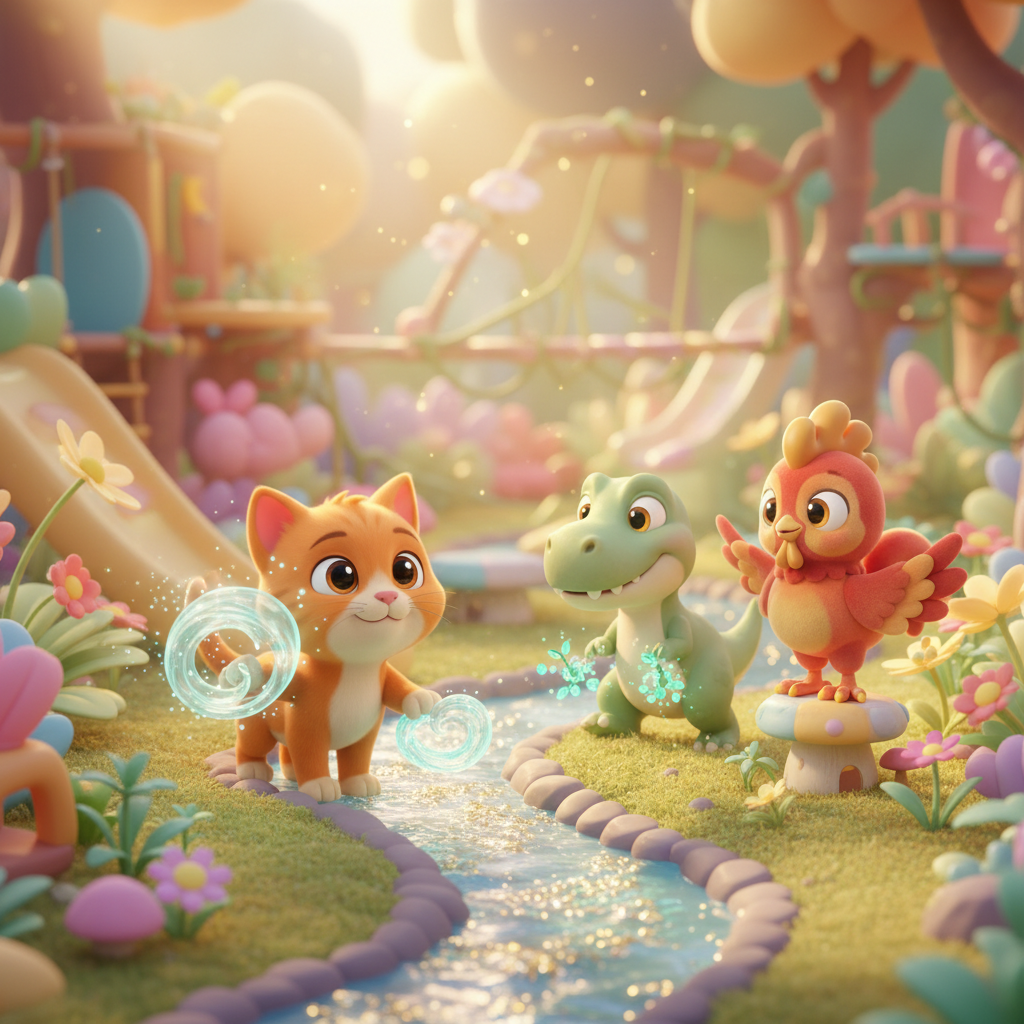
Gordon the Rooster is designed for ages 3-8, making it ideal for introducing rescue themes to young children. The magical elements — plants that walk, a playground built for safety — keep the tone light while the core message (every life matters) comes through clearly.
People Also Ask: How do I start a conversation about kindness with my child?
Start with concrete examples. Ask: “Have you ever helped someone? How did it feel?” or “Has anyone ever helped you when you were sad?” Use books as conversation starters — pause during reading to ask how characters might feel. The discussion questions below give you specific prompts to deepen these conversations.
Here’s how to get the most from it:
Before Reading
Tell your child that this story is based on something that really happened. That Gordon is a real rooster who was saved by a real person. This grounds the story in reality and makes the rescue feel more significant.
During Reading
Pause when Gordon is in danger. Ask: “How do you think Gordon feels right now?” Let your child name the emotion. Scared. Alone. Worried. This builds emotional vocabulary.
After Reading
Use the discussion questions below. Don’t rush. Let your child think. Their answers might surprise you.
5 Discussion Questions for Parents (Free Printable)
- Gordon was going to be hurt, but someone helped him. Can you think of a time you helped someone? How did it feel?
- If you saw an animal that needed help, what would you do? Who could you ask for help?
- Kitty and Dino built a playground for the plants. What are some ways we can make our home or yard safer for animals?
- Why do you think the author wrote this story? What did he want kids to learn?
- Gordon is safe now. What do you think his life is like? What makes him happy?
Copy these questions and use them tonight. No special materials needed — just you, your child, and a book that matters. Discover more children’s books about kindness and adventure.
People Also Ask: At what age can children understand empathy?
Children begin showing signs of empathy around age 2, but true understanding develops between ages 4-8. This is the perfect window for books like Gordon the Rooster, which present empathy concepts in age-appropriate ways. By age 5-6, most children can discuss feelings and imagine how others experience situations.
TL;DR
- Bedtime stories about rescued animals teach empathy through emotional engagement
- Animal characters create safe distance for exploring difficult feelings
- Children ages 3-8 can understand rescue concepts through picture books
- Gordon the Rooster is ideal for ages 3-8 — based on a true story
- Use the 5 discussion questions to deepen the conversation
- Get Gordon the Rooster on Amazon
- Visit kittyanddino.com for more kindness-focused stories